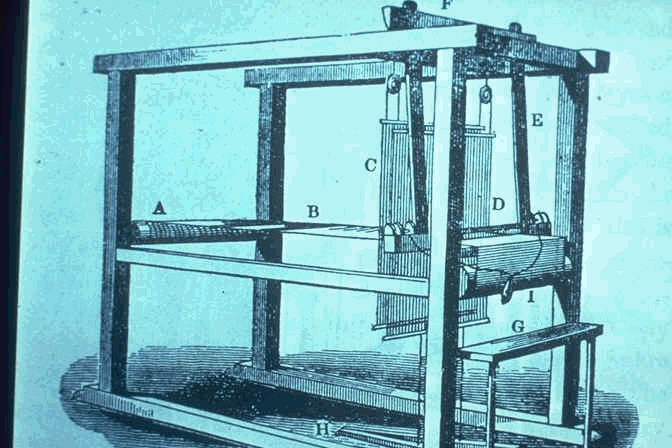
One of the most amazing features of the Industrial Revolution was the introduction of power-driven machinery in the textile industries of England and Scotland. This took place between 1750 and 1800.
The textile manufacturing industry was the one of the most well known of waterpower in the industry.
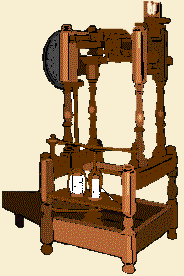
Spinning Jenny
The spinners could not keep up with the weavers. If anyone could produce a better spinning machine, a reward would be given.
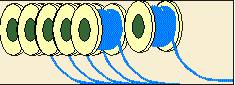
In 1764, James Hargeaves invented a new spinning wheel. He called it the Spinning "Jenny" in honor of his wife. This machine was quite simple. It allowed a worker to spin 6 or 8 threads at a time. He turned the spindles of the spinning wheels upright and placed them in a row. He then added a frame that directly held and pulled the rovings used to make thread. Later ones could spin as many as 80 threads.
Flying shuttle
In 1733 a watchmaker made a shuttle that moved back and forward on wheels. The flying shuttle, as it was called was more than a boat-shaped piece of wood to which the yarn was attached. The flying shuttle allowed weavers to produce cloth twice as fast than the spinners could supply them with thread. This increased production, cloth, and improved the quality as well.
Water Frame
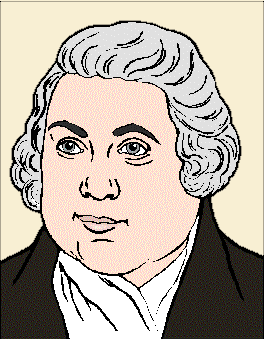
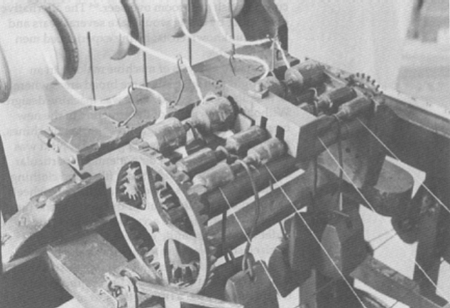
In 1769, Richard Arkwright invented the Water Frame. The Water Frame used water from a near-by stream to operate the spinning wheels. Sets of rollers turn at different speeds that drew cotton from the carding machine, and straightened out the fibers. Spindles then twisted the cotton into thread. The water frame made hard and firm thread.
From than on, the work could be done by spinning instead of people, so they could spin more cotton.
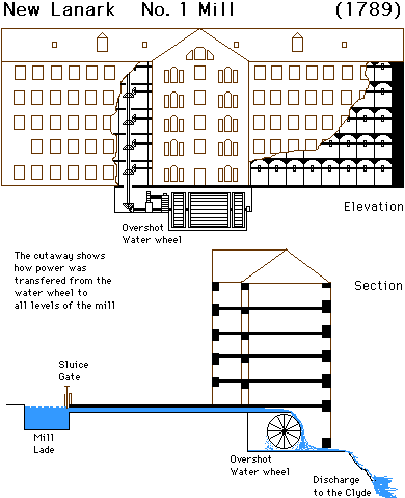
A diagram of one of the Textile Mills that contain hundreds of water frames. In the factory, power is supplied by a single water wheel.
Spinning Mule
In 1779, Samuel Crompton use the features of the spinning jenny and the water-frame to make the spinning Mule. Since a mule is the offspring of a horse and a donkey, it was named as spinning mule. It made thread stronger and finer than before.
Power Looms
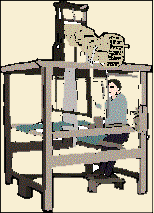
The water-frame and the spinning mule were too large and expensive for people to use at home. Families stopped spinning and weaving at home. Factories began to use these new machines. And James Watt's steam engine gave a way for the factories to power their machine. In 1785, Edmund Cartwright, invented the Power Loom which did weaving. In 1833, over 100,000 machines were used. Therefore, people were not working at home. Instead they worked in factories.