Pyotr Ilych Tchaikovsky
1840-1893
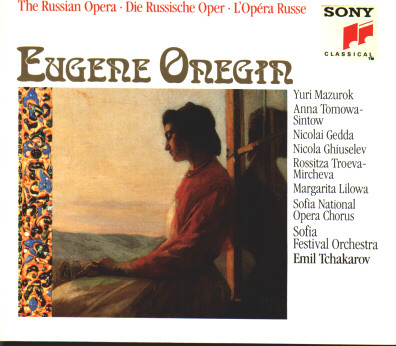
This is not a very familiar opera work, yet the Waltz with chorus is an absolutely state of the art masterpiece and of course the more famous Polonaise is also an outsatnding work. The Waltz with chorus is of the same caliber as The Swanlake Ballet. Just this piece makes it worth to buy the 2 CDS. These two pieces are just like hearing the famous Ballet but with a chorus!!!!
Tchaikovsky is probably the most notable romantic composer having at least two other extraordinary works, the piano Concerto in B and the Violin concerto in D.
This extraordinary composer entire output is truly remarkable, the piano concerto is the most challenging piano concerto ever composed and it has a degree of perfection only comparable to Mozart´s most perfect piano concerto K. 464 No. 21. As far as violin concerto is concerned this work easily rivals the other masterpieces written by Beethoven and Brahms.
|
|
"UNBRIDLED EMOTION" would perhaps best describe the
music of Tchaikovsky. His deep-sensitivity saturated his music producing lush
melodies that have enamored listeners for over a century.
Yet, Tchaikovsky's personal life was in turmoil from the very begining. As a
youth Tchaikovsky faced the hardship of losing his mother at age 14 and was
forced to deal with the cold atmosphere of a military boarding school. As such,
he shied away from the harsh and brutal world and found solice in music. It was
upon hearing Mozart's Don Giovanni that Tchaikovsky decided to dedicate
his life to music.
Previously he held a civil service position which he abandoned to enter the St.
Petersburg Conservatory to study under Anton Rubinstein. Fortunately Tchaikovsky
had a father who although not pleased with his decision for a musical career
didn't interfere with his son's wishes. As a student he wrote The Storm 1864
and later in 1868, under the direction of Mily Balakirev, he composed Fatum..
This work pleased Tchaikovsky but not Balakirev- the leader of the "Mighty
Five." He bluntly criticized the work for its lack of continuity and
natural flow and pointed to Liszt's Les Préudes as a successful
model. Tchaikovsky respecting his judgement discarded the work. The famous Romeo
& Juliet would follow within a years time, again under the
nurturing counsel of Balakirev.
On a deeper and more personal level Tchaikovsky's neuroses, which in part
stemmed from his character, often lead him to be depressed and insecure in the
presence of people. Entering into a marriage in 1877 with a young student it
naturally proved disasterous . Whether it was to appease his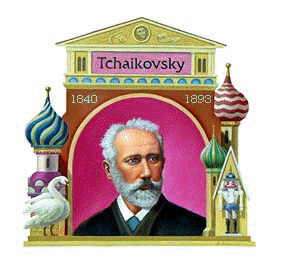 overly infatuated wife or conceal his secret all that Tchaikovsky was left with
after nine short weeks of marriage was a suicide attempt and nervous breakdown.
overly infatuated wife or conceal his secret all that Tchaikovsky was left with
after nine short weeks of marriage was a suicide attempt and nervous breakdown.
As fate would have it another woman, Nadejda von Meck, would enter his life, but
this time exclusively as a pen pal. Her wish was to subsidize him without ever
meeting. A better arrangement couldn't be made for one such as Tchaikovsky, as
their mysterious relationship lasted for fourteen years. This at least offered
him some piece of mind as his brother Modest recalled years later,"The
Tchaikovsky of 1885 seemed a new man compared with the nervous and misanthropic
Tchaikovsky of 1878."
Tchaikovsky's music was marked by its sensuously rhythmic pulse and an innate
ability that enabled him to create some of the world's greatest ballet music.
Music that shows a mixture of playful classicism and romantic verve. That he
should incorporate such melodies into his symphonies prompted some critics to
attack. Tchaikovsky's quick defense was simple, ballet music was by no means
inferior to any other form of music. This inevitably would be affirmed by the
millions of people who still rally behind his symphonies in praise.
Tchaikovsky's inner conflicts perhaps give a clue to his music for he openly
adored the style and grace of Mozart, yet gravitated to the revolutionary
innovations of Liszt
and the Romantics. Although he could escape and find peace and consolation in
Mozart his inner turmoil and the tempestuous times in which he lived forced him
to ingest and release stirring Romantic creations. With constant input by
Balakirev and the influence of the avant-garde Tchaikovsky would release more of
what constituted his reality rather than his escapist wishes, the latter
attempted in his Mozartiana. With works like; Romeo & Juliet,
Fatum, Manfred, Hamlet, or the first Piano concerto the
influence of Liszt and the moderns is clearly evident.
So, although the Dionysian aspects of Romanticism intimidated
him he felt some how compelled and drawn in by its dynamic beauties. For he was
quite bewildered by Wagner as he stated after seeing The Ring, "I
came away in doubt about the validity of Wagner's view of opera; I came away
exhausted, but at the same time wishing to continue my study of this
music."
Writing a broad spectrum of works ranging from piano solo pieces & chamber
works to concertos', symphonies and operas Tchaikovsky has undoubtedly made his
mark as one of the greatest masters of the late Romantic era.
As a result we fully reccomend that if you
like the best romantic and fine music ever composed please buy by all means all
the works that you can get from Tchaikovsky. Just ask someone who
knows 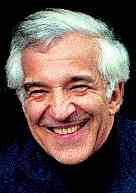 Maestro Ashkenazy, besides, of course, from the other giant, Sergei
Rachmaninoff, who happens to have the most beautiful piano concerto No. 2 of the
present century!!!!
Maestro Ashkenazy, besides, of course, from the other giant, Sergei
Rachmaninoff, who happens to have the most beautiful piano concerto No. 2 of the
present century!!!!
Tchaikovsky's piano concerto No. 1, in B flat Minor, was completed on
February 21st, 1875 and had its first performance on October 25th, 1875, in
Boston. It's scored for solo piano, 2 flutes, 2 oboes, 2 clarinets, 2 bassoons,
4 horns, 2 trumpets, 3 trombones, tympani, and strings.
The story of this piano concerto and its ultimate rejection by the man to whom
it was dedicated is, perhaps, one of the most famous tales in all of classical
music.
Tchaikovsky had achieved no little fame and certain success by 1874, so it was
late in this year that he decided to try his hand at writing a piano concerto.
This was the genre in which Mozart
- and later Beethoven -
reigned supreme, so it was with some trepidation that he started work on his
masterpiece. Tchaikovsky's account of it gives the impression of a man tortured
by his work; both fighting himself and the necessity to "hammer passages .
. . out of my brain."
This piece proved to be one of the greatest challenges of his life. The melodies
didn't come so easily as earlier in life, and he spent long nights "walking
up and down the room for hours" waiting for the musical ideas to form in
his mind. Having suffered through these agonizing weeks of creation, it was with
great excitement that Tchaikovsky presented his piano concerto to Nicholas
Rubinstein, the man to whom it was dedicated, at the Petersburg Conservatory
in the early days in January of 1875.
Rubinstein
was not pleased. He said not a single word; absolute silence. "Well?"
Tchaikovsky asked. At this, Rubenstein burst forth with a torrent of criticism,
"It's worthless and unplayable . . . bad, trivial, vulgar . . . Only one or
two pages have any value!"
Rubenstein
then told him that he might perform the concerto if Tchaikovsky would alter
the score to meet his specifications. Angry and annoyed at Rubenstein's
total distaste for the piano concerto into which he poured his heart and
soul, the composer curtly replied:
"I shan't alter a note. I shall publish it as it stands." With that,
he crossed Rubinstein's
name off the title page and re-dedicated the great piano concerto to Hans
von Bülow, a pianist who had only recently discovered Tchaikovsky's genius.
Von Bülow
was ecstatic, proclaiming the concerto to be "lofty, strong, and
original."
Von Bülow
had been planning a trip to America for a tour during the fall of 1875 so he
offered to study the concerto and perform its premiere in late October. The
first performance was held in Boston, followed closely on its heels by a
performance in New York. The verdict was unanimous: The audience loved it. They
demanded encores of the Finale, and although the critics were not as easily
pleased, they were hushed by the outpouring of enthusiasm by the public. Even Rubinstein
was forced to recant his earlier condemnation of the piano concerto and
performed it on many occasions.
Then came the landmark performance of the 20th century.
The performance is set on the backdrop of the Second World War. The Allies had
commenced a drive against the Axis Afrika Corps in Tunisia but only a scant few
miles were gained in the northern region. Repeated United States air raids were
made in the Solomans, reported the New York Times. On this historical afternoon,
a concert took place which was, and still is, the only one of its kind. The
concert-goers that night were admitted to the performance not by the usual
concert ticket, but by purchasing War Bonds.
The generous performers who gave this outstanding concert, and who went without
being paid a single dime for their troubles, were Vladimir Horowitz and Arturo
Toscanini. They were the front end, as it were, of the NBC Symphony. This was to
be an all-Tchaikovsky program.
Eleven million dollars was raised.
"None of us in Carnagie Hall
that afternoon has ever forgotten that hour. The electricity and excitement
always present in a Toscanini or a Horowitz concert were charged with enormous
voltage, an emotion that derived from the high purpose of the event.
"This emotion must in turn have acted on the artists. The secret of an
exceptionally great musical performance lies in an interaction in which the
music, the artist and the audience itself each plays a part. How this greatness
comes about, what is the alchemy that fuses the various elements, no one can
explain. One can only feel it when it happens. So it was that the performance of
Tchaikovsky piano concerto, a performance which was familiar to many in the
audience and had arouse them to enthusiasm previously, this time took on an
extra measure of inspiration. The response to it was almost one of frenzy."
- George R. Marek
It is an extremely important performance to hear.
[email protected]
Cholula, Mexico 
Merry Chri stmas
for 1999 to all the visitors of this page.
stmas
for 1999 to all the visitors of this page.




Submit your page to 34 popular sites for free, using one form!
 eter Ilyich Tchaikovsky
[also spelled Pyotr Ilyich Tchaikovsky] was born at Votkinsk, in the government
of Vyatka, Russia, May7, 1840, second in a family of five sons (two last ones
twins, whom he loved as if he had been their father) and one
eter Ilyich Tchaikovsky
[also spelled Pyotr Ilyich Tchaikovsky] was born at Votkinsk, in the government
of Vyatka, Russia, May7, 1840, second in a family of five sons (two last ones
twins, whom he loved as if he had been their father) and one