
General Information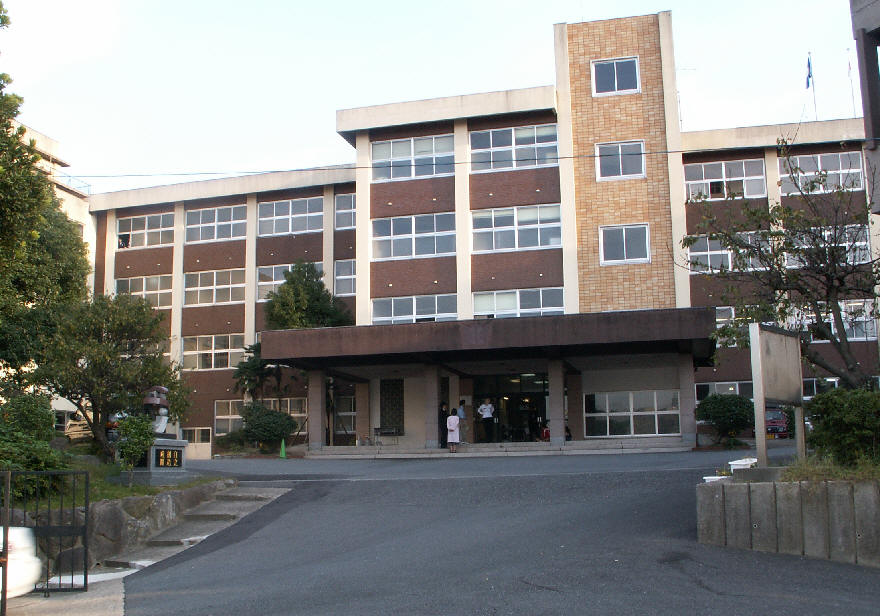
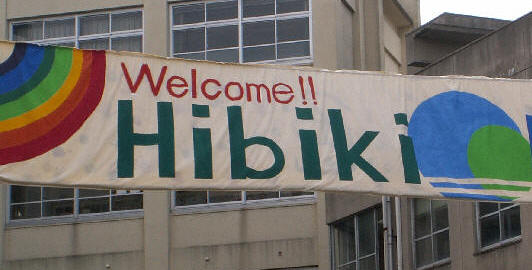
Hibiki is a prefectual senior high school, but it is unlike any other high school in Kitakyushu, possibly even in Fukuoka. Hibiki is a credit system high school, more similar to high schools in North America. In a regular high school, students all have the same classes, and travel as a group. Here each student has their own schedule. Hibiki also has no uniform, the students wear name cards, but that is the only requirement. The school is open to anyone who has graduated from Junior high school, with students ranging in age from 15 to 65. Hibiki students have the advantage of taking classes throughout the day, and therefore are able to hold down part-time jobs, something that is forbidden by most other high schools. The actual school is a brand new building (in fact as I type this it is not yet finished).
Location
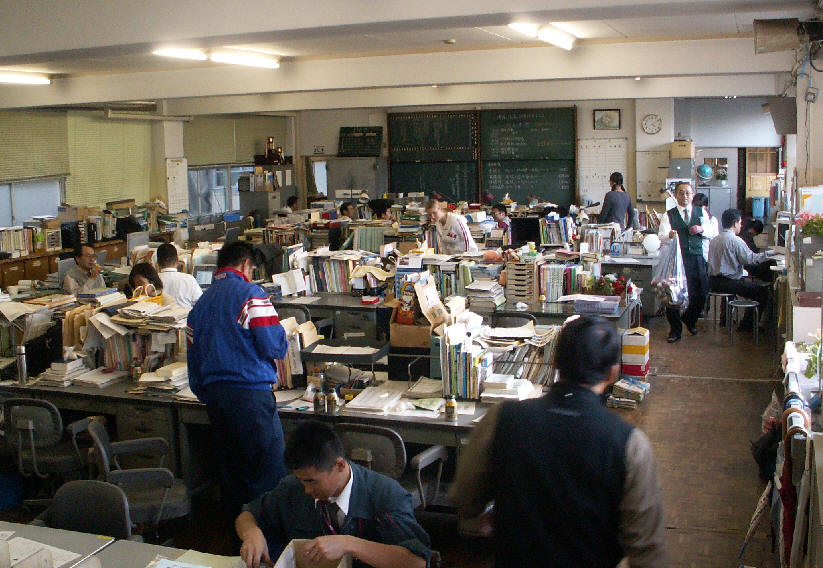 Hibiki is located in Tobata, the same area of
Kitakyushu as your apartment, and in fact, it is very near to your
apartment. You can take a bus to school, but my guess is that it would
actually take longer then if you were to ride a bike. This is my preferred
method of transportation. I am able to leave my apartment and be sitting in
my desk in about 8 minutes. That includes getting my bike from the storage
shed, riding to work, locking up my bike, and walking to the teachers’
room. To walk it is only about 12 minutes door to door at a regular pace.
Near the school there is a 7-11 and a few small restaurants.
Hibiki is located in Tobata, the same area of
Kitakyushu as your apartment, and in fact, it is very near to your
apartment. You can take a bus to school, but my guess is that it would
actually take longer then if you were to ride a bike. This is my preferred
method of transportation. I am able to leave my apartment and be sitting in
my desk in about 8 minutes. That includes getting my bike from the storage
shed, riding to work, locking up my bike, and walking to the teachers’
room. To walk it is only about 12 minutes door to door at a regular pace.
Near the school there is a 7-11 and a few small restaurants.
Students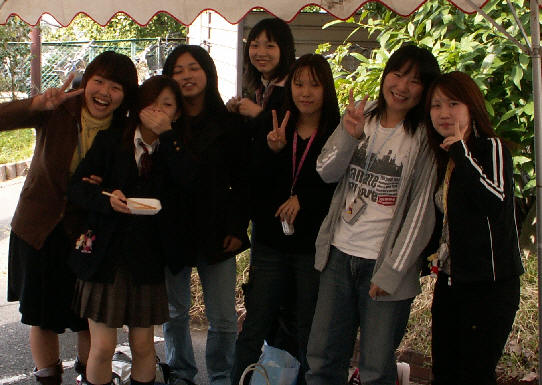
Students have varying reasons for coming to Hibiki, some are here due to illnesses that hold them back from other schools, some students are here because of problems in their lives (caused by themselves, or by others), but most students are here because they enjoy the freedom that they are given. The English level of the students varies quite a bit. There are some students who I can hold a proper conversation with and there are others who I literally have never heard an English word muttered from their mouths. The willingness to interact also varies between students. Some are gung-ho and want to be my best friend, others glare at me as if I just killed their mother. In the end, there are many more smiles than anything else. The student's reasons for being interested in me also varies. Some students will be excited to know you, others just want to say they spoke to a foreigner. On a whole, you can easily being a smile to their faces by simply saying "good morning" or "see you later" as you pass them in the hallways.
Activities
 There are
not as many clubs at Hibiki as there are at
other high schools. The clubs that I have witnessed are also fairly small
(but are growing).
This stems back to the nature of the school, and the varying time-tables. I
have had the opportunity to play with the basketball team, so if you are
looking to do some of the activities, you will be more then welcome.
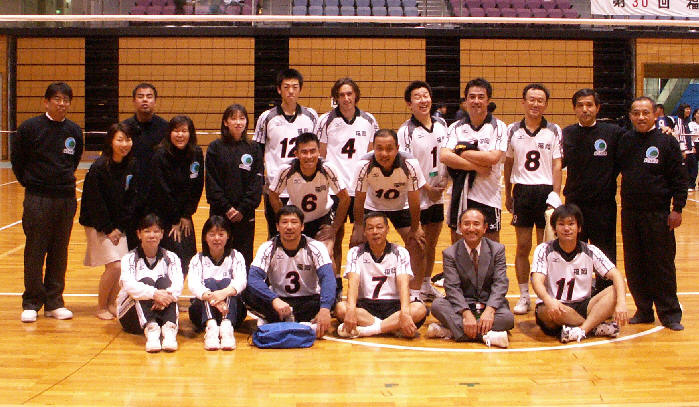
Another really fun activity at Hibiki is the teachers volleyball team. This
past year the team made it to the prefectual championships, and we got to go
to Fukuoka City for a tournament. Another thing to look forward to is the
Hibiki Festival, at which you will be asked to organize an English room, or
an “insert your county here” room.
There are
not as many clubs at Hibiki as there are at
other high schools. The clubs that I have witnessed are also fairly small
(but are growing).
This stems back to the nature of the school, and the varying time-tables. I
have had the opportunity to play with the basketball team, so if you are
looking to do some of the activities, you will be more then welcome.
Another really fun activity at Hibiki is the teachers volleyball team. This
past year the team made it to the prefectual championships, and we got to go
to Fukuoka City for a tournament. Another thing to look forward to is the
Hibiki Festival, at which you will be asked to organize an English room, or
an “insert your county here” room.