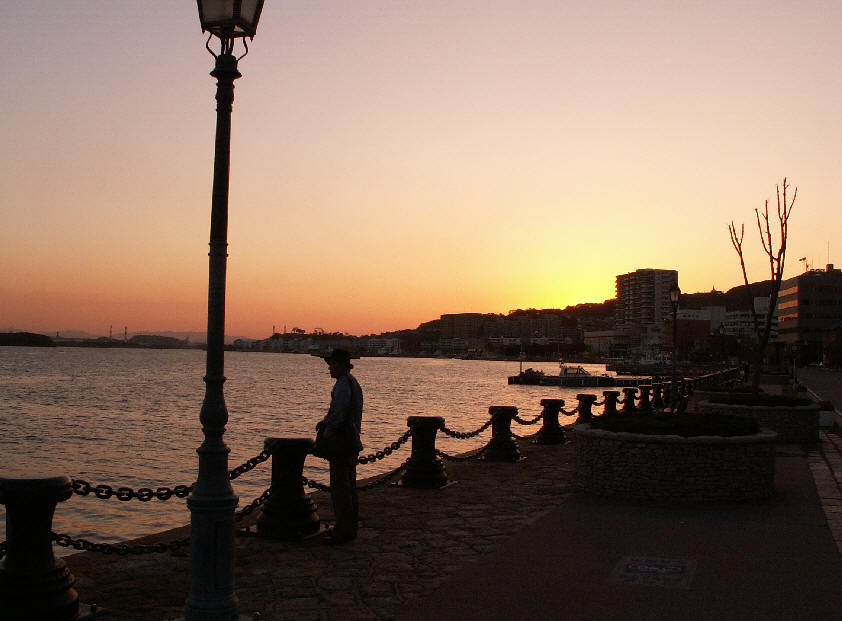
Sunset in Wakamatsu
Kitakyushu is the eleventh largest city in Japan, with a population of just over 1 million. The city is divided into seven different wards. The downtown area of Kitakyushu is Kokura, which has the largest JR train station as well as a Shinkansen stop. Kitakyushu, originally a castle town, is now known as a steel town, with several industrial factories, but don't worry, it has it's beautiful side as well. The city is located about 60 kilometers from Fukuoka's capital city, Fukuoka City.
Weather
We write this assuming you are from an average climate, so bare with us if you are actually from Nunavut or somewhere down in the Caribbean. The weather in Kitakyushu is interesting, to say the least. When you arrive in August it is so blazing hot that you can’t take two steps without sweating. You should be wearing a suit on your first day, and you will be wishing it was a swim suit. On the flip side, winter is the exact opposite. Before we go on, let us say we are from Canada, and although our summers reach 30 degrees Celsius, our winters are minus 25 degrees Celsius. Now let us go on. Winter in Kitakyushu is freezing. The temperature barely gets into the minus side, but the difference here is that there is very little indoor heating. When you sit and watch TV you can see your breath. The school also has minimal heating and you may find yourself teaching in your winter jacket. This is a link we found to some average temperature data. When you are packing, remember that this is the temperature outside, as well as in your apartment and in school.
One of the most convenient methods of transportation in Kitakyushu is bicycle, but when the weather is bad, or the destination too far, there are a few other options. There are three methods of public transportation in Kitakyushu; bus, train, and monorail.
Bus
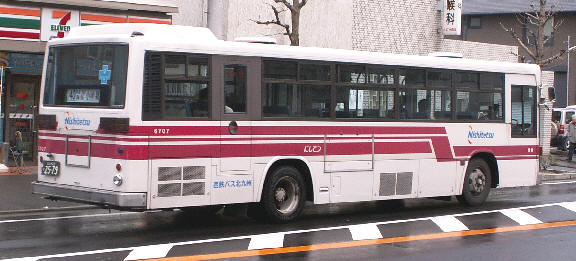
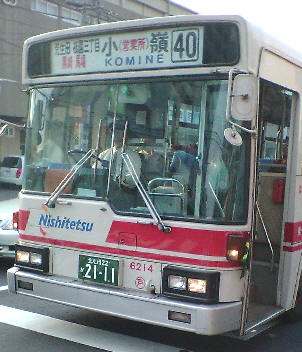
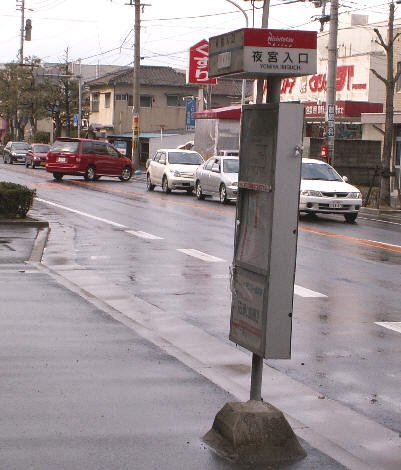
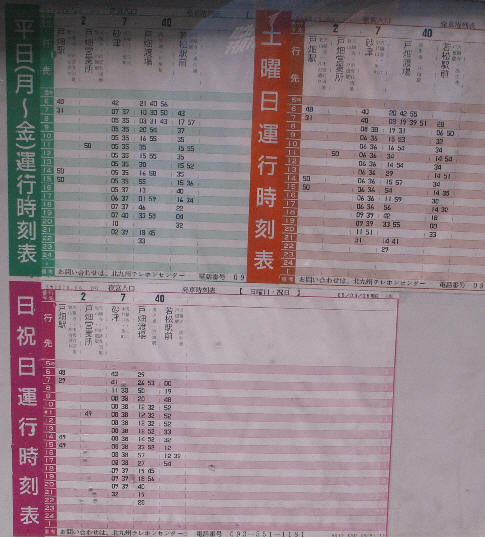
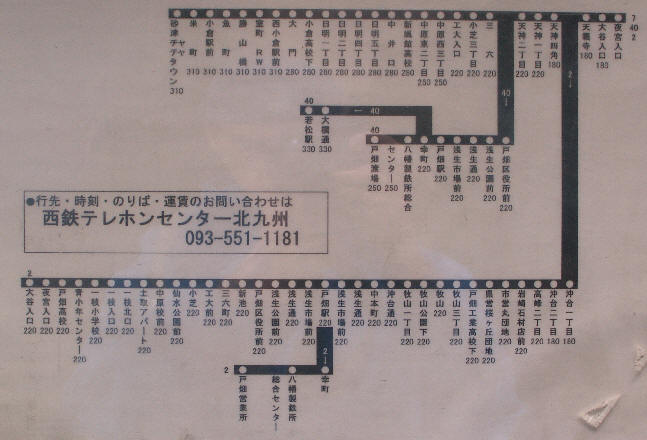
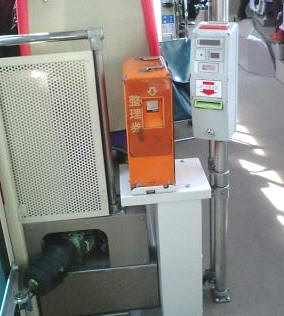
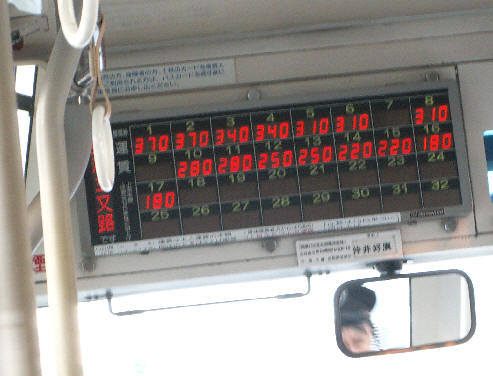
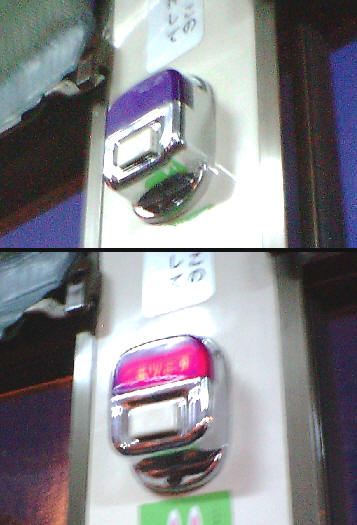
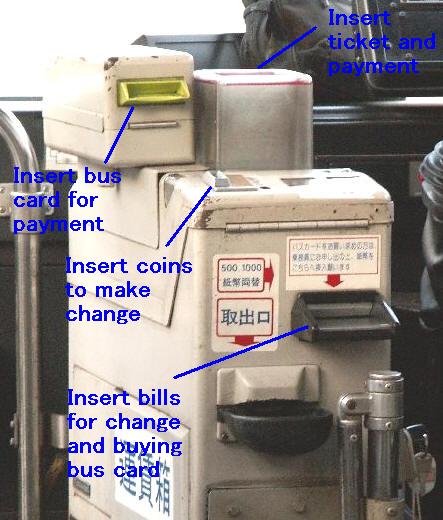
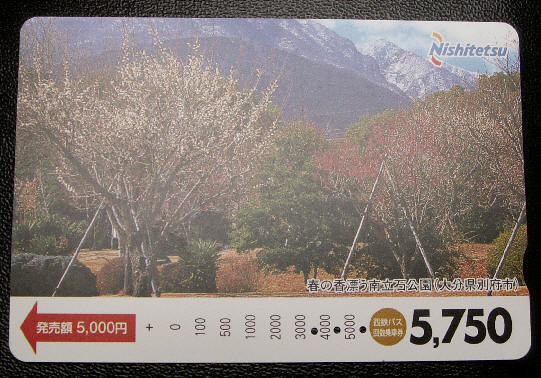
Most of the buses(1) are run by Nishitetsu and most areas of the city may be reached by bus. Each bus route is numbered(2) to differentiate between several buses that may stop at the same locations. At each bus stop(3) there are three schedules(4), one for the weekdays, one for Saturday and one for Sunday. Some bus stops also list the route and the prices for each bus that stops at that location(5). Paying for the bus is like European a bus, where you pay based on how far you ride. When you first get on the bus (by the back door) you take a small ticket with a number on it(6). At the front of the bus there is a big board(7) with a bunch of numbers that correspond to the tickets taken when getting on. When you are approaching your stop there are buttons(8) all over the bus to push to inform the driver you would like off. When the bus stops you check the number on the board corresponding to your ticket. At the front of the bus, drop your number ticket and the correct change into the machine beside the driver(9), then exit by the front door. If you do not have correct change, the same machine can make change from coins or bills(9). This is done first, then you place your payment in the proper spot. For example if you owe ¥280 and you only have a ¥500 coin, first you put your coin into the slot to make change and you will receive ¥500 back in smaller coins, it will not subtract your fare, you then pay your ¥280. There is also the option of a bus card(10). A bus card can be purchased on the bus, from the driver, any time they are stopped at a light or other times they are stopped. When you purchase a bus card you save some money (up to 15%), so if you ride the bus a lot it is well worth it. For example, if you buy a ¥5000 bus card it has a credit of ¥5750 on it. To use the bus card, you simply slide it into a small scanner(6) when you get on the bus (back door), then when you get off the bus (front door) there is another scanner(9), simply slide the card through and off you go. The bus card can be used on any route, it is a card with a set credit on it, and each time your fare is deducted from that credit. The buses do not run late into the night, so it is best to check the schedule early. Here is the Nishitetsu bus web page.
Train
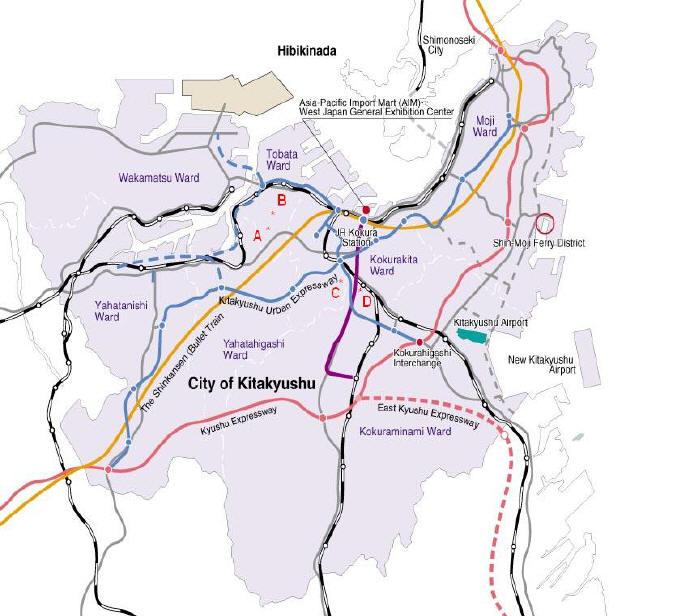
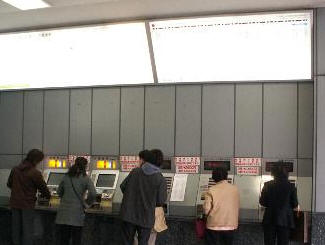
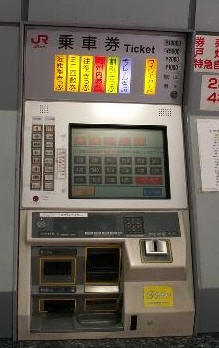
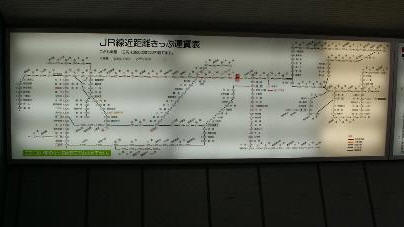
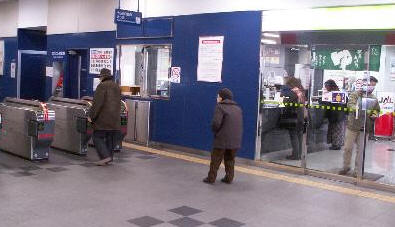
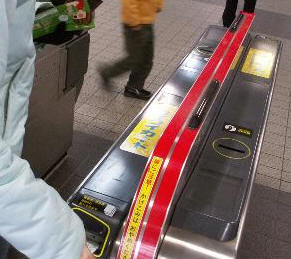
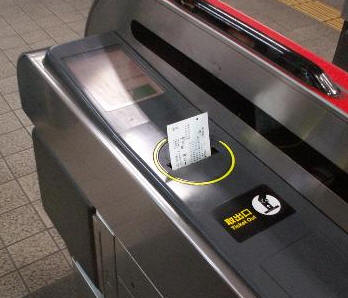
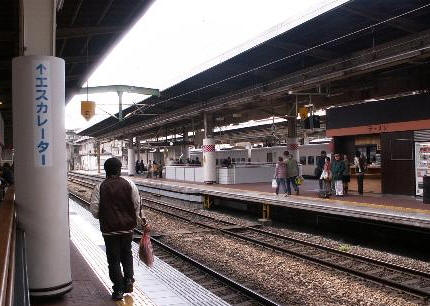
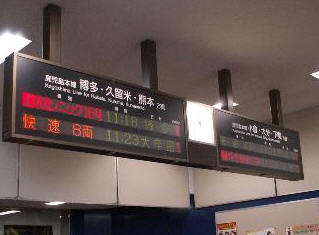
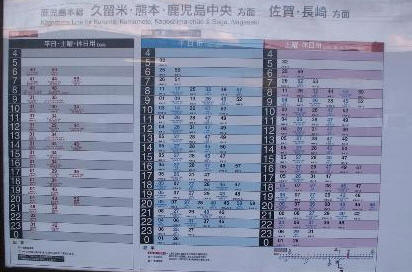
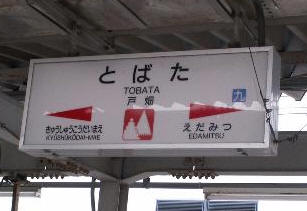
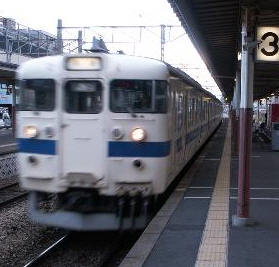
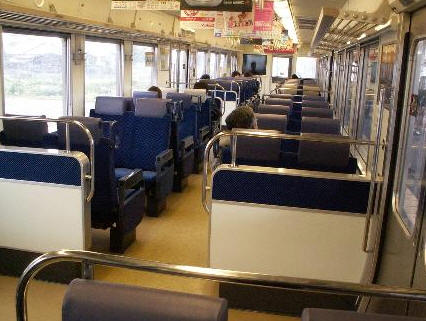
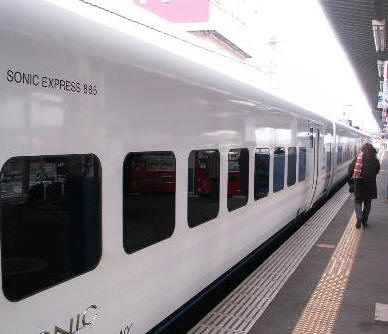
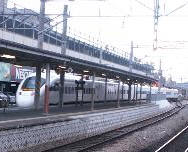
The JR train route runs through Kitakyushu, and branches in a few places. The map of Kitakyushu shows the train lines in black and white dashes. You cannot reach as many places within the city by train, but it can be much quicker than the bus if your destination is on route. The train also can take you out of the city. For example, you will need to take the train to Fukuoka city once a month for a meeting. Paying for the trains is similar to the buses, you pay based on the distance you ride. Before going through the gates at the train station you buy your ticket from a machine(2), this machine will provide change. Above the machine there is a large list of prices by station(3). Once you have your ticket you proceed to the gates at the station(4), here you place your ticket into a slot in the gates(5) and retrieve it on the other side(6). Make sure you take your ticket, you will need it when exiting at your final destination, where you will slide it into a similar slot, from which it will not be returned. You will need to determine which platform your train will come to. For some stations it is as simple as figuring out the direction of the train, other stations have many platforms(7). All of the stations have digital schedules that indicate the next trains coming to each platform as well as the type of train(8). Normally this can help you determine which platform to go to (based on the time of the train). The scheduling of the trains is also similar to the buses, in that there is a different weekday and weekend schedule(9). There is some English in the train stations(10), but not always enough to provide all the information you need. There are two types of trains that come to the same stations, regular(11, 12) and limited express(13, 14). The limited express trains, "Sonic" and "Tsubame", will not stop at every station, and if you ride them you will be required to pay an extra ¥500 (no matter how far you travel). These limited express trains may be identified quite easily because they look much more "fancy" then the regular ones. Some of the regular trains also skip stations (and are labelled as "express", although they look no different then regular trains), but I have never run into a problem with this. When you are traveling further than just within the city you can sometimes get discount tickets such as the "yon mai kippu" to Fukuoka. This is a special that allows you to buy 4 tickets at once. There is also a 2 ticket deal. The price is basically the same, but with these tickets you can ride the limited express trains without paying extra. A limited express train will get you to Fukuoka in 39 minutes, a regular train is almost triple that. The discount tickets may be purchased from an attendant at a small counter outside of the station gates(4). Here is the JR Kyushu web page and here is the main JR page.
Monorail
Kitakyushu also has a monorail, this is basically another train route, but it is run independently. The map shows the route in purple, running south from Kokura Station. Purchasing and using tickets is done in the same fashion as the train. The monorail has not been much use to us because we are living in Tobata, but from Kokura Minami it is quite convenient and cheap to get to Kokura. Here is the web page.
Other
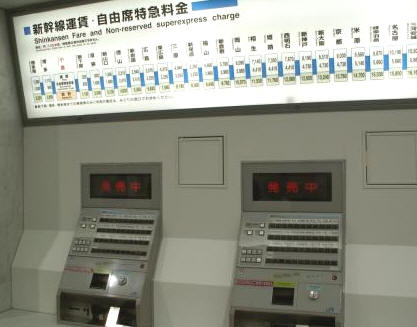
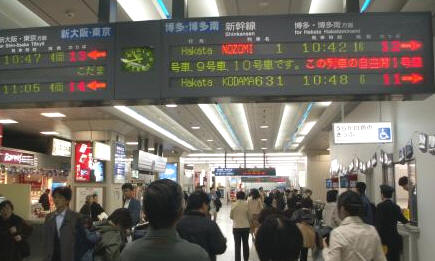
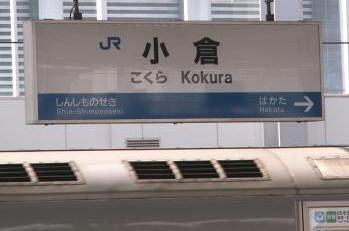
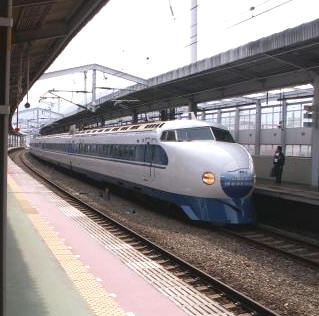
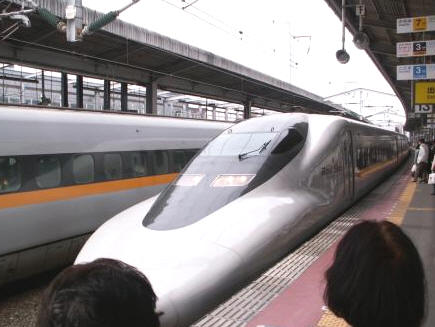
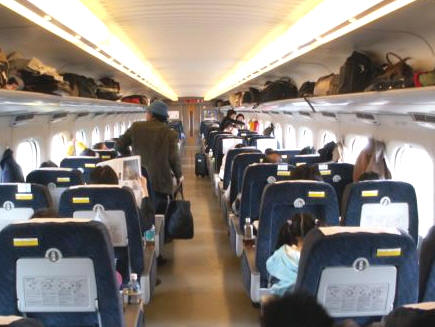
At Kokura Station there is a "Shinkansen" stop, this is Japan's "Bullet Train" and can take you between cities very quickly (although it can be more expensive). Information can be found on the JR web page.
There are highway buses that you can take between cities. These buses have far fewer stops, so you will have to do some research if you plan to use them. There is a bus that goes directly from Kokura station to the airport in Fukuoka. Here is the web page for the highway buses.
Taxis are quite abundant in Kitakyushu, especially in the Kokura area, meaning you are never stranded. Although, it does get costly to take a taxi by yourself. From Kokura to Tobata clears ¥2000. There are "taxi stops" where you will always find them waiting, or you can simply flag them down with a wave of the hand.
Local Attractions
Although Kitakyushu is a large city, there are not a lot of attractions to be seen. We have listed some of them below, but we do not have a lot of information about them.
Kokura Castle
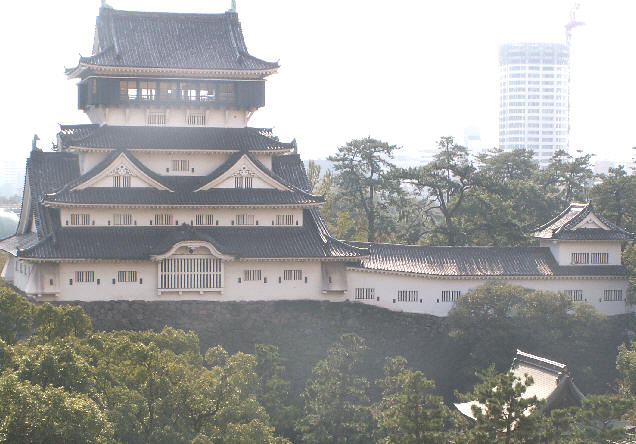 The easiest attraction to
get to is Kokura Castle, which is a re-make of the castle that the city was
formed around. The outside of the castle is very beautiful, but we
would not recommend paying the fee to go inside, it was not worth it at all.
The castle is in downtown Kokura, and cannot be missed. There is some
nice scenery around the castle, but it is also surrounded by large urban
buildings. There is a temple behind the castle that is used during
special events or special times of the year.
Here is the home
page.
The easiest attraction to
get to is Kokura Castle, which is a re-make of the castle that the city was
formed around. The outside of the castle is very beautiful, but we
would not recommend paying the fee to go inside, it was not worth it at all.
The castle is in downtown Kokura, and cannot be missed. There is some
nice scenery around the castle, but it is also surrounded by large urban
buildings. There is a temple behind the castle that is used during
special events or special times of the year.
Here is the home
page.
Art Museum
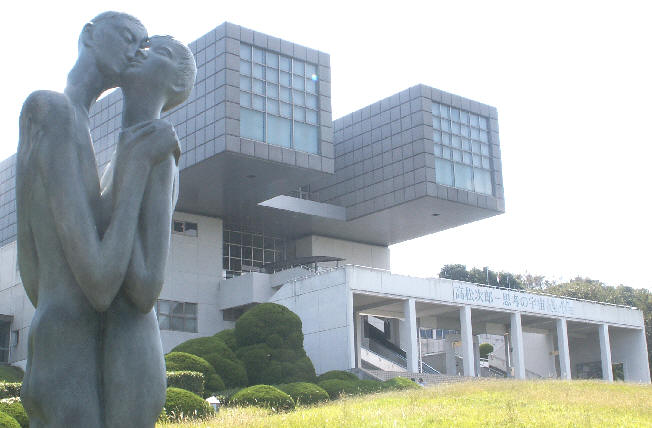 There
is a fairly large art museum in Tobata. Although, we have not been in
to see what it has to offer. We have been up to the area because there are some beautiful walking paths and the building itself is neat
to see, but we can't bring ourselves to go inside (we, unfortunately, do not
appreciate art for its true beauty). The museum is a little more
difficult to find than some other things, but on their home page they supply
a map. Here is the home page (couldn't
find an English link).
There
is a fairly large art museum in Tobata. Although, we have not been in
to see what it has to offer. We have been up to the area because there are some beautiful walking paths and the building itself is neat
to see, but we can't bring ourselves to go inside (we, unfortunately, do not
appreciate art for its true beauty). The museum is a little more
difficult to find than some other things, but on their home page they supply
a map. Here is the home page (couldn't
find an English link).
Space World
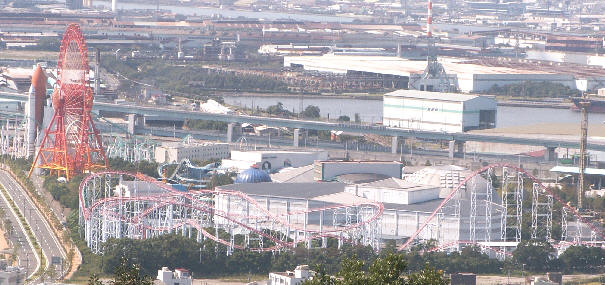
Basically Space World is a space themed amusement park. There are several roller coasters and other rides. Shortly into the new school year you will take a school trip there (paid for by the school), so it is best to wait to see this attraction. The park has a train stop named after it, and is only 5 stops from Kokura. Here is the home page (English link is easily found).
Museum of Natural History
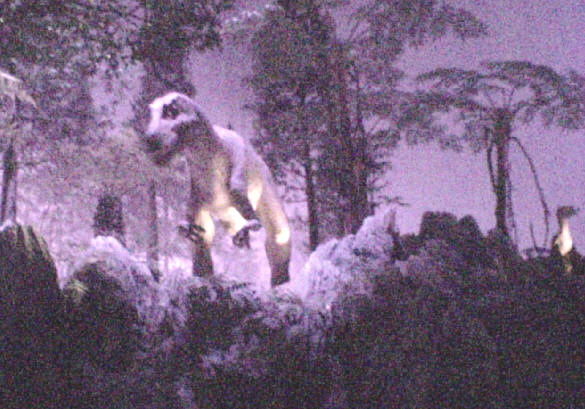 Located at the
same stop as Space World, this is a medium sized museum specializing in natural history, the evolution of the world and the creatures on
it. The cost to get in is fairly cheap, only about ¥700, and we
thought it was worth it. The catch is to go to the standard exhibit.
When we were there they had a specialty exhibit, which was more expensive,
about one tenth the size, and not nearly as interesting. Do not
waste your money on this special exhibit unless of course it is something
that really excites you.
Here is the home page.
Located at the
same stop as Space World, this is a medium sized museum specializing in natural history, the evolution of the world and the creatures on
it. The cost to get in is fairly cheap, only about ¥700, and we
thought it was worth it. The catch is to go to the standard exhibit.
When we were there they had a specialty exhibit, which was more expensive,
about one tenth the size, and not nearly as interesting. Do not
waste your money on this special exhibit unless of course it is something
that really excites you.
Here is the home page.
Hiraodai
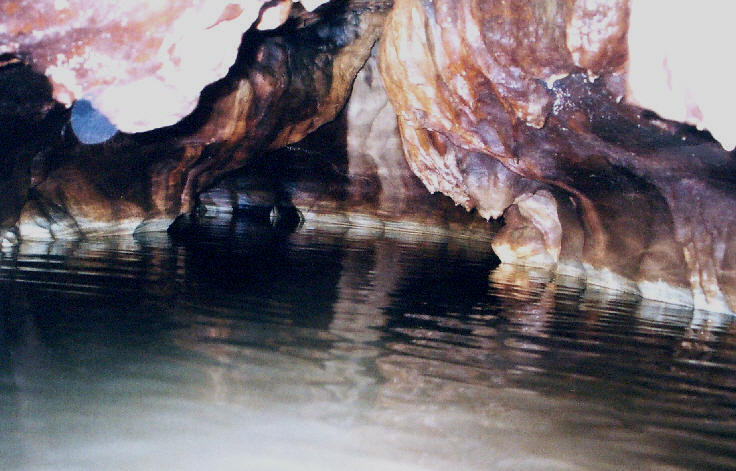 Hiraodai is a big outdoor area,
at which there are limestone rocks protruding from the hill side.
Pretty cool to see, but even better are the limestone caves that can be
found there. There is also a large park at the top, meaning that this can
turn into an all day adventure. We ventured up here in August, and it
was a real pain to get to. Everything we were told about how to get
there was false. The bus company told us to take a bus to the middle
of no-where. We ended up hitchhiking, which was a lot faster and
cheaper then anything else available. With that said, it was well
worth it. The caves were amazing. If you can make it early in the day there are
also some waterfalls out that way that you could see on the same visit.
We have not been because we went later in the day.
Here is the home page (English
link is easily found).
Hiraodai is a big outdoor area,
at which there are limestone rocks protruding from the hill side.
Pretty cool to see, but even better are the limestone caves that can be
found there. There is also a large park at the top, meaning that this can
turn into an all day adventure. We ventured up here in August, and it
was a real pain to get to. Everything we were told about how to get
there was false. The bus company told us to take a bus to the middle
of no-where. We ended up hitchhiking, which was a lot faster and
cheaper then anything else available. With that said, it was well
worth it. The caves were amazing. If you can make it early in the day there are
also some waterfalls out that way that you could see on the same visit.
We have not been because we went later in the day.
Here is the home page (English
link is easily found).
Green Park
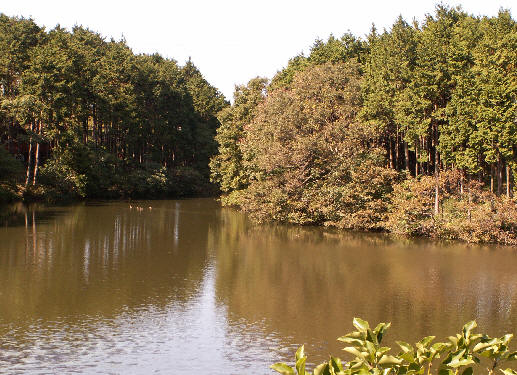 Green
Park is a large green space found in the Wakamatsu ward. There is a
large open field where families come to toss around a ball, there are
several gardens to look at, and there are also animals to see. There
is a fee to get into the park, and an additional fee to see the animals.
This is an okay place for a relaxing day, but nothing overly exciting.
Be sure to time your buses well, there are only two buses that go out there
each day. Here
is the home page.
Green
Park is a large green space found in the Wakamatsu ward. There is a
large open field where families come to toss around a ball, there are
several gardens to look at, and there are also animals to see. There
is a fee to get into the park, and an additional fee to see the animals.
This is an okay place for a relaxing day, but nothing overly exciting.
Be sure to time your buses well, there are only two buses that go out there
each day. Here
is the home page.
Mojiko Retro Area
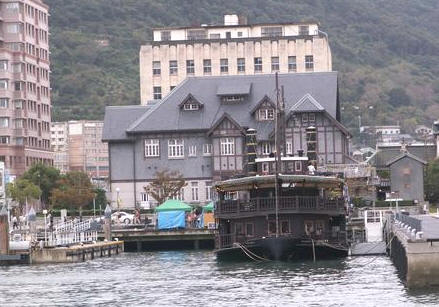 We've been told that this is an attraction, but we really must be missing
something. The port at Moji is kind of neat to see, but we don't
understand the attraction part. Anyhow, decide for yourself.
Here is the home page.
We've been told that this is an attraction, but we really must be missing
something. The port at Moji is kind of neat to see, but we don't
understand the attraction part. Anyhow, decide for yourself.
Here is the home page.
Itouzu Zoo
We have never been here, but when we asked people for local attractions we were told about this zoo. I have been told that there are animals and roller coasters. Here is the home page.
Kokura Race Course
We have not gone to the races, but we have been told that it can be fun. They do horse racing, and you can watch for free. There is also a beautiful park near by with lots of flowers. Here is the home page.
Kitakyushu Media Dome
Another place we have not been, but we were told they do cycling races, as well as music concerts. Here is the home page.
Shopping
Riverwalk
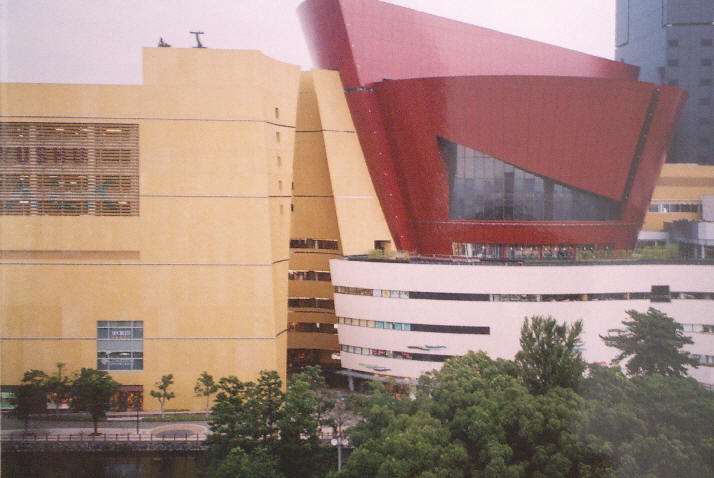 The
largest shopping mall in Kitakyushu is Riverwalk. This mall is fairly
new and has many well known stores, such as HMV and Sports Authority. There
is also a movie theatre, a stage theatre, and a small museum, all inside the
mall. There is a large food court in the basement of the mall.
You cannot miss this mall if you make your way downtown, it is quite large,
and is very near to Kokura Castle.
Here is the home page.
The
largest shopping mall in Kitakyushu is Riverwalk. This mall is fairly
new and has many well known stores, such as HMV and Sports Authority. There
is also a movie theatre, a stage theatre, and a small museum, all inside the
mall. There is a large food court in the basement of the mall.
You cannot miss this mall if you make your way downtown, it is quite large,
and is very near to Kokura Castle.
Here is the home page.
Cha-Cha Town
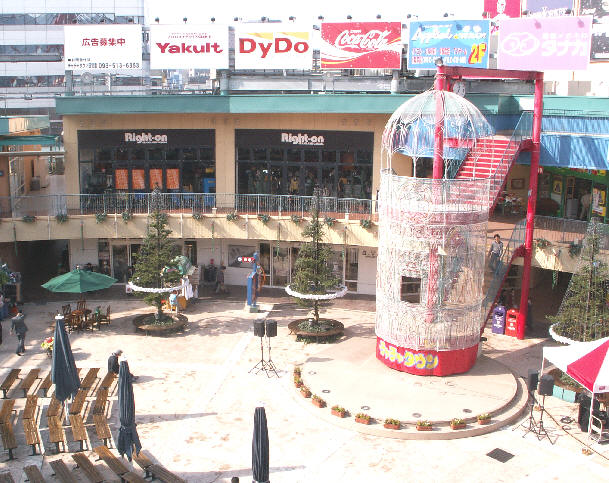 Cha-Cha Town is known for two things. The first is an enormous 100 Yen
store, an ALT's best friend, and second for it's constant live
entertainment. The mall is set up like a coliseum, with all the stores
forming a circle around a central courtyard. In this courtyard there
are several benches and seats, from which you can watch the entertainers on
a small stage. Whether it be a band or the power rangers, there
always seems to be something going on. There are a few restaurants, an
electronics store, and several other small shops. Cha-Cha Town is
found in Kokura, at the end of the #7 bus route.
Here is the home page.
Cha-Cha Town is known for two things. The first is an enormous 100 Yen
store, an ALT's best friend, and second for it's constant live
entertainment. The mall is set up like a coliseum, with all the stores
forming a circle around a central courtyard. In this courtyard there
are several benches and seats, from which you can watch the entertainers on
a small stage. Whether it be a band or the power rangers, there
always seems to be something going on. There are a few restaurants, an
electronics store, and several other small shops. Cha-Cha Town is
found in Kokura, at the end of the #7 bus route.
Here is the home page.
Isetan
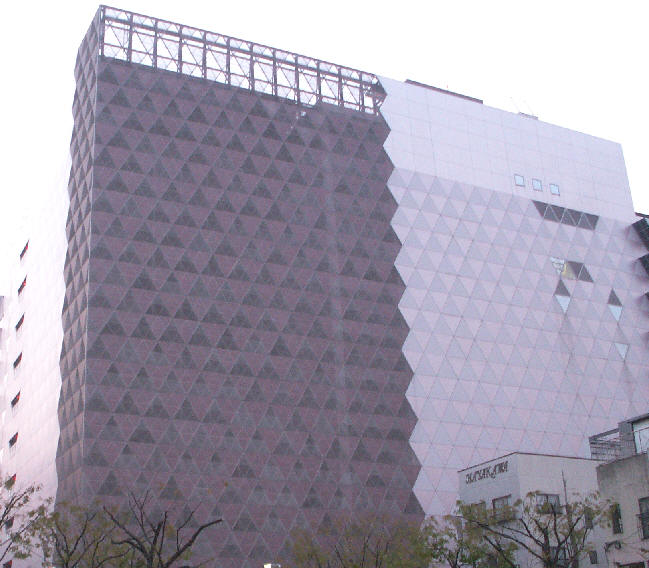 Isetan is a large department
store found just outside of Kokura station. We have not personally been
shopping there, but when we asked female teachers where to shop in
Kitakyushu, this was the first response.
Here is the home page.
Isetan is a large department
store found just outside of Kokura station. We have not personally been
shopping there, but when we asked female teachers where to shop in
Kitakyushu, this was the first response.
Here is the home page.
Saty
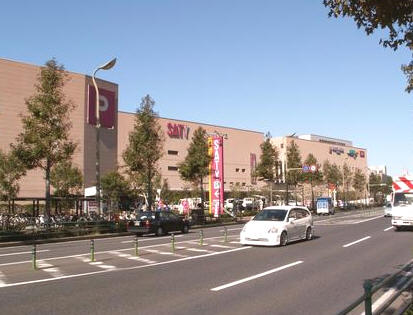 Saty is found in Tobata Ward, and is
attached to Tobata station. There are three floors of stores, a food
court with a McDonald's and several Japanese restaurants, a grocery store, a
movie theatre, and a gym (which won't let you join if you have a tattoo, but
that is another story). Also right near Saty is a 100 yen shop.
Here is the Saty homepage, not
the mall's home page.
Saty is found in Tobata Ward, and is
attached to Tobata station. There are three floors of stores, a food
court with a McDonald's and several Japanese restaurants, a grocery store, a
movie theatre, and a gym (which won't let you join if you have a tattoo, but
that is another story). Also right near Saty is a 100 yen shop.
Here is the Saty homepage, not
the mall's home page.
Uomachi Shopping Arcade
If this is the area we are thinking of, it is a series of stores lining the sides of some roofed streets. The area is not far from Kokura station, and it is basically a bunch of stores that are on streets that have been turned into walk ways, and a roof was built over the streets. There are many interesting shops to be found there. Here is the home page.
The Mall
We have not been there, but here is the home page.
Other Web Links
Kitakyushu City’s English Web Page
Kitakyushu City's Japanese Web Page (much more detailed)
Kitakyushu City tourist Association Web Page