Victoria's Lifecast
|
|
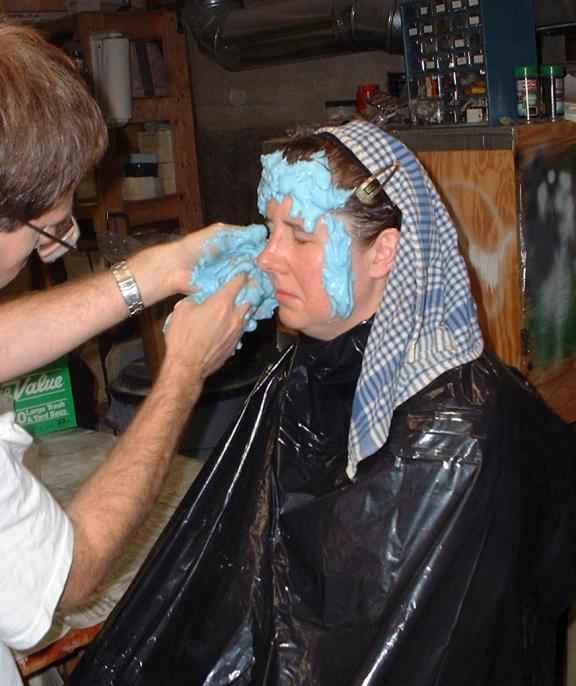
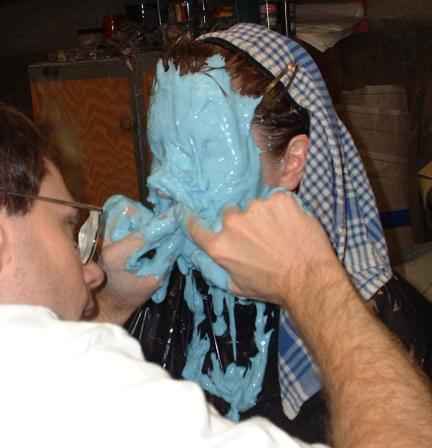
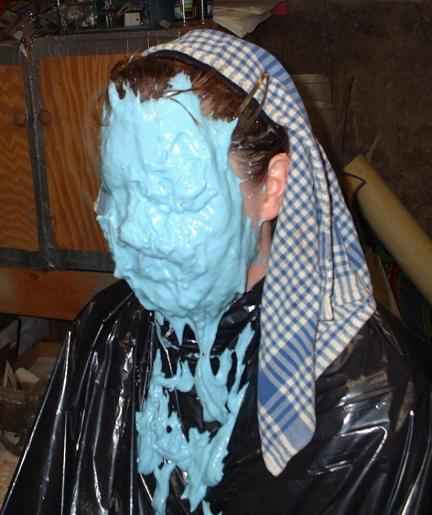
First I covered her face with a slow-setting form of alginate.
(Alginate is the stuff your dentist uses to make impressions of your teeth.)
|
|
|
Careful - don't cover up the breathing apparatus.
|
|
|
|
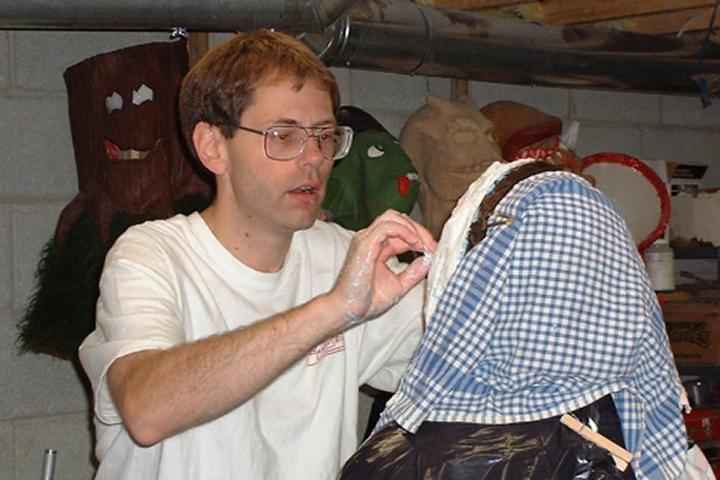
When the alginate set I covered it with plaster bandages.
This gave it a supporting shell.
Victoria was kind of nervous about the whole lifecasting process. I wonder...
|

|
|
At this point, the lifecast mold is complete. After removing it
it from Victoria's face, I immediately filled it with plaster.
Alginate is is extremely delicate and starts shrinking right away,
which renders it useless.
Once the plaster set, I made a similar mold of the plaster positive
using the same process, except I used silicone instead of alginate.
|
The Sculpture
 This is the finished sculpture. As it turned out, the lifecast
wasn't as helpful as I had hoped it would be. I can count on one hand the
number of lifecasts I've done, and I did half of them during the Reagan
administration. (But I knew better than to tell Victoria and David that.)
This is the finished sculpture. As it turned out, the lifecast
wasn't as helpful as I had hoped it would be. I can count on one hand the
number of lifecasts I've done, and I did half of them during the Reagan
administration. (But I knew better than to tell Victoria and David that.)
So I'm not the best lifecaster out there. As a result, the lifecast molds weren't as accurate as they could have been. Specifically, I think they were too heavy. The molds pulled down the castee's face, adding jowls and the like. This made the casts look about 20 years older than the subjects. Not good. But on the positive side, it provided a place to start that was better than if I hadn't made the casts at all. |
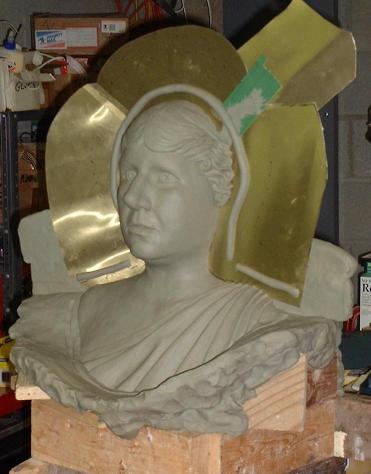
This is the sculpture with a dividing wall in preparation for molding. |
| Next---> |
