Sample pages
|
|
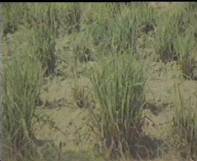
Cymbopogon flexuosus |
|
|||
|
|
|||||
|
|
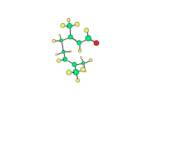
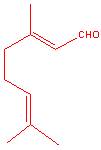
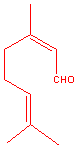
Citral – trans
|
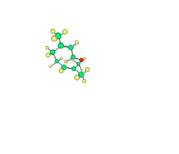
Citral – cis
|
|||
|
v
Cymbopogon flexuosus) v
Native v
Major
Producer |
The Indian lemongrass , Family Graminae Tropical
Asia India , Tirunelveli (Tamil Nadu) , Cochin (Kerala),
Commercially cultivated in Assam, Maharashtra and Uttar Pradesh |
||||
|
v
Botany
v
Distillation
of oil |
Aromatic grass, up to 3 m tall, resistant to
draught, needs warm and humid climate with plenty of sunshine and rainfall
for its cultivation. Named “Lemongrass” because of strong lemon-like odour
due to the high percentage of citral content. Plants used are the freshly cut and partially dried
(after allowing to wilt for 24 hrs) leaves of cultivated plants from which
the essential oil is obtained by steam distillation. The steam is
allowed to pass into the still with a
steam pressure from 18 to 32 kg in the boiler. The yield of the oil is about
0.5 to 1.0 % depending upon the fertility of the soil, climatic conditions,
age of the grass, time of cultivation, the state of the grass distilled,
whether fresh or dry, distillation method etc. the yield of the grass is the lowest in the first year and
highest in the third and fourth year after planting. |
||||
|
v
Chemical
Composition (typical oil, % varies from sample to sample) |
Constituent
Citral-trans & Citral-cis Myrcene Methyl heptenone Geranyl acetate a- and b-pinene a-thujene myrcene limonene cis-b-ocimene trans-b-ocimene terpinolene methyl heptenone nonanone citronellol a-terpineol geraniol |
Percentage
75 to 85 14 to 15 2 3 0.25 0.03 0.46 2.42 0.06 0.07 0.05 1.43 0.07 0.37 0.38 trace |
Pharmacology and Biological activity Lemongras oil has been reported to possess antifungal property. According to a report it is mildly to moderately irritating to the skin of laboratory animals but non-irritating and non-sensitizing to human skin. Uses - Ø
Cosmetic – Oil is used extensively as a
fragrance component in soaps, detergents, creams , lotions and perfumes with
maximum use level of 0.7% in perfumes. Ø
Food – It is used in alcoholic and non-alcoholic beverages, frozen dairy
desserts, candy, baked goods, gelatins and puddings, meat products, fats and
oils. Highest average maximum use levels are about 0.008 & 0.004%,
respectively, in candy (33.3 ppm) and baked goods (36.3 pm) Ø
Others – Citral is isolated from the oil and used as such in flavour
and perfumery industry as well as a basic raw material for the production of
ionones and vitamin A. In some countries the oil is used to flavour tea and
bath water. The oil is suitable as a fumigant against flies and mosquitoes.
The left over of lemongrass is used as source of raw material for cellulose
pulp and paper production using sodium sulphite and cold caustic soda. |
||
|
Specification Description Odour |
I.S.I
Reddish Yellow to brown mobile liquid Lemon like |
I.P. |
|||
|
Specific Gravity |
(a) 0.900-0.910 (15oC) (b)0.892-0.902
(25o C) (c) 0.888-0.898
(30oC) |
0.892 – 0.909 |
|||
|
Optical Rotation |
-3o to +1o |
-3o to +1o |
|||
|
Refractive index |
(a) 1.4808 to 1.4868 (25oC) (b) 1.4786 to 1.4848 (30oC) |
1.4808 to 1.4868 |
|||
|
Citral Content |
minimum 75% |
minimum 75% |
|||