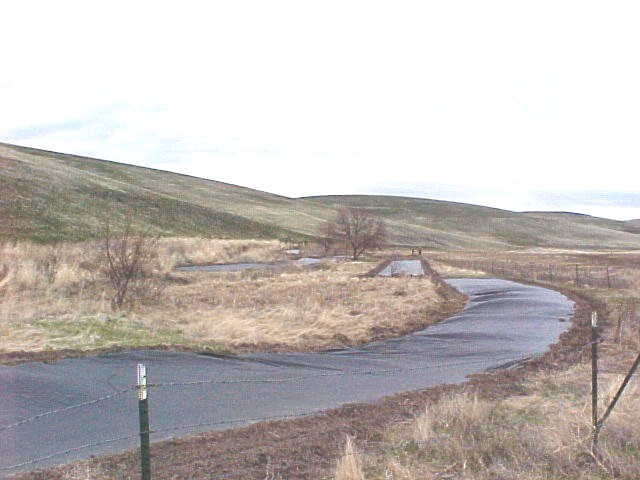
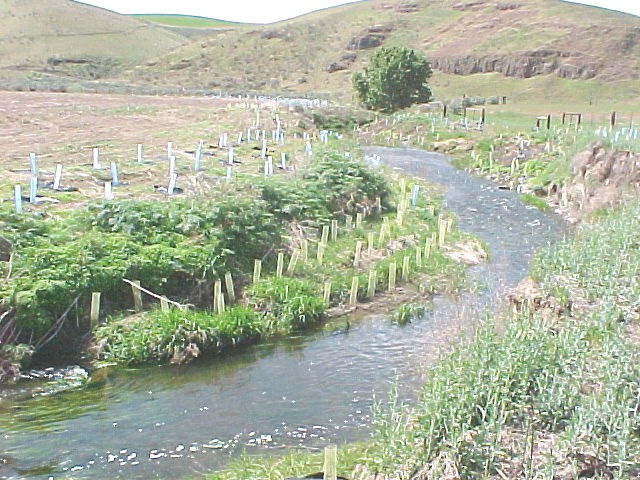
Trees and shrubs are planted along stream area on Hwy. 74 to help rehabilitate the stream bank.
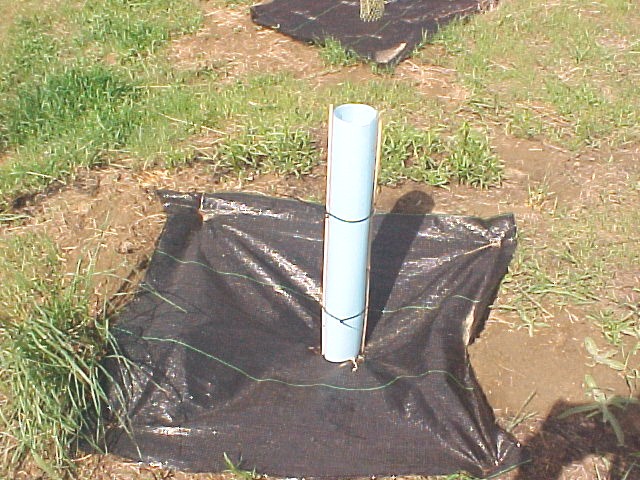
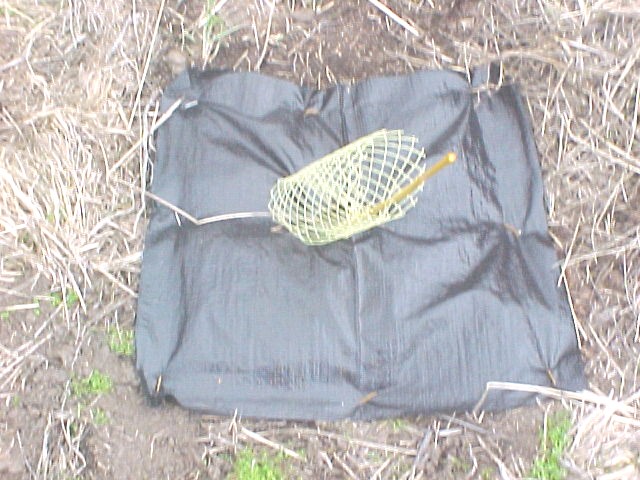
A black permeable mulch mat is laid down to help kill any weeds, as well as provide a concentrated water source for the plants. The plant is also surrounded by deer protectors, to help keep roots stable when the rest of the plant is grazed on.
The Continuous Conservation Reserve Program, which works to rehabilitate streams and wetland areas by planting trees and scrubs, has been recently planting along Hwy. 74 towards Pilot Rock.
The root systems of the trees and shrubs create a buffer along the streams, which is used to hold the soil in place, as well as improve water quality and quantity. The trees and shrubs themselves, once grown, also rebuild habitat areas for deer, birds and other animals. The water quality is improved by the fact that the trees help filter out contaminants before they reach the water. The quantity of water is increased because the roots hold water in the area longer, which helps to increase the water table.
Farmers and land owners, who are part of the �buffer� program, by allowing their lands to be planted on, also benefit. Through the program, when an owner wants to build a fence along the area, or create a trough to water animals, part of the project is funded by the CCRP.
Plantings in the area were first put down around March of 2003. More were added this past spring as the contractors brought in the product. Trees and scrubs are tailored to the area, whether it is a wet climate or dry. In our area, trees such as Willow, Cottonwood, Dogwood, Alder and Pine were used and scrubs including, rose bush, service berry and blue elderberry were added.
Information and pictures courtesy of Heppner Gazette Times � used with permission.