|
|
|
In 2004 it was made legal to pack a pistol when archery hunting and made it legal to own semi-automatic firearms and the clips that hold more than 10 rounds, that is just a couple of the things groups like the NRA and the OHA did in 2004.
__________________________________
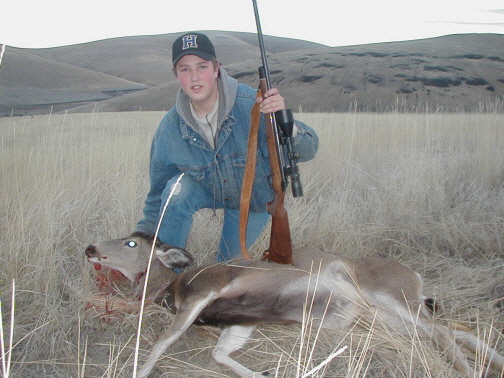
MULE DEER:
North East Oregon is home to some of Oregon's best mule deer
hunting. The Heppner unit seems to lead the way here, followed by Sled
Springs, Murders Creek, Sumpter, and Chesnimnus units. For some high
country mule deer hunting.
__________________________________
BLACK BEAR:
The bear hunting in north east can be excellent. The Snake River, Pine
Creek, Wenaha, Sled Springs, Chesnimnus, Minam, and Imnaha units all
have high numbers of bears. Spot and stalk by glassing canyon walls and
open hillsides is the most common hunting method.
__________________________________
ANTELOPE:
There are also some antelope tags for this area of Oregon. The Beulah
unit leads the way in numbers followed by Murders Creek, Sumpter,
Keating, and Lookout Mt. Look in sage flats and foothills to find these
animals.
__________________________________
BIGHORN SHEEP:
For some BIG Bighorn sheep, north east Oregon has it. The Snake
River Unit probably has the most sheep folowd by Wenaha, SledSprings/Chesnimnus, Hurricane Divide and
Bear Creek. These hunts are in some steep, remote country that is not easy to get into or hunt.
__________________________________
COUGAR:
From the pioneer days to the mid 1960's cougar were very heavily persecuted throughout Oregon. There was a bounty on cougar in most counties of the state. This heavy persecution resulted in near elimination of cougar from the state. In 1961 the Legislature eliminated the bounty program and in 1967 reclassified cougar from an unprotected predator to a game animal under the management of the Oregon Department of Fish & Wildlife. As a game animal with carefully regulated harvest quotas, cougar made a dramatic recovery and are now abundant throughout much of the state.
__________________________________
WILD TURKEY:
Several populations are established throughout Oregon and distribution continues to spread. Highest densities are present on the east slopes of Mount Hood, Douglas, and Jackson Counties, lower densities are found in many other areas. Yellow pine and white oak woodlands are important to turkeys, furnishing a seed crop for food as well as roosting sites. The birds seem to do best where scrub oak also is present. Grasses supply an important share of the diet and are eaten at all seasons of the year. Since the turkey possesses excellent eyesight and is difficult to approach unseen, calling birds to the hunter is one of the most effective techniques. Hunting gobblers during the spring is almost entirely dependent on calling.
__________________________________
|
 |
|


