

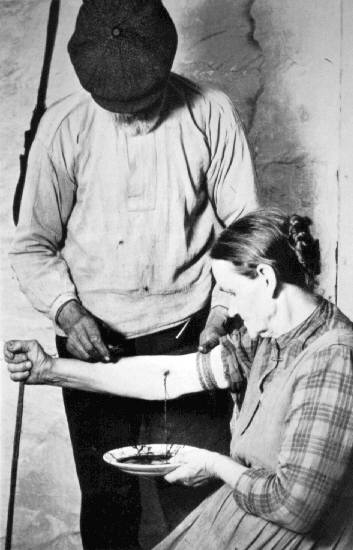
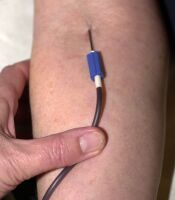
الفصد
 |
 |
" شرطة محجم " ما قد يتناول الفصد، وأيضا فالحجم في البلاد الحارة أنجح من الفصد،
والفصد في البلاد التي ليست بحارة أنجح من الحجم .
مواضع الفصد فقد حصروها في أربعة وثلاثين وريدا:
أثنى عشر في الرأس كاليافوخ والخششاء والأرنبة والودجين،
واثنى عشر في اليدين كالكحل والباسليق،
وثمانية في الرجلين كعرق النساء، والاسيلم وحيث يربط الزند فوق الكوع بأربع أصابع
أما الشرايين فتارة تفصد وتارة تبتر وتارة تسل وتارة تكوى
|
عروق الرأس |
عرق الجبهة |
المنتصب ما بين الحاجبين |
ينفع من ثقل العينين والصداع الدائم |
|
الشَّأْنَانِ |
، وهُمَا عِرْقَانِ
يَنْحَدِرَانِ مِنْهُ إلى |
|
|
|
العرق الذي فوق الهامة |
|
ينفع [ من ] الشقيقة وقروح الرأس |
|
|
العرقان الملويان على الصدغين |
|
وفصدهما ينفع من الرمد والدمعة وجرب الأجفان وبثورها |
|
|
عرقان خلف الأذنين |
|
لقطع النسل |
|
|
عروق الشفة |
|
ينفع من قروح الفم والقلاع وأوجاع اللثة وأورامها |
|
|
العروق التي تحت اللسان |
|
ينفع من الخوانيق وأورام اللوزتين |
|
|
اللِّسانِ |
الصُّرَدَانُ |
|
|
|
الذَّقَنِ |
الذَّاقِنُ |
|
|
|
النضرين |
|
مفيد في ( الرمد – وجع العينين ) |
|
|
عروق اليدين |
القيفال |
ُ في الجَانِبِ الوَحْشِيِّ
|
ينفع من علل الرأس والرقبة اذا كثر الدم او فسد |
|
الأكحل |
فصده خطر عظيم |
من الذراع الأيمن لليدين نافع من ( السوداء – البهق – الحمرة .– الرياح - البلغم ) |
|
|
الباسليق |
لباسِلِيقُ ، وَهُوَ عِنَد
المِرْفَقِ في الجَانِبِ الأنْسِيِّ مِمَّا |
من الذراع الأيمن نافع من ( الوهنة – وجع الصدر ) وفصد الذراع الأيسر نافع من ( الطحال – الرمد – وجع الوركين )
ينفع حرارة الكبد والطحال والرئة ومن الشوصة
وذات الجنب وسائر |
|
|
حبل الذراع |
يفصد موربا |
|
|
|
باطنِ الذّراع |
الرَّوَاهِشُ |
|
|
|
ظَاهِرالذراع |
النَّواشِرُ |
|
|
|
|
|
|
|
|
العَضُدِ |
الأبْجَلُ |
|
|
|
ظَاهِرِ الكَف |
ِّ الأشَاجِعُ |
|
|
|
الساعِدِ |
حَبْلُ الذِّرَاعِ |
|
|
|
بَيْنَ الخِنْصَر والبِنْصِرِ |
الأسَيْلِمُ |
يفصد طولا
|
|
|
الإبطي |
|
|
|
|
في العُنُقِ |
الوَرِيدُ |
|
|
|
|
والأخْدَعُ
وهو َ شُعْبَةٌ منَ الوَرِيدِ ، |
|
لوجع الطحال والربو . (
انظر نيل الاوطار باب ما جاء في الحجامة |
|
النَحْر |
ِالنَّاحر |
|
|
|
أسْفَلِ البَطْن |
ِ الحَالِبُ |
|
|
|
القَلْبِ |
الوَتِينُ |
|
|
|
|
النِّيَاطُ |
|
|
|
الأبْهَرَانِ |
|
|
|
|
عروق البدن |
عرق موضوع على الكبد |
|
فصد الأيمن منهما للاستسقاء |
|
عرق موضوع على الطحال |
|
والأيسر ينفع للطحال . |
|
|
عروق الرجلين |
عرق النسا
|
ويفصد عند الجانب الوحشي من الكعب
|
في النقرس والدوالي وداء الفيل
|
|
الشعبة التي بين الخنصر والبنصر[ من القدم ]
|
|
من اليد اليمني نافع من ( ضيق النفس ) ومن اليد اليسرى نافع من ( الطحال – يصفي اللون ) |
|
|
عرق الصافن |
وهو على الجانب الأيسر [ من الساق ]
|
ينفع من البواسير , ويدر الطمث , وينفع الأعضاء التي تحت الكبد
|
|
|
الفَخِذِ |
النَّسَا |
|
|
|
العَجُزِ |
الفَائِلُ |
|
|
|
السَّاق |
ِ الصَّافِنُ |
|
|
|
العرق الذي خلف العرقوب |
وكأنه شعبة من الصافن |
ومنفعة فصده مثل الصافن
|
|
|
عرق مأبض |
[ باطن الركبة ] |
مثل الصافن في النفع
|
|
|
الطائر |
وهو على وجه الرجل من كلا الرجلين |
مفيد في ( الشقيقة – ريح الكلى ) |
|
|
العروق والشرايين |
الصغار والبعيدة من القلب |
|
|
|
|
الشرايين الكبار القريبة الوضع من القلب |
شريان < 95 > الصدغين |
|
|
|
|
والشريانان اللذان بين الإبهام والسبابة |
|
Summary of Peripheral Points for Blood-Letting
|
Point Name |
Distribution of Blood Vessels |
|
Indications |
|
shixuan |
at the fingertips, network of the proper palmar digital arteries and veins |
|
fever, coma, sunstroke, unconsciousness, numbness of the hands and feet |
|
Shierjing |
behind the corner of the fingernails, network of the proper palmar digital arteries and veins |
|
fever, coma, sore throat, tonsillitis |
|
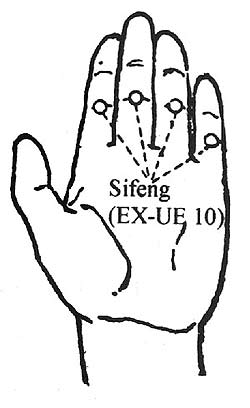
sifeng |
network of the proper palmar digital arteries and veins |
|
infantile malnutrition, dyspepsia, pertussis (squeeze out yellowish-white fluid) |
|
Yuji (LU-10) |
reflux branch of the cephalic vein in the thumb |
|
fever, sore throat, tonsillitis |
|
Bafeng and qiduan |
dorsal venous network of the foot |
|
swelling, pain and numbness of the foot, snakebite |
|
baxie |
dorsal subcutaneous network of hand |
|
swelling, pain and numbness of the hand, snakebite |
|
Ear apex, supratragic apex, and earback |
posterior auricular artery and vein |
|
fever, tonsillitis, red and swollen eyes, hypertension |
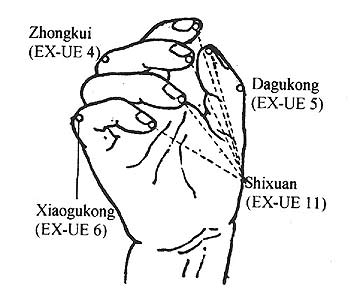
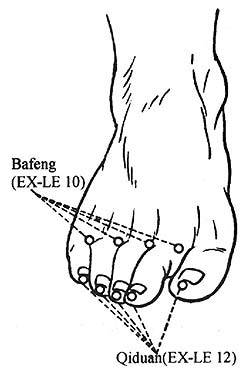
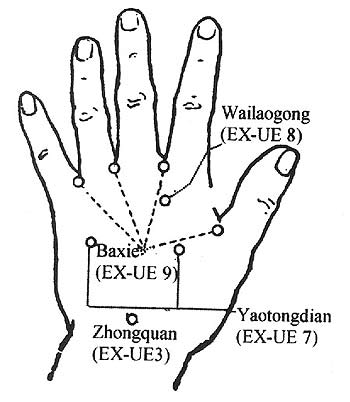
The terminal jing points, known by some as ting points, are also pricked to let out blood. These "well" points, of which there are 12, are mainly located at the tips of the fingers and toes (the exception is KI-1); below are some of the indications for bleeding these points:
-
Shaoshang ) LU-11: thumb, radial side): sore throat, epistaxis, pain of fingers, febrile disease, mental disorders, loss of consciousness.
-
Shangyang (LI-1: index finger, radial side): toothache, sore throat, numbness of fingers, febrile disease, loss of consciousness.
-
Zhongchong (PC-9: middle finger, at fingertip): cardiac pain, irritability, loss of consciousness, aphasia with tongue stiffness, febrile disease, heat stroke, infantile convulsions, feverish sensation of the palm.
-
Guanchong (TB-1: ring finger, ulnar side): headache, redness of eyes, sore throat, stiffness of the tongue, febrile disease, irritability.
-
Shaochong (HT-9: little finger, radial side): cardiac pain, pain in chest, mental disorder, febrile disease, loss of consciousness.
-
Shaoze (SI-1: little finger, ulnar side): febrile disease, loss of consciousness, sore throat, corneal disease.
-
Yinbai (SP-1 : big toe, medial side): abdominal distention, uterine bleeding, mental disorder, dream disturbed sleep, convulsions.
-
Dadin (LV-1: big toe, lateral side): prolapse of uterus, hernia, uterine bleeding, enuresis.
-
Lidui (ST-45: 2nd toe, lateral side): facial swelling, toothache, distending sensation of chest and abdomen, cold in leg and foot, febrile disease, dream disturbed sleep, mental confusion.
-
Yonguqan (KI-1: sole of foot, between metatarsals 2-3): pain in vertex of the head, dizziness, blurring of vision, sore throat, aphonia, dysuria, dyschesia, infantile convulsion, loss of consciousness, feverish sensation in the sole.
-
Qiaoyin (GB-44: 4th toe, lateral side): one-sided headache, ophthalmalgia, deafness, pain in the hypochondriac region, dream disturbed sleep, febrile disease
-
Zhiyin (BL-67: little toe, lateral side): headache, nasal obstruction, epistaxis, ophthalmalgia, feverish sensation in the sole.
Finally, there is pricking of the ear apex (tubercle) to let out blood, as a similar basic technique. All these peripheral point bleeding treatments are used for heat and excess syndromes. As an example, treating the ear apex by bloodletting has been recommended to treat hordeolum, an eye infection (8).
Summary of Body Points for Blood-letting
This table does not include the point dazhui (GV-14), which is also often used in blood-letting, especially accompanied by cupping. Dazhui has he indications of treating various heat syndromes and fevers, and epilepsy.
|
Point Name |
Distribution of Blood Vessels |
Indications |
|
Chizi (LU-5) |
cephalic vein |
sunstroke, acute vomiting and diarrhea |
|
Quze (PC-3) |
cephalic vein |
sunstroke, suffocating feeling in the chest, fidgets |
|
Weizhong (BL-40) |
great and small saphenous veins of the popliteal fossa |
sunstroke, acute vomiting and diarrhea, systremma |
|
Yintang |
branches of the medial frontal artery and vein |
headache, dizziness, red and swollen eyes, rhinitis |
|
Taiyang |
venous plexus inside temporal fascia |
headache, red and swollen eyes |
|
Baihui (GV-20) |
anastomotic network of the left and right superficial temporal artery and vein and occipital artery and vein |
fever, tonsillitis, red and swollen eyes, hypertension |
|
jinjin and yuye |
lingual vein |
apoplexy, stiff tongue, and stuttering |
