



















| |
|
Tip: click on picture of book with green border for
larger view, use the back button on your browser to return to this page.
Also, click on the Amazon.com logo or the Barnes and Noble.com logo to buy
that book!
|
|
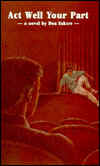
Act Well Your Part
by Don Sakers
At first Keith Graff dislikes his new school,
Oak Grove High. He misses his old friends, and wonders if he'll
ever fit in. Then, he joins the school's drama club, where he
meets the boyish Brian Davenport. Young love, fag bashing and
sweet revenge.
 
|
|
|
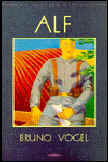
Alf
by
Bruno Vogel
The story of a friendship between two boys at a
Berlin prep school, Felix and Alf. Fearful of the sexual side of
their relationship, Alf enlists in the German army, and his
letters from the front radicalize his friend, who becomes an
agitator against the war.
|
|
|
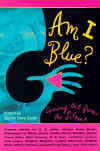
Am I Blue? Coming out from the Silence
by
Marion Dane Bauer
Teenagers are often confused
about their sexual identity, and this confusion often puts them
at risk. To combat this dilemma, sixteen prominent young adult
authors offer original short stories that explore aspects of
growing up lesbian or gay or with lesbian or gay parents.
|
|
|
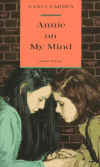
Annie on my Mind
by
Nancy Garden
A pensive story of love between women that
earned high praise from all corners. Chosen by the American
Library Association as one of the Best of the Best Books for Young
Adults,1970-1982. Tells us what it feels like to be a young woman
who is just coming to terms with her lesbianism. Clearly written,
consistent, lyrical, and best of all, believable.
|
|
|
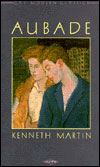
Aubade
by
Kenneth Martin
When it was first published in 1957, this novel
created a storm of controversy with its frank revelations about
adolescent homosexual feelings and influenced many major figures
of the time. Written in the first person by a sixteen-year-old
Irish boy, it deals uncompromisingly with the early homosexual
love affair of a young man. With a new introduction by the author.
|
|
|
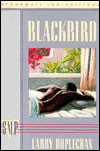
Blackbird
by Larry Duplechan
It was a month to remember for Johnnie Ray
Rousseau, a gay black high school boy: it was the month Todd
Waterson, high-school hero and all-around hunk, got the baptist
minister's daughter pregnant, the month sweet Cherie Barker, his
girlfriend, decided the time had come for them to make love, the
month he met Marshall MacNeill, surely the sexiest man ever to
walk the earth. And, of course, the month of his exorcism.
|
|
|
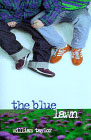
The Blue Lawn
by William Taylor
In this striking departure for New
Zealand humorist William Taylor (Agnes the Sheep), David and Theo
are schoolmates whose mutual attraction is in turn denied,
acknowledged, and deferred. Like Ursula LeGuin's Very Far Away
from Anywhere Else, this is a love story about the choice of
abstinence, making the passion unfulfilled but all the more
aching. "If I touched you right now, well, first off, I
wouldn't know much what to do and, second, I wouldn't know how to
stop doing what it is I didn't know what to do if I did get
started," says David in a remarkable evocation of the barely
articulated stumblings of first love.
|
|
|
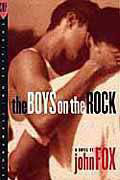
by John Fox
The story of Billy Connors, high school
student, swim team member and all-around regular guy who has to
face the fact that he's gay.
|
|
|
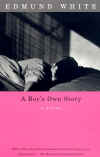
A Boy's Own Story
by
Edmund White
This is the autobiographical story of the
boyhood of this famous gay author. It tells the story of his late
childhood and early adolescence. The dominant feature of White's
story is his discovery of his gayness, and his coming to terms
with it.
|
|
|
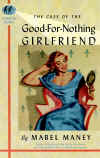
Case of the Good-For-Nothing
Girlfriend: A Nancy Clue Mystery
by Mabel Maney and published by Cleis Press
The sequel to The Case of the Not-So-Nice Nurse
is another hoot, a lampooning of girls' fiction of the past full
of hapless, do-gooding detectives with "keen sleuthing
abilities, up-to-the-minute fashion sense, and gracious
finishing-school manners." Girlfriend finds our hapless
heroine, Nancy Clue, racing home to River Depths, Illinois, to
confess the murder of her father, prominent attorney Carson Clue;
expose the terrible truth about him; and free Hannah Gruel, the
selfless housekeeper who has shouldered the blame. With Nancy is
the love of her life, nurse Cherry Aimless, whose wardrobe may be
smaller than Nancy's but whose most treasured outfit is her
nurse's whites complete with "cunning cape and perky
cap." With a honey like Cherry, who is always careful to keep
an ample supply of freshly starched, white linen handkerchiefs in
her seasonally appropriate handbag, we know Nancy can't miss. Nor,
with butch ex-con Midge and her perfectly lipsticked girlfriend,
Velma, along for the ride, does this hilarious, dyke-ish caper.
|
|
|
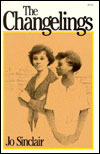
Changelings
by
Jo Sinclair
Two teenage girls, one Jewish and one black,
forge a friendship as their neighborhood seethes with racial
strife. This novel shows how such struggles affect younger
generations, whose survival lies in their power to love.
|
|
|
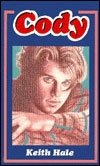
Cody
by
Keith Hale
This novel explores a different type of
friendship where the lines between straight and gay blur, where
two minds merge, making each one whole in the process. Trotsky, as
he is known to his friends, feels it as love. But what does Cody
feel? A teen coming out classic.
|
|
|
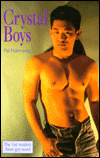
Crystal Boys
by Pai Hsien-yung
The first Chinese novel with a gay theme made
into the film "Outcasts." Cast out from his family after
coming out, A-qing, the adolescent hero, drifts into a life of
hustling among the buoliquan, or "glass community"-
Taiwanese for the gay community in which individuals are called
"crystal boys."
|
|
|
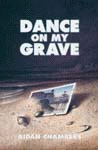
Dance on My Grave
by Aidan Chambers
Sixteen-year-old Hal realizes he is gay and has
a wonderful summer romance with Barry, in a positive story about
homosexuality and falling in love for the first time. Chambers
tells the story of a homosexual relationship in which one of the
partners is dominant and that ends in tragedy. Told by Hal, the
younger and weaker of the two, the book begins dramatically with a
newspaper clipping: Halhas been charged with 'wilful damage' for
'interfering with a grave.' Part of the story is told by the notes
of a social worker, part by Hal in retrospect, and most of it by
Hal as a running narrative. Chambers' style is often staccato,
often introspective; this is not an easy book to read. What should
appeal to readers are the effective communication of deep and
often anguished feelings, the perceptive depiction of
relationships, and the depth and consistency of characterization.
|
|
|
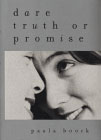
Dare Truth or Promise
by Paula Boock and published by Houghton Mifflin
Willa and Louie could not be more different.
Louie, who wants to be a lawyer, is an outstanding student and a
prefect at her New Zealand high school. Willa lives in a pub and
just wants to get through her exams so she can become a chef. But
they are immediately and completely attracted to one another when
they first meet as employees at a fast-food restaurant, and they
soon fall in love. Louie's mother suspects the affair and orders
her daughter to stop seeing Willa. Unwilling to defy her family,
Louie seeks counsel from an understanding priest at her church and
finally comes to accept her sexuality and her love for Willa.
Boock's characters are lively and believable; even Louie's mother
is multidimensional. Like M. E. Kerr's Deliver Us from Evie
(1994), this is a heartening novel in which the lesbian lovers
stay together despite family and societal objections.
|
|
|
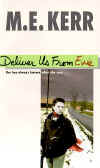
Deliver us from Evie
by M.E. Kerr
Here, finally, is a challenger to Annie on My
Mind. This well crafted, interesting, and believable novel
features a midwestern farm family with a lesbian daughter. Kerr
creates a character who knows who she is and feels at home in her
difference. Evie's younger brother Parr narrates the story. Parr
plays a key role in the action that revolves around how the town
deals with Evie's love for the wealthy daughter of the town's most
powerful man. A real refreshing heroine. I'm still so high on this
book I'm not sure how to annotate it. I'll give you an excerpt:
"Mom got up and rinsed out her coffee cup. She said, 'I just
hope Evie has the name without the game. It's bad enough to look
that way, but it's awful to look it and actually be it....Then
you're a stereotype. You're what everybody's always thought one of
those women was like.' 'I'm what everybody thinks a farm boy's
like. I'm driving around on tractors, going to 4-H, planting in
the spring, harvesting in the fall- what's the difference?' 'The
difference is you're not against the law, Parr. And the church
doesn't call you a sinner.' 'Maybe something's wrong with the
law.'
|
|
|
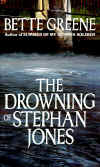
Drowning of Stephan Jones
by
Bette Greene and published by Starfire Press
When a gay couple moves to the artsy community
near town, Carla is not the least bit offended. However, Andy, the
boy she adores, wages war against the men. A tragic night of
violence leads Carla to realize that Andy's heinous actions can no
longer be denied, and she must stand up for what she believes
in.As her mother battles a citizens' group that wants to ban all
"anti-Christian" literature from the public library,
Carla faces her own battle of torn loyalties when her boyfriend
starts persecuting the homosexual owners of an antiques shop.
|
|
|
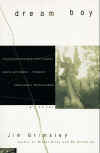
Dream Boy
by Jim Grimsley
In a corner of the rural South seething with
hatred and petty meanness, Nathan and Roy must keep their love
hidden from their friends, church, and families. That comes easily
to Nathan, who is used to keeping secrets. But he is afraid of the
secret he has always kept, even from Roy--the terrible truth about
his father that makes his life impossible.
|
|
|
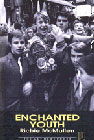
Enchanted Youth
by
Richie McMullen and published by Gay Men's Press
In this sensitive, revealing memoir, McMullen
recounts his year as a
London "rent boy," a prostitute engaging in homosexual
acts. In 1958, when he's 15, prostitution offers McMullen an
escape from his abusive father (described in his earlier Enchanted
Boy ) and the "cold hearted" city of Liverpool. He
ends up in "The Meat Rack" at Piccadilly Circus, where
boys hang around "like marketable produce in a butcher's
shop," waiting for customers.
|
|
|
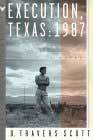
Execution, Texas: 1987
by D. Travers Scott
A sharply original coming-of-age story about a
17-year-old in the small town of Execution, Texas, whose struggles
with his identity are complicated and complemented by those around
him. This story introduces a startlingly original new voice that
shows a depth and complexity of character, time, and place that
far exceed expectations of a debut novel.
|
|
|
Entries from a Hot Pink
Notebook
by
Todd D. Brown and published by Washington Square Press
What if Holden Caulfield were coming of
age--and coming out--in the Reagan years? This deft, funny, and
irresistible debut novel puts an appealingly fresh spin on what
it's like to be fourteen, freaked out by life, and never more
eager to see what might happen next
|
|
|
The Front Runner
by
Patricia Nell Warren
The Front Runner was
a breakthrough gay novel, selling more than 10 million copies. The
love story between Olympic runner Billy Sive and his coach, Harlan
Brown, reflects the optimism of the early days of gay liberation,
before Bowers vs. Hardwick, before "Don't ask, don't
tell," before the rise of the religious right. Twenty-two
years later, it remains a sensitive, well-paced depiction of male
love with a cruelly dramatic climax. If Sive seemed a little too
good-natured to be credible in 1974, he feels almost alien in the
disillusioned, divided world of the 1990s.
|
|
|
Funny Boy:
A Novel
by Shyam Selvadurai and published by Harvest Books
Set in Ceylon, this book talks about the
growing pains of one boy who finds, at a young age, that he is
attracted more to other boys than he is girls. It's not about
limitless sexual tension, and it's not about public school
buggery. It is, instead, a poignant and troubling tale of a boy
coming to terms with himself and how he handles the world around
him. Children, if you have ever noticed, can be frightfully cruel
at times.
|
|
|
Getting Off Clean
by Timothy Murphy
Gay male coming-out novels usually deal more
with the personal than with the political, but Getting Off Clean
encompasses both. Eric Fitzpatrick is a bright, high school senior
in Mendham, a working-class town in Massachusetts. He is
determined to fit in, be popular, and go to college. The only
problem is that he is gay and just coming out--a problem
complicated when he begins having an affair with Brooks Tremont, a
black student who attends a prestigious prep school outside of
town. When racial violence breaks out in Mendham, both Eric and
Brooks have to make some serious choices. Getting Off Clean,
deftly written and incredibly smart, challenges us to think in new
ways about sexuality, class, race, and the accomplishments of gay
fiction.
|
|
|
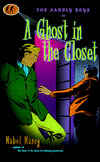
A Ghost in the Closet: A
Hardly Boys Mystery
by Mabel Maney
This hoot of a book works wonders--it's been
known to cure migraines, lift depressions, and spur readers on to
culinary triumphs like Salisbury Steak. The formula: 1 part Nancy
Drew, 1 part Women's Barracks, and a sly dash of ever-so-gay
humor. Maney's spot-on recreation of the original series' diction
is half the fun. In-jokes abound: butch-femme couple Midge and
Velma are my favorites, although Uncle Nelly Hardly is a close
second. Maney is a genius, and these books are destined to hold
pride of place in every gay and lesbian book collection.
|
|
|
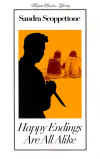
Happy Endings are All Alike
by Sandra Scoppettone
It was the last summer before college, and
Janet and Peggy were in love. But as Janet said, "It always
seems as if when something great happens, then something lousy
happens soon after." Soon her worst fears turned into brute
reality.
|
|
|
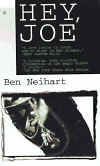
Hey Joe
by Ben Neihart
A gay youth seeking love in New Orleans
stumbles into a conspiracy to alter a jury verdict in this
atmospheric novel by a new voice in American fiction. Neihart
beautifully captures the colorful, seamy nightlife of "The
Big Easy" while exploring the pain and elation of young love.
|
|
|
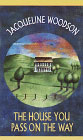
The House you Pass on the Way
by Jacqueline Woodson
Woodson takes the gay identity story far beyond
the simplistic problem novel and connects it with every outsider's
coming-of-age. Staggerlee is happy in her interracial family, but
she is a loner at school and in her African American community,
and she longs for a friend. Somehow she knows not to talk about
the kiss she shared with a girl in her class. Then her girl cousin
Trout comes to visit and they fall in love, but when Trout returns
home and finds a boyfriend, Staggerlee is alone again. There's a
lot of family history framing the central incident of the story
(including famous grandparents who were killed by a bomb during a
civil rights demonstration), and it's not always clear why, in
such a short novel, we have to be told so much of the past before
we can get to the immediate drama of the present. What many teens
will relate to is the uncertainty, the sense that Staggerlee
doesn't know who she is becoming and where her journey will take
her.
|
|
|
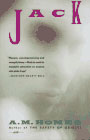
Jack
by
A.M. Homes
Fifteen-year-old
Jack wants everyone to be happy, including himself. One day his
father takes him out in the middle of a lake in a little
rowboat, and says something that undoes his world. He tells him
he's fallen in love with another man; he's gay. Jack can't
believe it, and he can't believe it makes no difference. And
somehow everybody knows. An insightful, endearing, and often
funny novel about a boy struggling to accept his father and
himself.
|
|
|
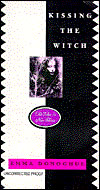
Kissing
the Witch: Old Tales in New Skins
by
Emma Donoghue
Lilting,
timeless fairy tales have a way of sneaking inside our spirits,
disturbing our hum-drum lives, making us ache for deeper
meaning--no matter how old we are. These fairy tales, especially,
will appeal to modern, mature teens because the stories have been
reinvented, re-enchanted with new life. Casting spells on classic
yarns, Emma Donoghue lets Cinderella tell her own story about
meeting the Prince and that darn slipper. Snow White and Rapunzel
just might shock the pants off of you when you settle down to hear
their side of things.
|
|
|
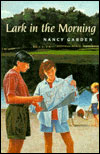
Lark
in the Morning
by Nancy Garden and published by Farrar Straus & Giroux
Gillian's
diary is stolen and in it she confesses her love for Suzanne, who
shares the same feelings.When Gill tracks down the thieves, they
are a couple of young runaways escaping their abusive parents.
Respecting their fear she decides to help them but soon discovers
she may have taken on too much. Teenage Gillian's summer is filled
with guilty secrets as she searches for a way to help two runaway
children hiding out on her family's vacation property and also let
her parents know that she and her childhood girlfriend have fallen
in love.
|
|
|
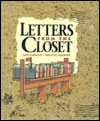
Letters
from the Closet
by
Tony Ferrante & Paulette Jacobson and published by Tzedakah
Publications
In
this cleverly crafted book filled with colorful graphics, two
fictional characters, Katie and Adam, communicate the "coming
out" experience through soul-searching letters, journal
entries, and postcards.
|
|
|
Man
Without a Face
by
Isabelle Holland
"Charles
Norstadt...is a revelation and a joy. So many young people in
books and films are defeated and disillusioned by sexual
ambiguity, broken homes, the drug scene and the emptiness of
formal education, but this boy plows into them, thrashes
hectically through his fourteenth year and comes to terms with
himself and his world. He's an endearing and funny boy, Isabelle
Holland has written a beautiful book about him. -Tad Mosel.
Man
Without a Face
by
Isabelle Holland
"Charles
Norstadt...is a revelation and a joy. So many young people in
books and films are defeated and disillusioned by sexual
ambiguity, broken homes, the drug scene and the emptiness of
formal education, but this boy plows into them, thrashes
hectically through his fourteenth year and comes to terms with
himself and his world. He's an endearing and funny boy, Isabelle
Holland has written a beautiful book about him. -Tad Mosel.
|
|
|
Milkman's
On His Way
by David Rees and published by
All
during his school years, Ewan knows he gets a special feeling from
being with other guys, but until he unexpectedly lands in bed with
his best friend, he doesn't know what it all means. This book
depicts one young man's gradual process of coming out.
|
|
|
My
Father's Scar
by
Michael Cart and published by St. Martin's Press
Through
a series of flashbacks, Andy reflects on his childhood and
adolescence and comes to recognize and accept his homosexuality.
Most of the characters are two-dimensional, representing
stereotypical responses to homosexuality. Cart explores themes of
violence, masculinity, prejudice, and love with limited success,
but Andy makes a sympathetic focus.
|
|
|
My Worst
Date
by David Leddick and published by St. Martins Press
Like Francesca Lia Block's
Weetzie Bat, My Worst Date radiates a remarkably trendy,
nineties-like verve as its plot about two high-schoolers--a
straight girl and a gay boy who are best friends--moves at
breakneck speed. But unlike Weetzie Bat, it is not a young adult
novel. The boy, a very self-reliant gay youngster, falls in love
(and has a hot sexual affair) with a super good-looking,
thirtysomething real estate developer and former gay porn actor
who just happens to be having an affair with the boy's mother,
too. The girl, very hip, gives advice as sage as any of Ann
Landers' and is also having an affair, with her pal's pal's former
acting partner! As if these potentially comic elements weren't
enough, the lad's dad, whom he hasn't seen since he was three,
tries to pick him up in the gay strip joint where he is earning
his college fund. Wit, plot, and language conspire to give this
romp surefire appeal to a very downtown crowd.
|
|
|
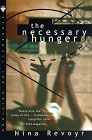
The
Necessary Hunger
by Nina Revoyr
Nancy Takahiro is a star
high school basketball player who is smitten by a new player,
Raina Webber. When Nancy's father falls in love with Raina's
mother and the families move in together, Nancy's love for Raina
becomes positively excruciating. This novel grapples not only with
the awkwardness of adolescent love, but also with race: Nancy is
Asian American, Raina is African American. And if that's not
enough, it's full of information on college sport recruiting
techniques.
|
|
|
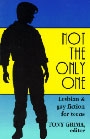
Not
the Only One: Lesbian and Gay Fiction for Teens
edited
by Tony Grima
The
quality of writing here can't match what's found in Bauer's Am
I Blue? None of these stories takes your breath away like
James Giblin's "Three Mondays in July" or makes you
laugh and think at the same time like Bruce Coville's campy
"Am I Blue?" Still, there's something to be said for the
ordinariness of the 21 pieces Grima has gathered in this roundup:
most have the feel of real life, with few loud and message-laden
declarations to get in the way.
|
|
|
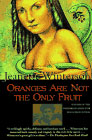
Oranges
are not the Only Fruit
by
Jeanette Winterson
Jeanette
is a bright and rebellious orphan who is adopted into an
evangelical household in the dour, industrial North of England and
finds herself embroidering grim religious mottoes and shaking her
little tambourine for Jesus. But as this budding missionary comes
of age, and comes to terms with her unorthodox sexuality, the
peculiar balance of her God-fearing household dissolves.
Jeanette's insistence on listening to the truths of her own heart
and mind - and on reporting them with wit and passion - makes for
an unforgettable chronicle of an eccentric, moving passage into
adulthood.
|
|

|
The
Silk Road
by Jane Summer
Home
is Hell--literally. Living in a New York suburb named Hell with a
mom committed to one-upwomanship, a dad defined by noncommittal
grunts from behind the newspaper, and an immature best galfriend
is bound to make a bright, questioning mid-teens girl restless.
Paige Bergman sees 1970s Hell in shades of gray, even without the
black-rimmed glasses she needs but hates to wear, and her
motorcycle-driving boyfriend, John, who is cute and Buddhist,
won't have sex with her. Good thing she notices a certain Buick
Skylark, because the driver is a stylish mystery woman whose
demeanor goes straight to Paige's heart--and other parts of her
anatomy. She finally meets the Woman of the Skylark when she
pinch-hit baby-sits a boy named Sean Gallagher: Fiona is his
mother. Paige becomes Sean's regular sitter, glad to be out of her
own home and earning good money, and more than glad to see Fiona.
Inevitably, the two grow closer, resulting in a memorable
coming-of-age in a debut novel.
|
|
|
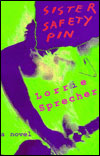
Sister
Safety Pin
by Lorrie Sprecher
Take
a wry, reflective 17-year-old, add the Sex Pistols, Sisterhood Is
Powerful and a generous handful of safety pins, and you'll have
Sprecher's delightful portrait of the artist as a young, punk
lesbian. Even before Melany's term paper is flunked (somehow
"Eve: Lesbian-Feminist Extraordinaire'' just doesn't cut it
with her Milton professor), she's got problems. Having escaped
from her family to a large, anonymous university, she finds
herself at loose ends. In punk rock, she discovers music that
mirrors her state of mind: ``It sounded as discordant as I felt'';
and at a local punk club, she meets Iso, a ``real lesbian''-more
precisely, she falls on top of her while drunkenly pogoing on a
table. Melany soon discovers that punk and lesbian-feminism don't
mix easily, and that Iso has her own agenda. As Melany travels
through school, relationships and her maturing sense of self and
purpose, Sprecher's first novel evokes the political and artistic
climate of the times through both the lyrics of established bands
and those written by Iso's sister, Janie. In Melany's ultimate
integration of her seemingly disparate concerns, Sprecher
convincingly demonstrates that punk and feminism indeed share some
essential methods and goals. Melany's search for personal and
political meaning and her growing sense of agency and
responsibility offer a welcome contrast to the all-too-common
destructive, nihilistic protagonists of many contemporary writers.
|
|
|
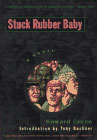
Stuck
Rubber Baby
by
Howard Cruse
A
truly eye-opening comic. The story is set in the South in the
early '60s and deals with homophobia, racism and the gay
subculture of that period. The art is absolutely beautiful; Cruse
is a master of the cross-hatching technique, which gives a certain
"texture" to his art work and brings his pages to life.
Stuck Rubber Baby is easily the most important comic book since
Art Spiegelman's Maus.
|
|
|
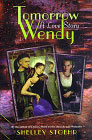
Tomorrow
Wendy: A Love Story
by
Shelley Stoehr
Author
Shelley Stoehr, who never seems to flinch at the grit of teenage
angst, succeeds again with Tomorrow Wendy, the story of an
unforgettable teen named Cary who finds herself obsessed with her
boyfriend's sister. As the obsession propels Cary to steal odd
bits and pieces from Wendy's room, Cary begins to wonder if,
perhaps, she might have a "thing" for Wendy. What's
really going on inside Cary's mind? Does she love Danny or his
sister? And what would it mean to be gay? Unfortunately, drugs and
manic dancing in underage nightclubs cloud Cary's mind even
further. The only person who seems to know what she may be feeling
is her best friend Rad, who is invisible to everyone else and who
talks only in song lyrics.
|
|
|
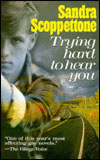
Trying
hard to hear you
by
Sandra Scoppettone
16
year old Camilla tells about a crucial summer in which her close
knit theater group discovers that two of their members are gay.
The reader is educated along with Camilla, but other members of
the group are less ready to change.
|
|
|
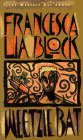
Weetzie
Bat
by
Francesca Lia Block
Weetzie
Bat, a novel about a punky flower child with a sweet caring
personality is amazingly fresh and surreally dramatic. Block
manages to pull off a (possibly) bad novel into a marvelous
fantasyland. One becomes attached to the characters, from Charlie
Bat to old Slinkster Dog, and loves every one. Block does an
amazing job of bringing the characters to life, while stil
posessing an amazing ability to question why someone or something
reacted in their own personal way. Weetzie Bat, an amazing novel
for all to read and enjoy.
|
|
|
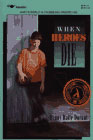
When
Heroes Die
by Penny Raife Durant
12
year old Gary Boyden idolizes his uncle Rob, a former basketball
star who is outgoing and took the place of Gary's father when he
ran off. But Rob's been sick lately,and Gary's mother reveals that
Rob is not only gay, but has AIDS. Soon Gary is forced into doubts
about his own sexuality, his relationship with his Uncle, and what
really constitutes a hero in people's eyes.
|
|
|
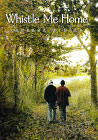
Whistle
Me Home
by
Barbara Wersba
Noli
is in love with the most beautiful boy in the world. T.J.'s face
is angelic, gently framed with long brown hair, and the two make
quite a pair: T.J., almost feminine, and Noli, a thin tomboy. They
dress like twins in backwards caps and big, thick, shapeless
coats; it's almost as if they are one person. Noli feels as though
she has found her soul mate, and yet, when they kiss, Noli can
tell that T.J. doesn't get excited. Here, Barbara Wersba writes a
challenging novel about teenage love, friendship, and the lies
that people tell themselves.
|
|
|
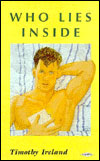
Who
Lies Inside?
by
Timothy Ireland
This
is Martin's story: "...The stranger seemed to have wriggled
under my skin, or had grown inside me all my eighteen years, only
now for some reason that stranger was not content to stay in the
shadows but wanted to step out into the light and be seen.Winner
of the Other Award, 1984.
|
|
|



