The Clan Stewart
Branches: Ardsheal, Achnacone, Fasnacloich, Invernahyle, Strathgarry
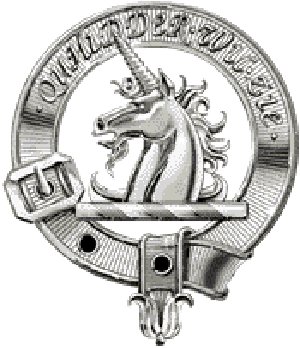
Badge: A unicorn's head, crined and armed, or.
Motto: Quhidder will zie (Whiter will ye)
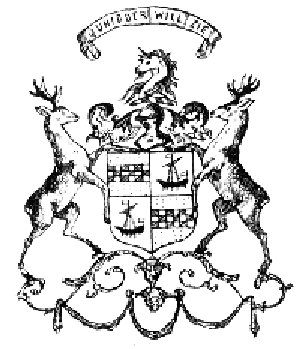
Coat of Arms
Tartans:
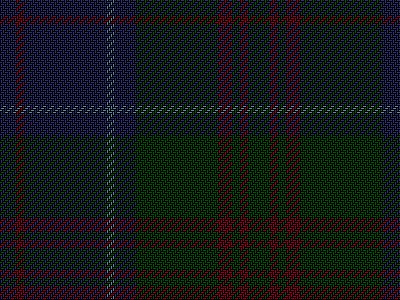
Stewart of Appin Red------------------------------------------------------
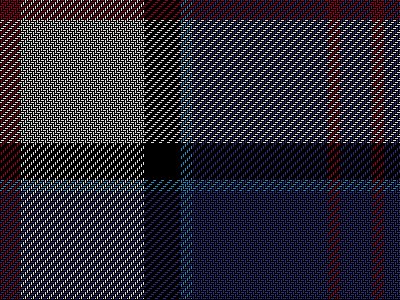
Stewart of Appin Dress---------------------------------------------------
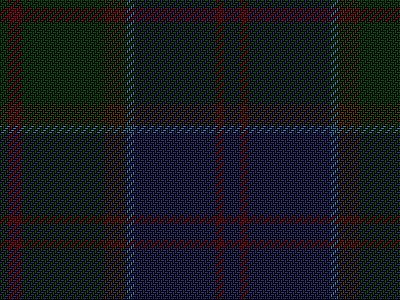 Stewart of Appin Hunting-----------------------------------------------
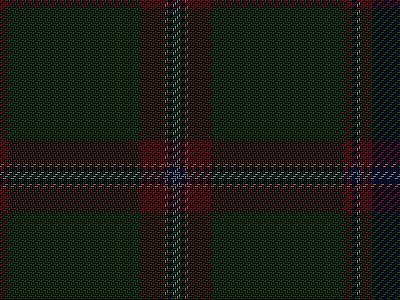
Stewart of Ardsheal---------------------------------------------------------
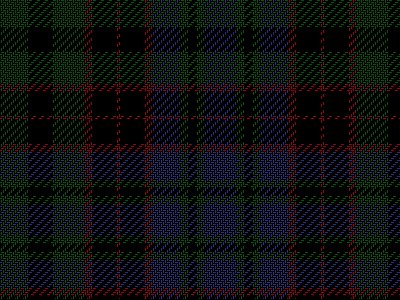
Stewart of Achnacone----------------------------------------------------
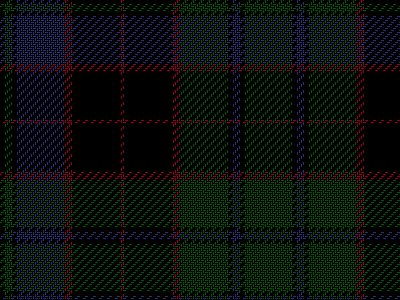
Stewart Old (worn by the Chief)---------------------------------------
Septs: Carmichael, Clay, Combich, Combie, Conlay, Donlevy, Leay, Levac,
Livingstone, Lorne, MacColl, MacCombe, McCombich, MacDonLeavy,
MacLea, MacLey, MacLeay, MacLew, MacMichael, MacNairn, MacNucator,
MacRob, Mitchell, Mitchelson, Robb, Walker
War Cry: Creag an Sgairbh ("The Cormant's Rock")
Plant Badge: Darag (Oak)
Clan Chief: Andrew Francis Stewart of Lorn, Appin and Ardsheal, 17th of
Appin, 12th of Ardsheal
The Appin Stewarts, the west highland branch of the royal surname Stewart,
descend from Sir James Stewart of Perston, 4th son of Sir John Stewart of
Bonkyl, second son of Alexander, the 4th High Steward of Scotland. Sir James
was the grandfather of John Stewart of Innermeath, who, through marriage to
Isabell NicDougall (MacDougall) of Lorn, became the first Stewart Lord of
Lorn. The Lordship of Lorn passed down for 2 more generations to Sir John
Stewart, the third Stewart Lord of Lorn.
Tradition tell us that in 1445, while returning to his seat at Dunstaffnage castle
from the great cattle tryst at Crieff, Sir John met and fell in love with the
daughter of MacLaren of Ardvech. Although married, he began an affaire with
his new love which, one year later produced a son. He was christened Dugald
and was to be the first Chief of the Stewarts of Appin.
After the death of his first wife, Sir John waited, for reasons we are unaware of
today, for 5 years until setting up the marriage between himself and Dugald's
mother, but it may have had something to do with the politics of the day. In 1463,
Sir John set a wedding date and sent for Dugald and his mother to come to
Dunstaffnage. Unknown to Sir John, there was a plot to kill the Lord of Lorn. It
is not fully known, but it is thought to have been set up by the Lord of the Isles
who was in a power struggle with the King of Scots, and who saw it as being in
his best interest to neutralize this powerful and loyal representative of the King in
the west highlands. The other plotters, which some feel included Colin Campbell,
Lord Argyll, Sir John's son-in-law, were primarily represented by Alan
MacCoul, the illegitimate grandson of an earlier MacDougall Chief. As the
lightly armed wedding party made it's way from Dunstaffnage to the small chapel
located approximately 180 yards from the castle walls, they were attacked by a
superior force lead by Alan MacCoul. Although better armed, MacCoul's force
was defeated, but not before mortally wounding Lord of Lorn. Sir John was
rushed into the chapel and MacCoul and his henchmen ran into and occupied the
deserted Dunstaffnage. With his last breath Sir John married Dugald's mother,
legitimizing him and making him the de jure Lord of Lorn. After receiving the
last rites, Sir John expired and a new chapter in west highland history was
opened.
Dugald gathered all the adherents of the Lord of Lorn and with the assistance of
the MacLarens laid siege to Dunstaffnage, but to no avail. Unbeknownst to
Dugald, Colin Campbell, Lord Argyll who seemed to have been involved in the
plot, raised a group of MacFarlanes to aid MacCoul in his struggle against the de
jure Lord of Lorn. MacCoul's men with the MacFarlanes met the men of Lorn
and MacLaren in what was to be known as the battle of Leac a dotha. It was a
fierce battle with both sides leaving the field with very heavy losses.
For the next few years Dugald, who had lost the tile of Lord of Lorn through the
treachery of his uncle Walter Stewart and Lord Argyll, but had retained Appin
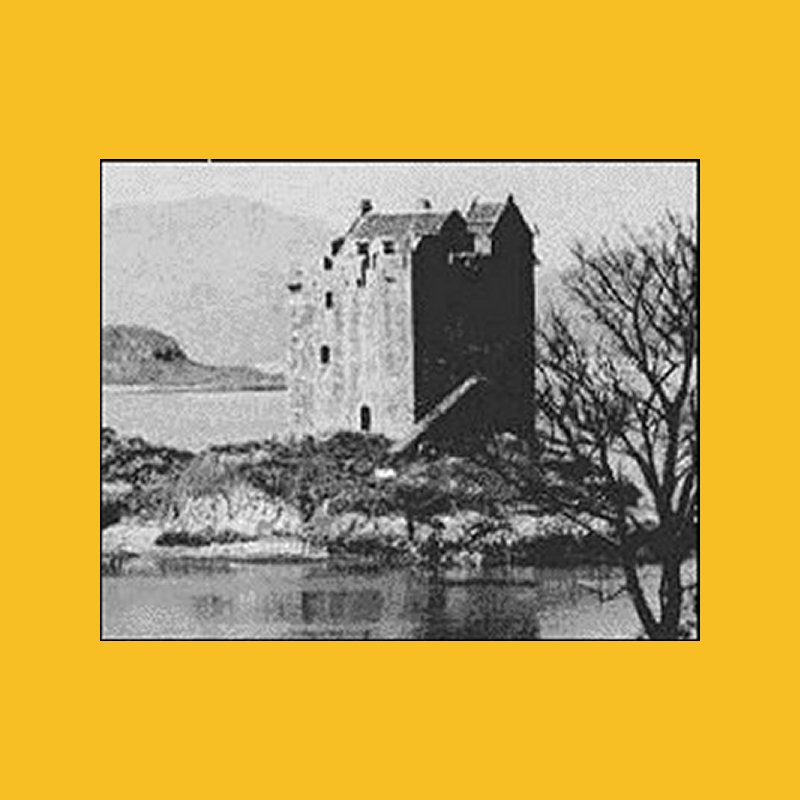
and Lismore, consolidated his power and fortified the hunting lodge of castle
Stalker on the Cormant's Rock in Loch Laich. He also ensured that the
Campbells were in no doubt about his displeasure over the loss of the Lordship of
Lorn by having the Campbell territory surrounding Appin regularly raided by our
clan. Finally in 1468 in a bid to finally destroy the power of Appin, Colin
Campbell and Walter Stewart, now recognized as the Lord of Lorn (but with no
authority in Lorn) organized a massive raid against Dugald and our clan. Alan
MacCoul was again involved and they met at what was to be know as the battle
of Stalc. Though loosing many men, Dugald virtually destroyed the military
strength of the MacFarlands (a destruction they were never to recover from) and
personally killed Alan MacCoul, his father's murderer. The battle solidified
Dugald's claim to Appin and the surrounding area which was formally granted to
him by King James III on the 14th of April 1470. Our clan was born.
The major branches or "tacks" of Appin stem from the sons of Alan Stewart, 3rd
of Appin. Originally they comprised John, 1st of Strathgarry, Dugald, 1st of
Achnacone, James, 1st of Fasnacloich and Alexander, 1st of Invernahyle.
Ardsheal, the branch our Chief hails from, was given to John, 1st of Ardsheal by
his father, John Stewart, 5th of Appin.
The adherents or "septs" of Appin stem from families that lived in Lorn prior to
the Stewarts gaining the Lordship. These were/are the MacColls, who descended
from Black Solomon, son of Coll, son of the Lord of the Isles, the MacLeays or
Livingstones (anglicized from MacLeay), who were reported to be on Lismore in
1130, but who's heritage is so old that know one really knows their beginnings
and the MacGillemichaels, or their anglicized form "Carmichael", who are also
so old that we can only guess. It is know that they were present in Appin prior to
the 13th century. The Combichs decended from a family nickname of north
Appin. The MacRobbs were/are actually Stewarts, descending from Robert, son
of Dugald, 1st of Appin. The MacInnes, originally from the area of Morvern,
settled in the area in the early 15th century.
The clan fought in many major engagements including the Civil Wars of the 17th
century and all the Jacobite Risings, ending, of course, with the battle of
Culloden, where 92 of our clan were killed and 65 wounded out of a fighting
force of approximately 300. Of these 69 of the dead were adherents of the Chief,
with 40 being wounded.
Today we are dispersed all round the globe, but are nobly represented by our
Chief, Andrew Francis Stewart of Lorn, Appin and Ardsheal. With the passing of
Stewart of Achnacone (a Chieftain of one of Appin's Cadet Branches) several
years ago, the mantle of keeper of our clan's history and traditions was passed to
Lady Sibyl Stewart of Appin, wife of our former Chief and mother of Andrew.
She still resides on traditional Stewart land in Appin.
Castle Dunnstaffnage