|
When
you begin the road construction, first bulldoze dirt and mud away. The
exposed soil surface, on which we now are able to build the road, is
called the "Terrace". On it various structural bearings are
placed and on top end with a surface course. Wearing layer can consist
of gravel or asphalt.
Recommendation for the different layers:
|
|
What are
the functions of the different building layers?
Wearing course
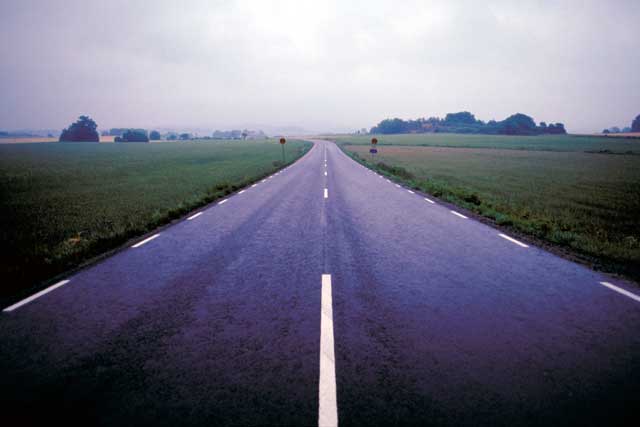
As the name suggests, the top layer is intended to run / wear out. For
more ways to use the asphalt, while smaller roads can be tarmac or plain
gravel / crushed materials will apply. Wear layer is replaced or supplemented
if necessary.
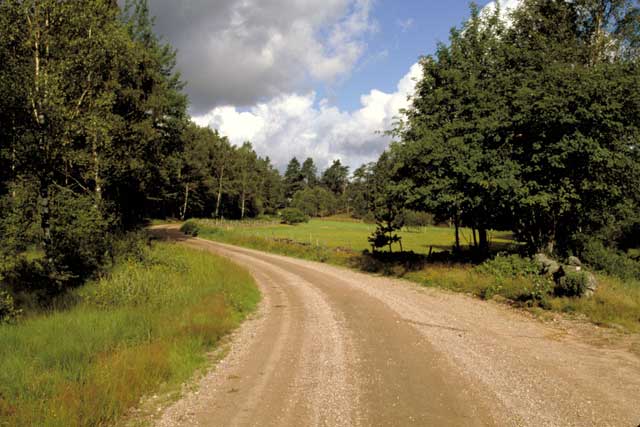
On gravel roads, the crushed rock's ability to bind the clay comes to
its right. It is important to include a high proportion of fine particles
to obtain optimum bonding between the clay and gravel. Therefore, use
crushed rock 0-8 mm, the best sort, for stabilization and fixation of
clay.
0-8 mm crushed rock also works very well for stabilizing the muddy surface
layers, etc.
Base course
Base course of scale out the load over a larger area of enhancement
layer. It also prevents the much finer wearing course from draining
down into the thick reinforcement layer.
Strengthening layer
The reinforcement layer has several functions It is necessary first
to distribute the load on as much surface as possible on the terrace.
It should also be so dimensioned that it insulates against frost at
risk of frost damage. Reinforcement layer must also be draining, so
that the water is removed, which also reduces the risk of frost damage.
Protective layer
Protective layer is sometimes needed for the terrace to carry machinery
and cars, for example wet clay. It is often used to obtain sufficient
insulation to protect against freezing.
Other
The height of the layers, as well as sorting of the material, varies
with the demands of the road. Often, it is the bearing capacity that
determines the design. Sometimes it is also insulation against freezing
which determines the design. There is usually a combination of several
requirements.
For major roads, it is always the SRA requirements that determines the
design. Mainly used these days is crushed rock, as road construction
material. Natural materials i.e. gravel is used only in exceptional
cases.
Rule of thumb:
Coarser material at the bottom and finer material in the upper layers.
|