
who's runnin' the amplifiers back here anyhow
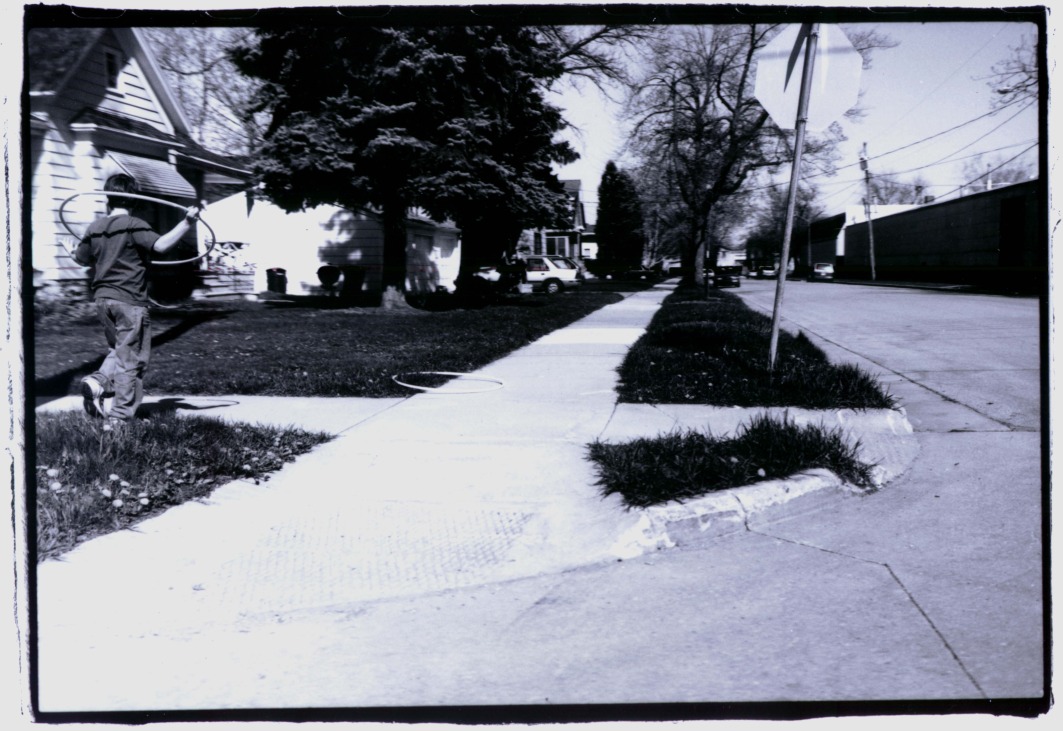
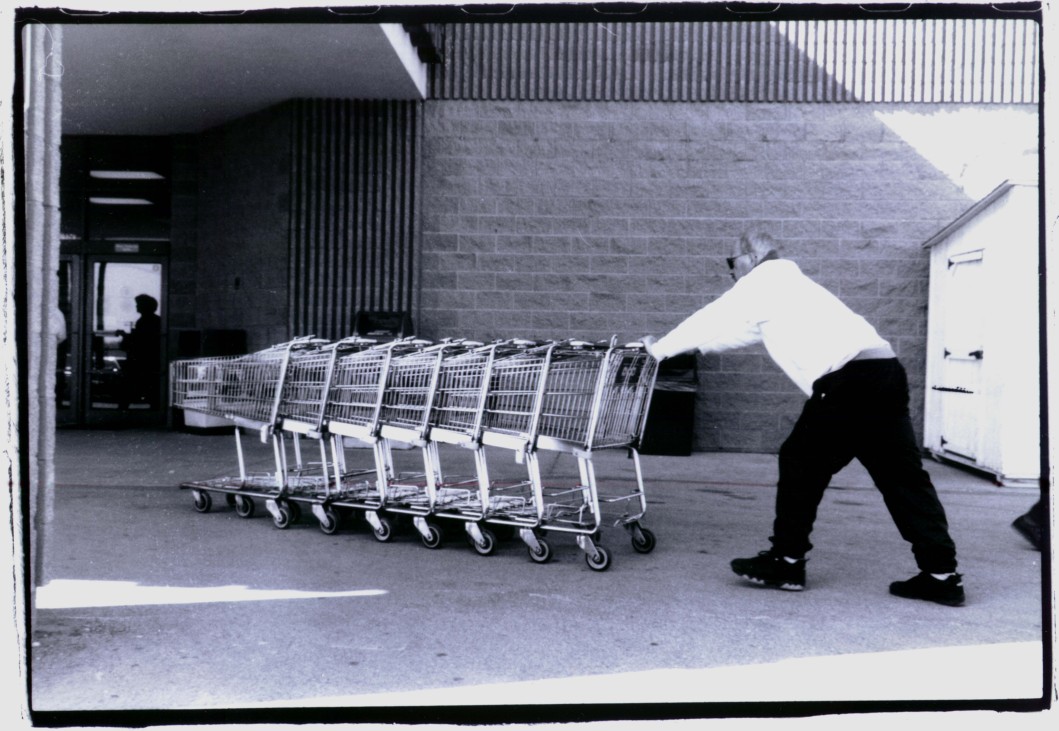
The way I began this project was by carrying my camera around with me. Many times I asked my friends to drive me around on sunny afternoons to see what I could see. I like hiding in my car and being a pure observer. Kids would be outside playing, riding their bikes, coming home from school. Fathers mowing their lawns, guys painting houses, women putting up laundry. "What do you want to take a picture of that for?" a lady asked me as we braked the car in front of her massive laundry line. "Art" I said.
There is so much concrete in Appleton. Since it's hard to get away from, I included it. Tried to make use of it. There are less people and more buildings and cars and sidewalks in Appleton. I really milked the new spring days for all the people they brought out of doors.
Though I make some of these photographs as a pure observer, many are too personal to be considered "straight" or "street" photography. I am not being fueled by a Great Depression, like the FSA photographers, nor is there a heavy sigh in the air like after World War II. When I take pictures of Americans, it isn't because we are so seemingly free that I feel compelled to explain that through photographs. There is no social movement in this Paper Valley. I hardly have an agenda to match those of Robert Frank or Ben Shahn. Basically, I'm a pot-smoking intellectual with a camera; my only commitment is to visual beauty. Gunar Binde said: "purely documentary photography is, to me, too primitive, and the subjective portrayal of one's world is incomprehensible; the real values in photo-art are somewhere between the two." (70,Contemporary Photographs) Of course I hoped I was reaching universal truths and avoiding wholly self-referential pieces. This is perhaps my greatest fear being trapped for four years on a private college campus.
It's hard to connect the collapse of the world trade center to daily life in Appleton. People around here respond by putting stickers of American flags on their SUVs. I don't know why anyone would terrorize Appleton; the police and the regressive conservative bigotry around here is enough of a terror. Many times I walked by the Hmong neighborhoods and hesitated, feeling wrong to take a picture. It would mean too much in the wrong way. It would divide the people more, because here the rich and the poor are separated, not mingling in a common city center. The center of Appleton is a mall. I just didn't want to invade.
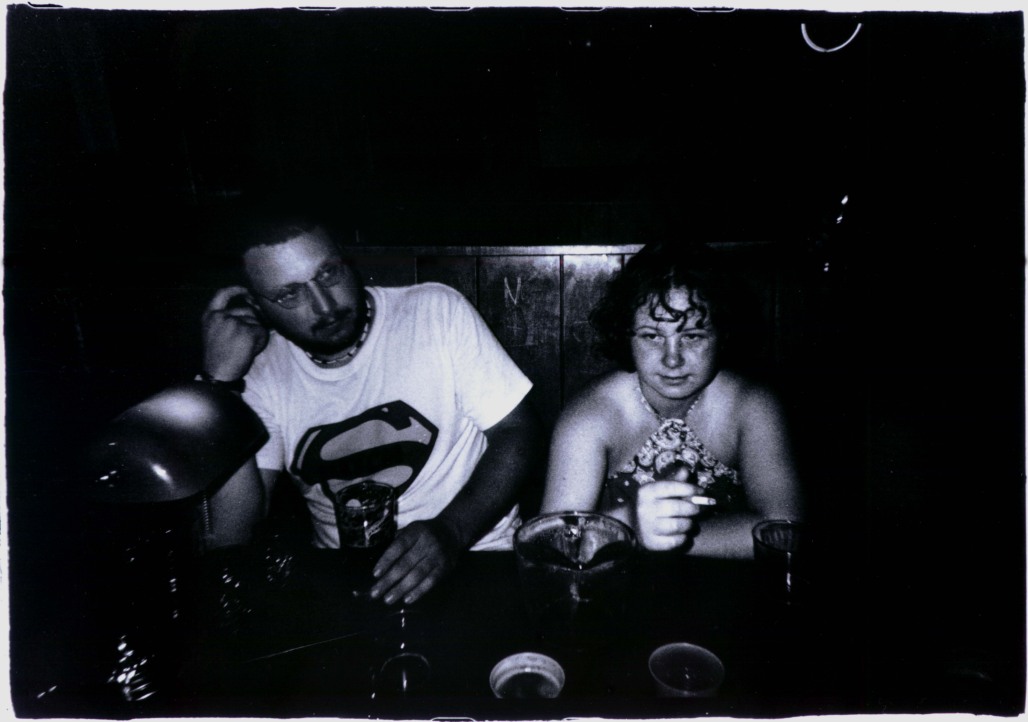
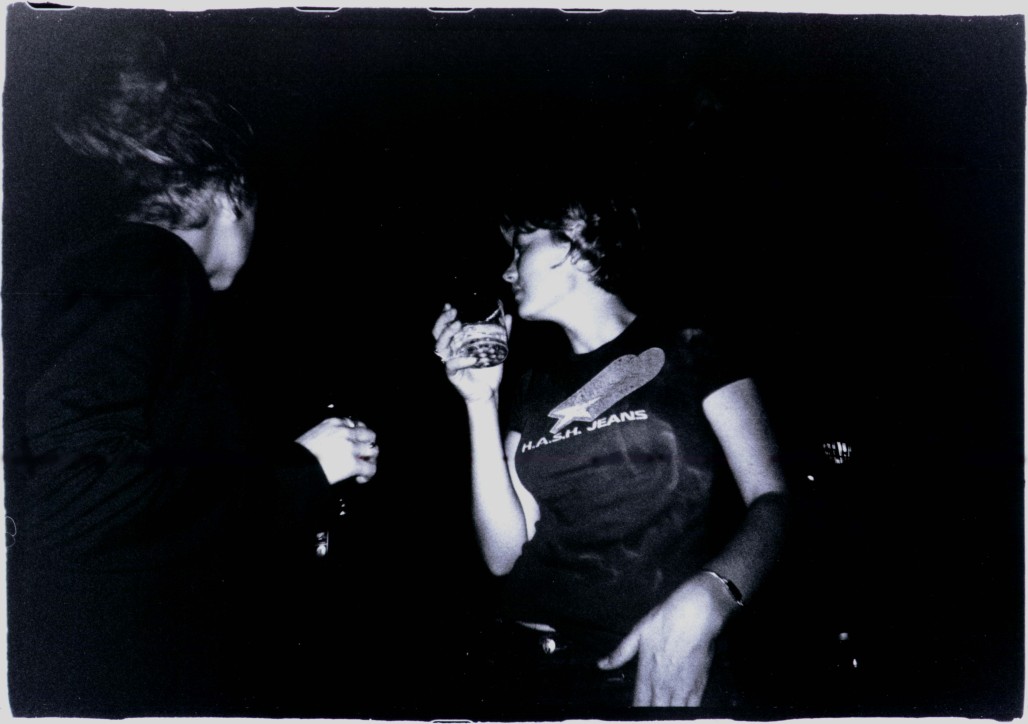
Some of these photographs reveal more personal relationships, like Dano and Katrina at the college campus bar. These are my friends and my enemies. Here I caught the quintessential attitude of Dano. He doesn't want to smile for the photo, only if he had his arm around a beautiful woman. He won't be caught on paper with a female intellectual. Resisting all the way, he maintains a bored expression. And Katrina, well, I tried to portray her as drunk and whore-like. The end result? They look like an unhappy couple. But even worse I have caught some inner realities of these people. It's more than a bar scene with a jukebox.
I attempted many times to get a good reflection of Leslie and myself. The self-portrait with Leslie in front of Jerry's Smoke Shop reminds me of Thelma and Louise. There are magazine covers of beautiful women and brides in the storefront, and then us-reality. We bought these 65-cent sunglasses from the thrift shop and would walk around stoned, philosophizing with these protective sunglasses on: our masks. We're not beaten or misused, not drug addicts, not transvestites, we're just something different altogether. Like being on top of the world all by yourself.
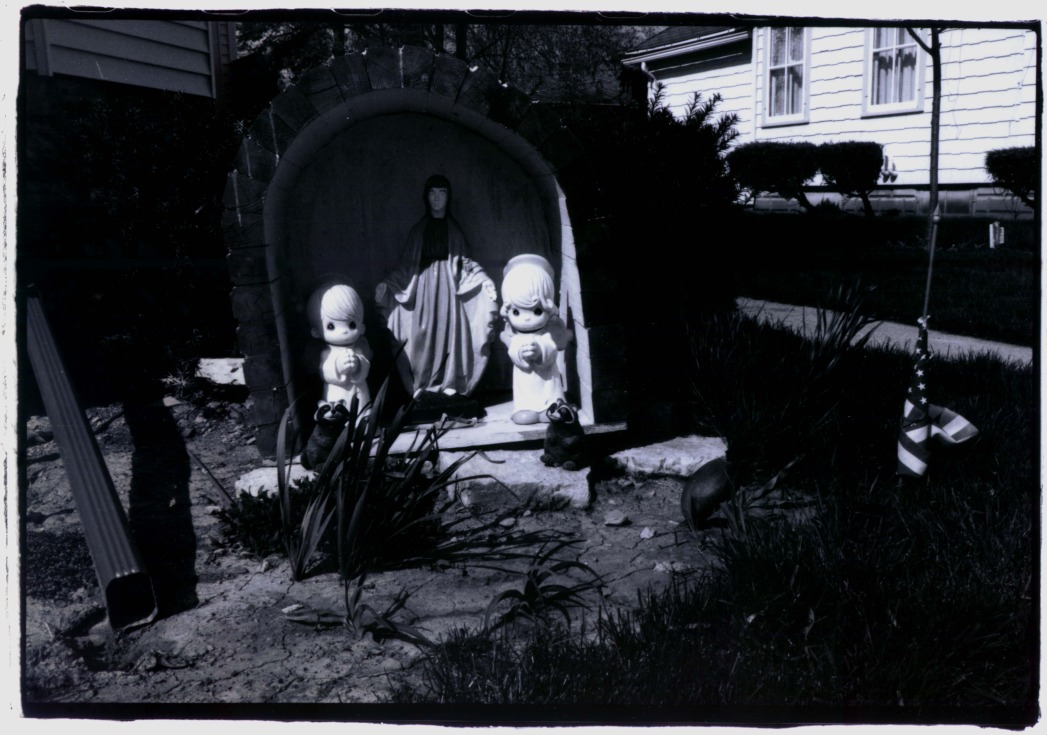
I suppose the precious moments/ Virgin Mary altar is reminiscent of Robert Frank's photos of the Americans. It's typical suburban lawn set-up. Who would have rationalized some plaster raccoons with the paint-chipped mother of God but some white middle-class suburban Christian housewife? And what am I thinking by elevating it to the level of fine art? It all fits into my evil cynicism towards beauty. The wound up flag and the rain gutter make it beautiful.
My interest in including people in this series lead me to incorporate a quirky nude of my friend Matt. It is not quite the typical "beautiful nude figure in nature." His pants are around his ankles, making him more naked than nude. His face hidden in shadow, shrouded in mystery. Barbaric? Perverted? Though the picture references a perfect nude in the romantic, untouched nature, it is a twisted modern version. We were actually in a very popular public park.The way I use people is different from the methods and justifications of street photographers. They captured life in crucial time periods, and their resources took them around the states to do so. Yet, comparatively, I can define my work as straight photography. I waiver between documentation and manipulation, as all photographers do. But beyond arranging a composition and using my intuition to choose a moment, there is little manipulation on my part. Truly, I attempted to capture life around me, projecting my cynicism through what I chose to take. After that it was developing the full-framed negatives, showing the world what I see. As our options expand endlessly to scan, edit, cut, paste, crop, light and alter, I made the conscious choice not to. Instead I rely on the intuition within and the given subject matter around me.
To put it another way: this is not a series of arranged still lifes. Unlike Steiglitz, I did not stand on a street corner for hours waiting for a moment, anticipating life. These portraits were not made in a studio by appointment, but on the spot. My appreciation for flaw and the unplanned give this series a sense of straight photography. Like Mark Cohen: "when he leaves . . .to go make pictures he has no clear concept of what he's looking for." (Adapted 157, Contemporary Photographers)
| photographs - paintings - resumes |
| contact me |