








HEATH
Family History


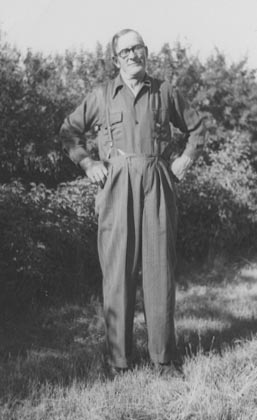
F.B. HEATH (1881-1967) HISTORY
Frank Burrows Heath was Born June 29, 1881 at Fargo North Dakota. He married Harriet Anne (Hattie) Dynes in 1903. Their first child, Thomas Murl Heath was born September 27, 1904 at Nez Perce, Idaho.
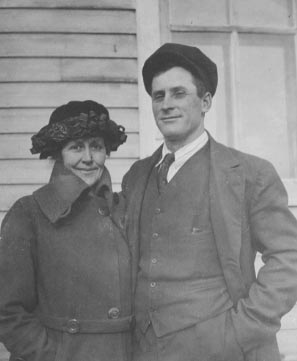
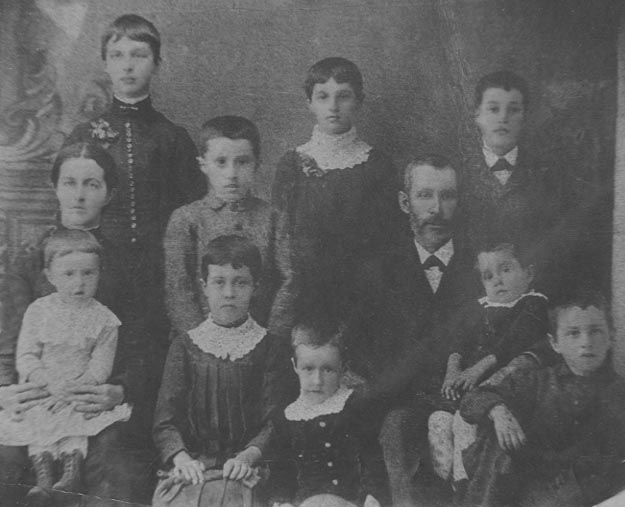
In 1905, Frank traveled to the Hanley Saskatchewan area of Canada to purchase farm land. Until living quarters could be built, he boarded with the Grindheim family of the Hanley area. In February 1906 he purchased a half section of land and a month later made the trip back to Idaho to bring his family to their new home about 7 miles south of town.
It was a modest start for this pioneer family: In April of 1906, they began their Saskatchewan farming experience living in only a shack, but in 1912 a large house costing two thousand dollars, was completed. Their second son, Clarence(Sam) was born in 1907 and daughter Ruth was born in 1911.
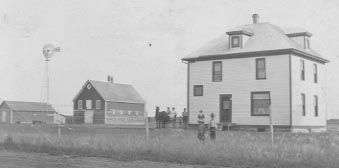
He began buying more land and according to his homestead documents, Frank made an application September 4th, 1908 for homestead entry on a quarter section a few miles south. It was approved by the Interior Dept. Nov. 16, 1908.
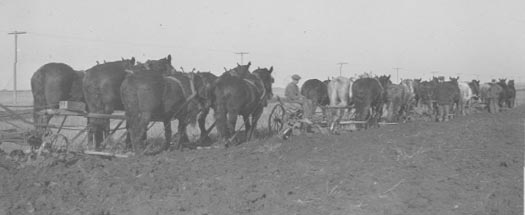
According to the official records, in 1909 one hundred acres were broken and cropped. And in 1910 and 1911 sixty acres. Among his major assets recorded on his homestead papers:8 horses in 1909, 13 in 1910 and 17 horses in 1911. With only raw horsepower available to him at that time, proving up this land was no easy task. Just a few years later in 1915, a powerful Rumely Oilpull tractor (Model F, 15-30) replaced horses in the field. Advertising claimed it had the power of 15 good draft horses, the endurance of 50 and the cost of less than 10.
One of Hattie's brothers, Edward (Eddy) Dynes was the first hired man on the F.B. heath farm. He later showed an interest in being a farmer on his own and set-up a small grain farm a few miles north east. Eddy assisted Murl with the harvest for many years.
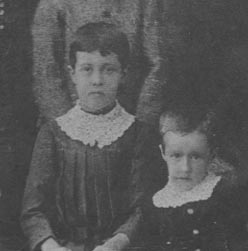
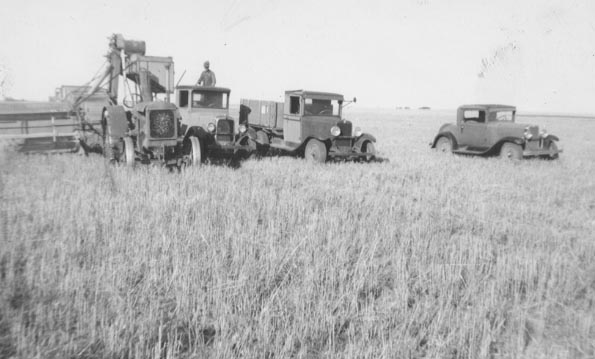
The Heath family continued to grow along with the land holdings. By 1913, with the birth of Cecil (Cec) Burrows Heath, the number of children stood at 4. Then 3 years later, Wilbert (Web) Dynes Heath was the last child born in Frank and Hattie Heath's family.
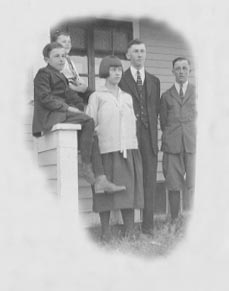
The boys worked with their Dad on the farm and eventually took their experience to their own farming operations. Clarence (Sam) worked with Murl for a short time including some land breaking, on land to the west. But Sam decided to pursue other areas of work and adventure. His working career took many turns, but he eventually worked for many years in a Calgary stock brokerage firm.
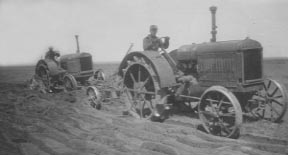
The oldest son, Murl was the first to begin farming on his own. That was in 1927. Thomas Murl Heath (1904- 1995) was born in Nez Perce Idaho to Frank B. Heath(1881-1967) and Harriet Anne Dynes(1879-1928).
Murl moved with his parents to the Hanley district in the spring of 1906. Elementary schooling was at Smilesville, a small one room country school west of Kenaston along highway 15, and his high schooling was in the town of Hanley.
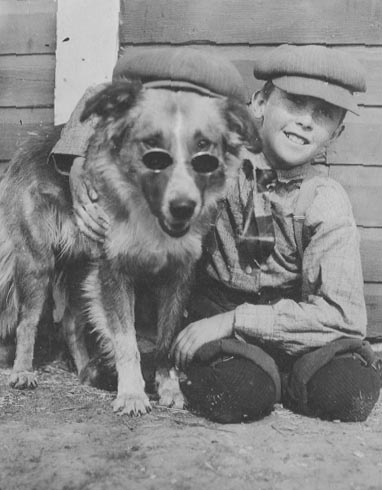
He began his "off the farm" working career in 1922 at the First National Bank in Seattle Washington. But after 2 years, he returned to assist his father.
In the fall of 1926, he began his own operation He built a house and barn on one of the 3 quarters his father owned near Strong siding. He began by using horses to pull the implements but they were soon replaced by a steel lugged tractor- a McCormick- Deering. Mechanization! But it was still slow-going with implements only 42 inches wide.
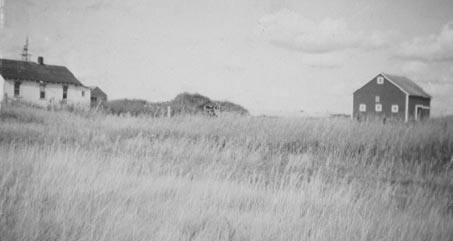
Hilda Tweet of Kenaston knew of the Heath family for many years before meeting Murl. In fact she recalled when, at just 13 years of age, she was sitting behind a 22 year old Murl and another girl in church one Sunday. She was envious but at 13, didn't rate even a second look. It wasn't until 10 years later....in 1937 that they actually met in Kenaston at the workplace of one of her friends. They began dating and the next year September 30, 1938 Thomas Murl Heath married Hilda Amanda Tweet.
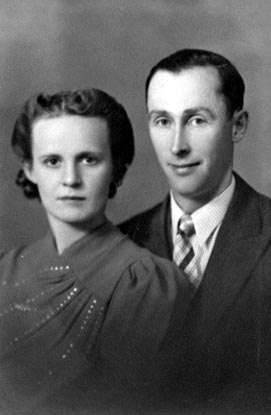
They lived on the farm during the growing season but winters were spent in Kenaston where Murl worked at Hooper's hardware store where he was the resident handyman. His job included a lot of painting and wallpapering for customers. That gradually led to doing some electrical work.
Their first son, Dale arrived Oct 28, 1940 and the family continued to live in a suite over the store during the winter months. The family moved to Saskatoon in winter 1943, first to a rental house on 1st Avenue North, then to a newly purchased house at 1915 Franklin (Coy) Avenue in the fall of 1944. The cost was $2500.00 . The move was made just 2 months after their second son, Allan was born. The house was rented out for 2 summers, but in 1946 when Dale began school the family lived at the farm only when school was out. Otherwise,farming was largely a weekend job.
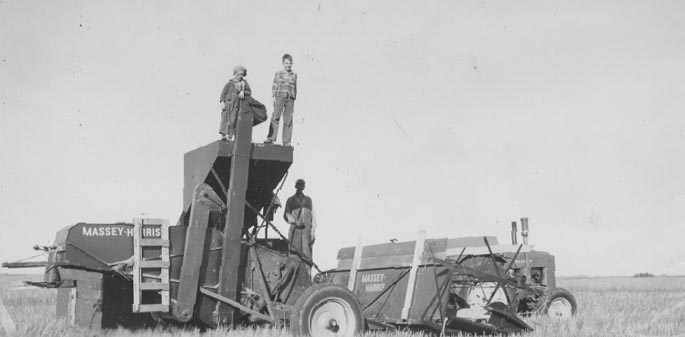
The experience gained at Hooper's hardware store sparked Murl's interest in electricity. In 1944 this led to an opportunity to specialize in this work at Wheaton Electric in Saskatoon. It was a job which lasted 25 years with that company and its successor, Young Electric. Allan followed in his Dad's footsteps as both electrician and farmer. Although he retired from his electrical work in 1970 at 66 years of age, Murl was still actively farming at 81. When he stepped aside, son Allan, who had been helping for years, took over the farming.
Dale had a 34 year career in Radio and Television. He married Mary Candace (Candy) Mills in 1964. They have a daughter, Elizabeth married to Remy Waterkamp and son Thomas Darcy married to Melanie Grant in 2014. Dale and Candace have 5 grandchildren.
Frank Burrows Heath and Hattie continued to enjoy life on the farm during much of the 1920's but 1928 became a year of tragedy for the family when Hattie died of a sudden illness.
In 1930 Frank met Laura Richardson who was employed in a millinery shop in Harris Saskatchewan. Frank and Laura were introduced to each other by a friend he was visiting in Long Beach Ca. From that point on, Frank made frequent visits to Harris and in 1931 50 year old Frank and 35 year old Laura were wed. This began a new chapter in the Heath story. Laura and her daughter Laverne and son Russell joined the family. Laverne married Al Prentice and they had two daughters, Anne and Wendy. After the death of his first wife, Mary MacDonald, Russ married Alta Catton and they had two sons, Ron and Don and a daughter, Linda.
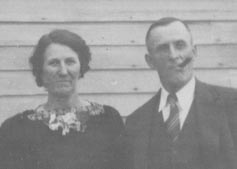
Back in 1931, Russ Richardson at just 16, joined 15 year old Wilbert (Web) Heath in a farming partnership on land near Strong Siding. Cecil (Cec) Heath, now 18 years of age continued farming with the boss. That's how all the boys affectionately referred to their Father, Frank.
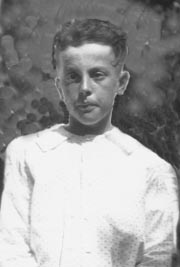
The Heath's only daughter, Ruth married Arthur Millsap in 1936. They had three children: Geraldine, Norman and Don.
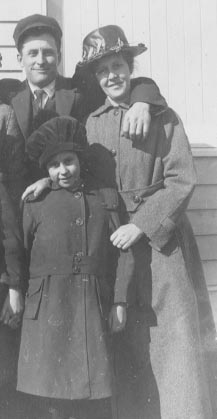
While the farm and family were the center of Frank's life, he also found time for his community. He was prominent in the United Church in Hanley.
Web Heath and Irene Catton were married in 1953. He farmed near Strong Siding while Irene worked in Nystuen's and Simonsen's stores. In 1961 Web and Irene bought and operated a hotel in Wilkie Saskatchewan. In 1971 they retired to Saskatoon. Web died February 15th, 1982. Irene passed away March 27, 2003.
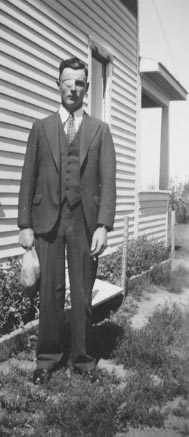
In his early 70s, Frank retired with Laura in 1952 to live in Saskatoon. But the farm was where his heart was. He commuted back and forth to the farm where he continued to work with son, Cecil until Frank's death in a highway accident in 1967. Another of Hanley's great pioneers was gone. In a eulogy at the funeral at the Hanley church, he was remembered as loving family man, hard worker and a man with a great sense of humor. Frank Burrows Heath was interred in the Hanley cemetery, not far from where he first set foot 62 years before.
Cecil kept the farm going after his Father's passing, but after a few years it was sold to Arthur Millsap and sons Norman and Donald.
Heath and Jarvis families arrive from North Dakota
CHAS. JARVIS FAMILY as remembered by Stan Jarvis
After harvest was finished at Gardiner, North Dakota, in the fall of 1904, my father, Chas Jarvis and a long-time neighbour and friend, Frank Heath, came north and west in search of land, as land was hard to come by in the Red River Valley of North Dakota.
How or why they decided on the Hanley area I do not know. They must have liked what they saw, as my father purchased the E.1/2 31-29-3 W3 and Frank Heath the west half of the same section. They then returned to their homes in North Dakota for the winter.
Early in the spring of 1905 they loaded all their possessions into boxcars billed for Hanley. These cars were known as settlers effects, which allowed the owners of the contents to ride along free in order to care for the livestock. Some two weeks later my mother Bessie, my two older brothers, Everett and Spud as he was later called, along with Hattie Heath and son Murl, left Gardner late one night by passenger train - destination Hanley, Sask. I don't remember too much of the train trip, however, I do remember my father and Frank Heath meeting us at Hanley. From the train we went to a hotel for dinner. There were four or five eating places Hanley at that time. After dinner we were loaded into a buggy and a democrat, which was like a buggy but longer and had two seats, and we were on the last lap of our journey to our new home. The sun was warm, spring had come to the prairies. Our home to be was six miles south and one mile east from Hanley. There was no road - not even a trail, the only sign that anyone had been that way was the section survey.
About three and one-half miles on our way we came to what was later called Big Creek, which was in flood from spring run-off. Our drivers were able to ford it okay. However, the water came up and in on the floor of the buggies. Everything was alright then until we came to Beaver Creek about three miles along the way. At Beaver Creek my father and Frank had a consultation and decided we could not cross so we moved east until we came to Mr. and Mrs. Grindheim's who had a place beside Beaver Creek on N.E. section 6. The Grindheims were the only people living between our future home and Hanley at that time. True to early hospitality they put us up overnight. The next morning while the creek was at a much lower ebb, we crossed and were at our new home in about 15 minutes.
Our new home was a shanty roof, one ply of lumber throughout, tar paper covered, held on with lath. This was to be our new home for the next few years. My father had made good use of his time. Beside the shack he had four walls up on what was to be a barn.
Aside from the Grindheims one-half miles north, Mr. and Mrs. Stanley O'Dell one and a half miles east, Frank and Hattie Heath one-quarter mile west, there was no one else in the country.
There was lots of activity that summer. Land had to be broken, worked and seeded. Seed grain was hard to come by. The first two summers there were great herds of antelope, 50 or more to a herd. They would follow my father as he rode the breaking plow. We never shot any as we had nothing to shoot with.
Those first years there were prairie chicken everywhere, and the coyotes played with our dog and lived in harmony. My father and brother Everett did a nice bit of breaking the first summer and put up an abundance of prairie wool hay. It was thick and everywhere for the taking.
We got our drinking water from sloughs and Beaver Creek the first summer until a well driller by the name of Mr. Etson, from Hanley, sunk a hole 80 feet in the ground and we had water. l guess it was looked on as a blessing and a step forward. However, from the day we got that well in 1905 there never were any epsom salts in our home until we were able to get a flowing well of soft water in 1923. That same prairie wool that was such good feed was the cause of many prairie newcomers losing about everything they had. When a prairie fire got away it travelled as fast as a prairie wind. Only once were we in real danger. Fortunately my father had a good fire guard which was made by plowing five or six furrows then going back 40 to 50 feet, plowing another set of furrows then burning in between.
In those early days the rain always came at the right time and good crops were continuous. In early years there was only one kind of wheat, Red Fyfe, then came Marquis which was a Godsend.
In the summer of 1907 both Jarvis and Heath built new homes. What a blessing! Those tar paper shacks did not do much to keep out the cold.
Fuel was hard to come by and the closest trees were at the Saskatchewan River 25 or more miles away. I remember Father and Frank in the winter leaving home long before daylight and coming home near midnight, when they went for wood.
Those first two years there was no school. However, Smilesville School No. 1641 was built in 1907 and we had to walk the two and three-quarter miles to school. We carried our own lunch and drinking water for the day. The school was named after a Mr. and Mrs. Smiles who moved into the area. All our text books and teachers were from Ontario. School opened mid April and closed mid October.
All us young boys had to skip school at threshing time to haul grain. It was about this time we could boast of a bridge at Beaver Creek and Big Creek, but still no road. You were very lucky if you were able to get through the flats south and east of Hanley without getting stuck. I well remember hauling grain with Tommy Dean and Jack Kippen. In the fall it was mud, and winter snow plus -40 degree weather. In the winter of 1906-1907 the train was stuck in the snow not far north of where Strong Siding was at one time and they never got it out for over a week.
We had an addition to our family in 1907, however, he was not with us long. When he was about 18 months old he became suddenly sick, and before we could bring a doctor from Hanley by horse and buggy, he had passed away. Had we had phones, roads and cars as now it would have been quite different.
Times continued to change; we had good crops, no weeds, elevator agents took half of one percent dockage. Roads were marked out and graded, not as now, but we had a legal right of way. The people south of town went together, formed the Beaver Creek telephone company and built their own line. By this time the government had a line complete from Regina to Saskatoon with a central in Hanley. Violet Drummond was our first central. What a blessing that phone service was!
As time passed, more land was purchased and broken. It was a great day in the fall when we could see the smoke from Tommy Torguson's steam engine coming to thresh for us. We could see the smoke for miles. Engine, separator, cook car, bunkhouse, ten bundle teams, one water tank man and team, two spike pitchers and two field pitchers. They would thresh all day at one spot, and as evening drew near they would move about one quarter mile and when it got dark a match was put to the day's straw pile so they got another hour's threshing. No eight hour days then.
After 1914 the war was on, men became scarce, the big steam outfits went out and farmers bought their own gas outfits. From 1905 to 1925 horses were the main source of power on the farm. I can only remember seeing two yokes of oxen in the Hanley area. From 1925 the horse was being replaced by smaller gas engines.
My father and mother left the farm in 1927 and retired in Saskatoon where they lived until they passed away.
I married Vera Karst of Kenaston in 1927 and took over the home place at that time. We changed from horse power to tractor and from threshing machine to combine. My brother Spud married Margaret Bohrson in 1928 and built farm buildings on the south section. They had a family of two, one girl Marion and a boy Billie. Margaret passed away at her home in High River, Alta. in 1978. Spud is still living at High River.
In the old days the name Jarvis was hardly ever mentioned unless Heath was mentioned and visa versa. I can never remember my dad and Frank having a disagreement. They both gained control of considerable land. I know we would have up to 40 horses working at one time. Those were the days when the three large livery barns prospered in Hanley.
After the war my brother Everett married Ester Anshelm and farmed for a few years near Kenaston. Then he became a professor at the University of Saskatchewan; he passed away in 1927. His widow now lives in Saskatoon. They had a family of five.
When the grasshoppers and drought came in the thirties my family and I left for Frenchman Butte where we have lived ever since. We had two children - Collen who lives at Paradise Hill, Sask. and Roger who lives in Calgary. Vera and I try to spend our winters where it is warmer and our summers in Frenchman Butte.
I have many fond memories of Hanley as that was the only town I knew as I was growing up and attending school there. We we very sorry to miss Hanley's Homecoming day. It just happened Frenchman Butte held theirs at the same time.
Updated 04/2016