Welcome into realm of Indian Ocean that surrounds Bali!
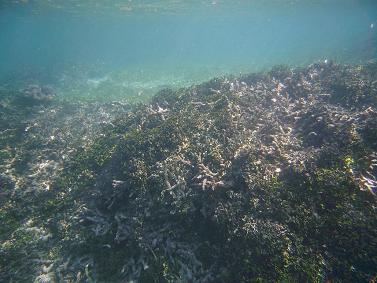
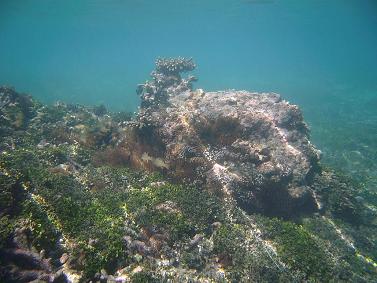
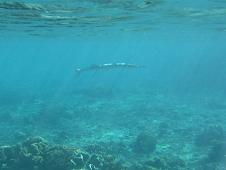
On the below 2 photos you see the underwater desert: dead coral reef in Padangbai gulf, Bali.
Obviously: almost no fish can live in this man-made desert.
Q.: What about live corals? Do they look alike?
A.: Well, in a middle of this desert, there are few tiny semi-healthy corals - usually size of a table - remain (as of July 2008). You ask how they look like... Like the one on the below photo:

See also our sample coral reef fotos – you will better understand WHAT exactly we all are loosing in Bali right now. In fact, no photo can express the real beauty of these Natural monuments. Unbelievably beautiful! Just try play with fishes and feel their love! It's however more unbelievable that local people threat to kill even these last natural things – by catching coral fish (even with nets, which brake corals!), by dragging anchors through the corals, by taking parts of corals for sale, as well as by wasting large quantities of plastic (and even oil!) into coral reef area (photos follow):
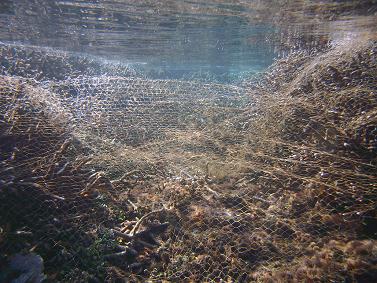
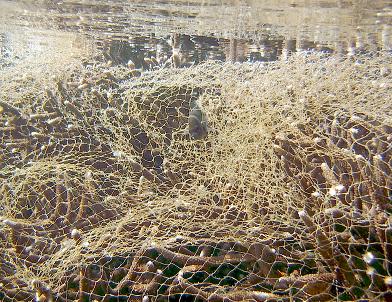
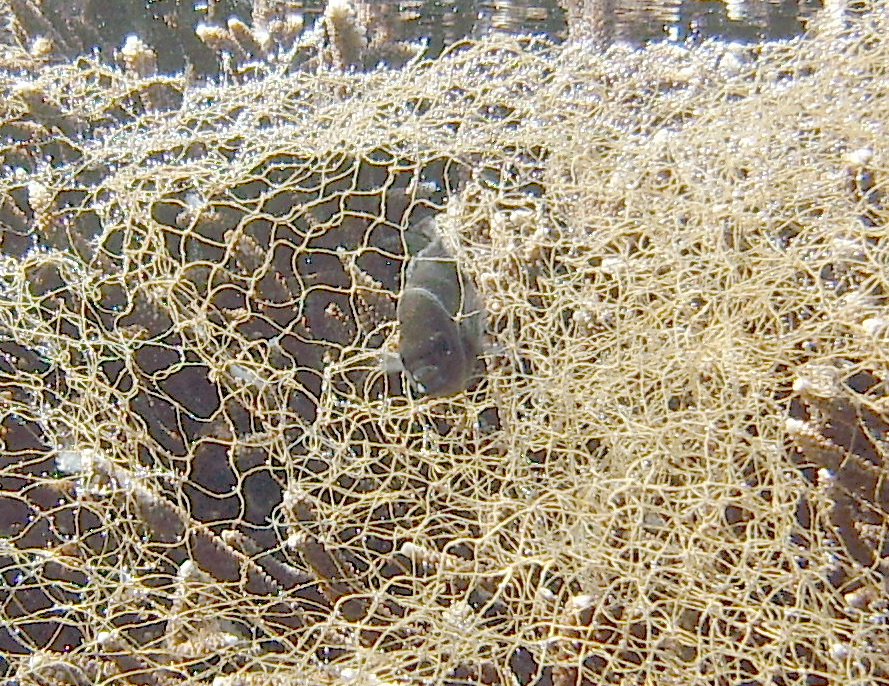
This fishing net is wasted in a middle of a coral, but it continues to kill fishes, as well as their habitat. Bali, near Padangbai.
Below: this little fish would have died if not freed by us. (We always try to remove such wasted nets and free all fishes).
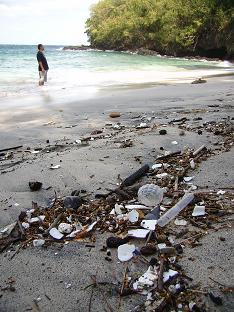
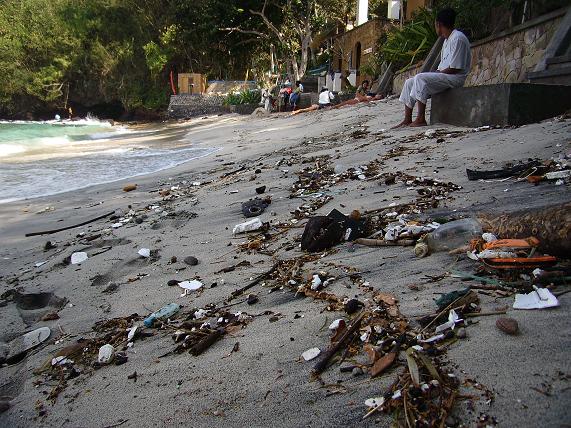
These plastic bottles and other plastic things are wasted in large quantities on the beach. They pollute and subsequently kill the coral, but fishes also die: as result of their habitat destruction. This place is called Blue Laguna. It is located next to Padangbai gulf, Bali (photo taken in 2007)
Q.: What about local people?
A.: There are basically only hotels and shops on the beach. Their owners are too busy to keep the occupied beach clean. They use all available time for marketing their rooms and goods (including drinks in plastic bottles).
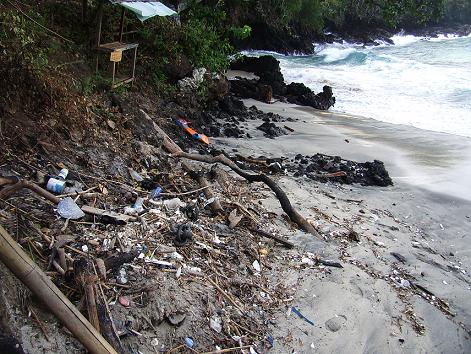
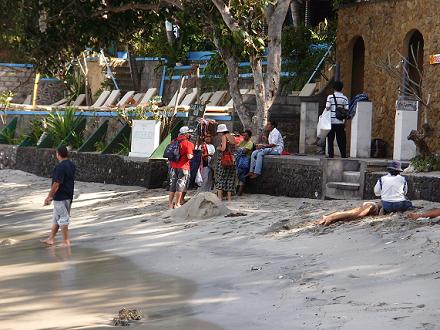
Just be careful in this “Paradise”, especially if you came with kids: make sure they don't cut their tender legs badly. There are broken glass bottles out there.
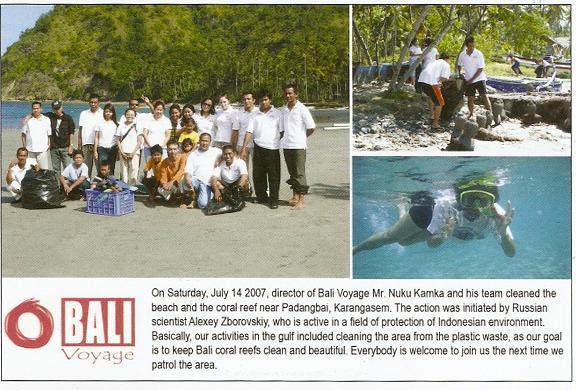
Aiming to reduce this calamity to extent possible, we sometimes come to Padangbai area and remove garbage (parts of fishing nets and other plastic, glass bottles etc.) from both the coral and the beach. One day, in summer 2007, we've collected more than 200 kg of such waste. This was result of mutual work of about 20 people and a little track (all provided by Bali Voyage company). Brief message from HELLOBali magazine, September 2007, p.58 follows:
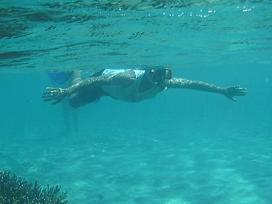
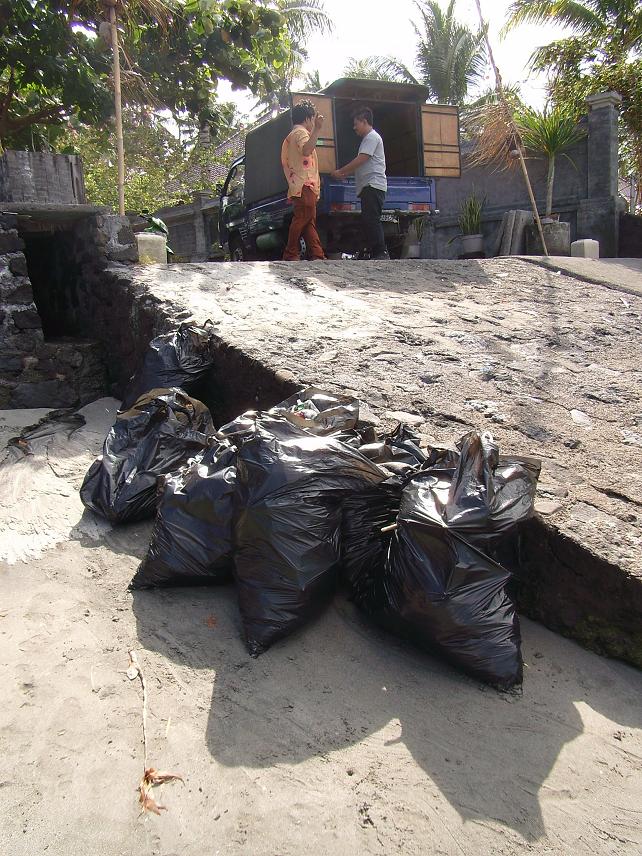
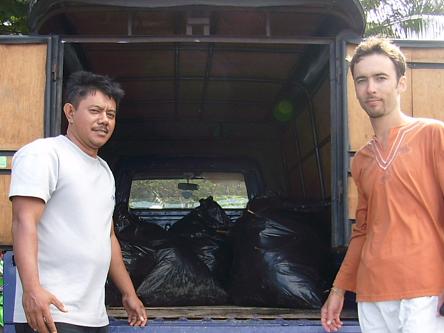
I must add that procedure of fishing nets removal requires a lot of patiency and skill. Otherwise, more harm than help is done to coral, tender branches of which are being broken with every inaccurate movement! In addition, you can hurt yourself badly... Therefore: beware to remove waste directly from coral if you don't have perfect skill. Best option for you than would be to clean the beach only. It's a very good work, because during high tides (what is to say: every 12 hours) all the waste from beach goes to the coral. By preventing such man-made disasters we in fact serve ourselves... One good thing about locals is that they learn from us and do the same. Yes! Almost each time I come to clean the beach, some of them join me... So that – during next few days - area indeed looks like a genuine Paradise, especially if you watch it without too much focusing on shops and hotels with their screaming advertisement. Imagine how it was here just a few decades back: virgin rainforest covered the whole of beach! Modest, pleasant for the eye homes of locals stayed under shadows of dipterocarps...
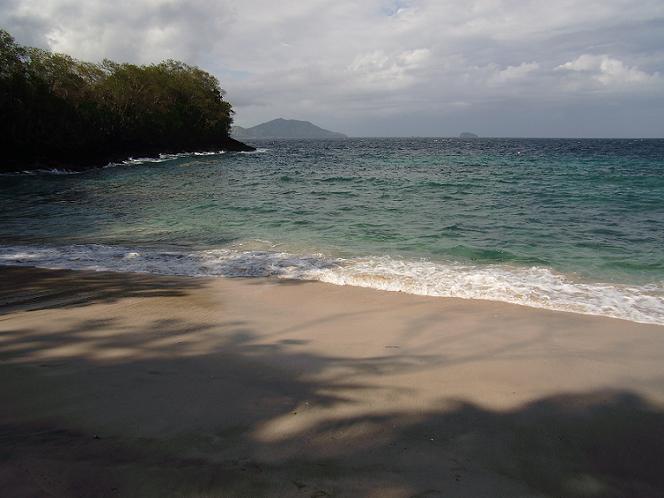
By proper actions we can make these old good times (and even better ones) to come back again. We live more than once. Slowly-slowly, we can reach anything. Meanwhile, if you're serious about healing corals, I can train you some good technique.
Next question: what to do with collected garbage? Initially, I used to bring it to recyclers in Sanur:
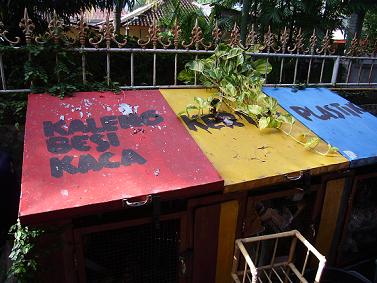
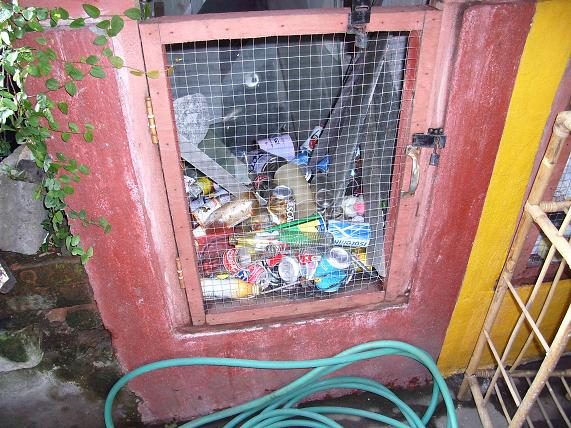
But, alas! Few months later, my recyclers disappeared. Since there are no other recyclers in Bali, I've decided that plastic should be burned, but not without simultaneous planting of indigenous Balinese trees. (Plastics, while burning, produce a lot of poisonous substances into atmosphere. On the other hand, generous trees clean air and give oxygen in return for CO2 and even poisons. Thus forests are best natural air-cleaning factories. Once well established, they need not much of maintenance. But only forests with considerable diversity of indigenous (i.e. original) trees are really stable. Alas! Such good forests, especially in lowland Indonesia, are almost completely destroyed by people... This is why, from 2008, we've started planting beautiful indigenous trees of multi-various species in Bali).
Contact us if you'd like to participate in our Oceanic project. But first read our Terms and Conditions – they are somewhere on this page. There you will also find info on tree planting and other programs of us