by Brian Morrison, Head Instructor at Full Armor Martial Arts

Basic Striking or Angles of Attack
Whether your Filipino system has 12, 8, 6 or 7 Count Striking in your beginning curriculum there is really one purpose to the teaching of these strikes and it is widely misunderstood.
When I first started training in the Filipino Martial Arts I was taught 6 Count Striking and then later 12 Count Striking. We were taught the reason behind these striking patterns were that it made it easier for them to teach us disarms. It was much later that I discovered the truth.
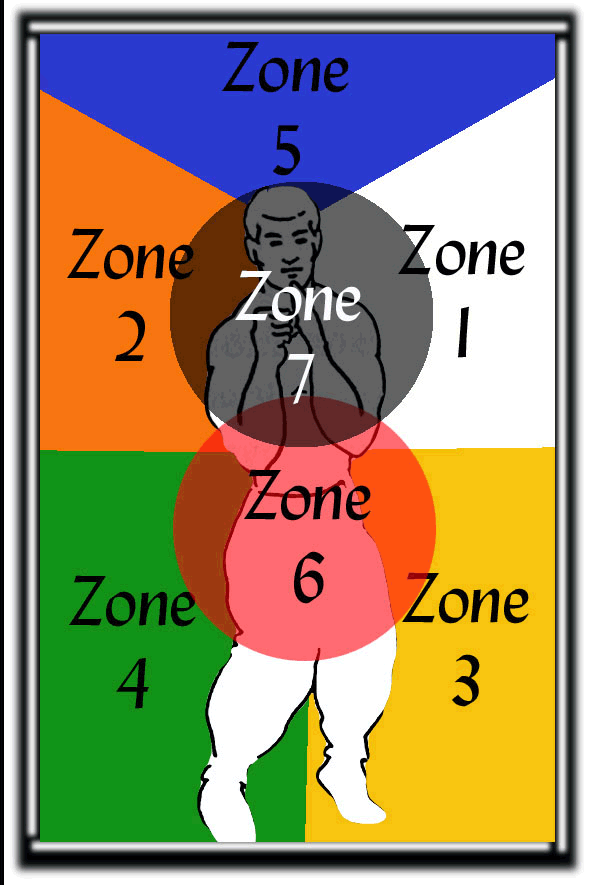
In North American Arnis we teach 7 Count Striking for one real reason only. To implement and internalize the Zoning Principle. The seven strikes you learn do not teach you how to strike. They do not teach you how to block. They also do not make it easier to teach disarms. They are the foundation for all defensive action.
The Methodology
By establishing seven zones (see diagram on sidebar) into which any attacking strike must pass, it increases reaction time by eliminating any decision making. For instance, there are only so many ways a rear/right hand can come at you. It may be clenched into a fist, open for a palm heel, used as a ridgehand, be holding a stick, a knife or bottle, etc. But that hand, regardless of what it is or is not holding is always attached to that right shoulder and is going to enter one of your seven zones. If our attacker swings a hook punch into Zone 1, we will defend it the same as if he swung a lead pipe at us into Zone 1. You defend that zone or angle, not the technique. There are no new techniques for each new situation. The practitioner will act the same way every time, eliminating any thinking or hesitating.
I have heard some martial artists claim they know thousands of techniques. Some boast that they know 100 ways to defend a right cross, they know 250 counters for a overhead strike, and so on and so on. Regardless of the veracity of their claims, what is the point? Are they looking to impress you with their vast knowledge? Your attacker on the street will care not. 100 ways to defend a right cross means you have 100 decisions to make before that fist lands. Those are not my kind of odds.
Martial Artist who learn to deal with different attacks different ways do themselves a great disservice. For each new situation, they must then learn a new technique. Usually this is brought on by the �if it works then use it� crowd. In their rush to find new and exciting techniques, they muddy the waters of effectiveness. For no matter how lethal your technique is, it is useless if you do not or cannot bring it to bear. I love learning new techniques as much as the next guy. But I know that any technique that ignores the Zoning Principle, regardless how cool it is, is not staying in my repertoire. Quite simply, less is more.