| SUNSET CRATER Rte. 89, North of Flagstaff, Arizona |
 |
 |
 |
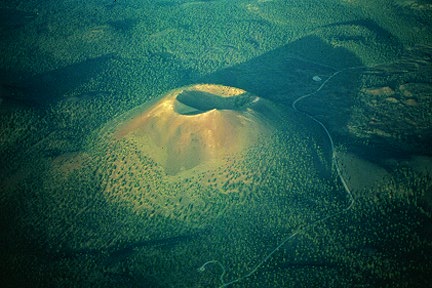
| This is an aerial view of this cinder cone crater. Viewed at sunset, it appears to glow like the sun. Look how close you can get! We stood right there at the base. No one is permitted to climb the crater anymore because it would cause greater erosion. Some nearby cinder cone volcanoes come to a point at the top, with no crater. The top of this one blew out in its most recent eruption. |
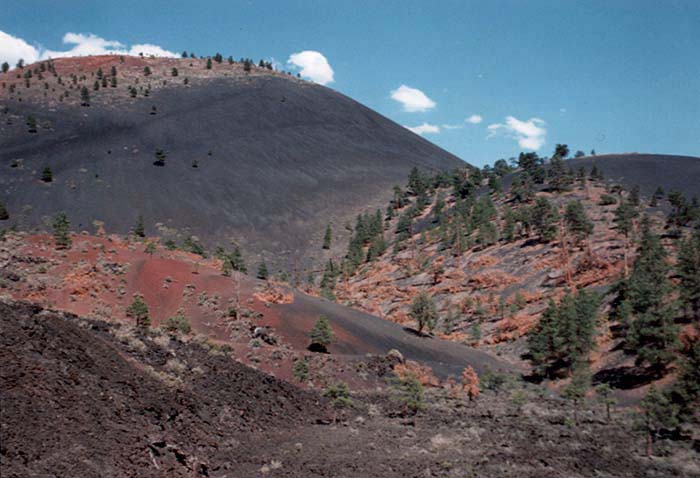
| This shows a close-up of the cinder- covered landscape. When the volcano erupted it shot out tons of incinerated bits of rock called cinders. Most are black , however, the orangish-red cinders helped give this volcano its name. It looks very strange, like the surface a distant planet. |
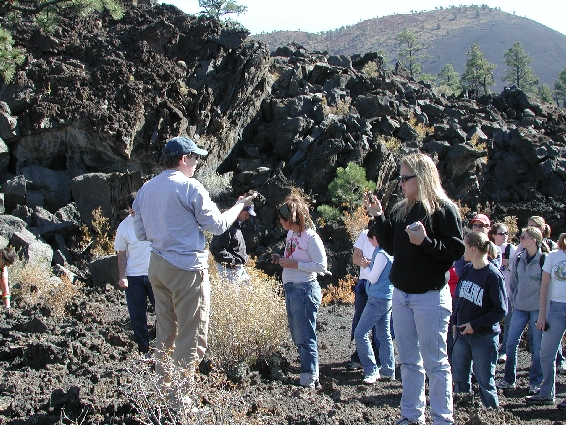 |
| Here is a group at the edge of the Bonita Lava Field. Not only did this ancient volcano spew cinders, it also included lava flows. This is the outer edge of the lava. A dangerous eruption of this volcano in _____ led to mass migrations of the Sinagua Indians from this area to safer spots in Walnut Canyon, southeast of Flagstaff. |
 |
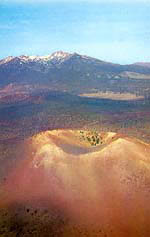 |
| San Francisco Peaks in the distance. |
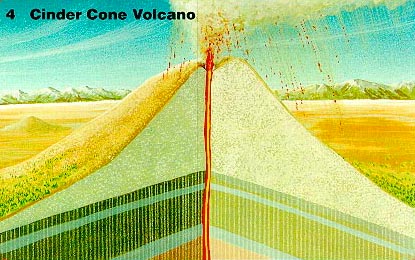
| This graphic shows the Sunset Crater volcano erupting. Each eruption piled up more and more cinders, making the cone higher and steeper. You can see another cinder cone volcano in the distance. This entire northwestern section of Arizona is filled with cinder cones. It is amazing! You might think it is a little pointy hill, but it is a cinder cone in disguise. Not at all like Delaware. |
| Pressure builds in magma pools deep below the surface, forcing lava up a single pathway. |