| THE GRAND CANYON |
 |
 |
 |
 |
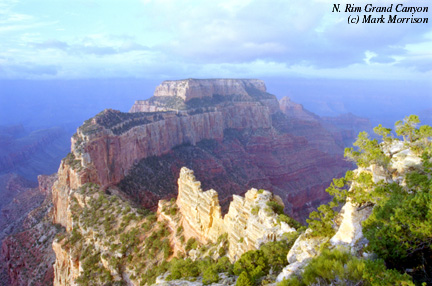
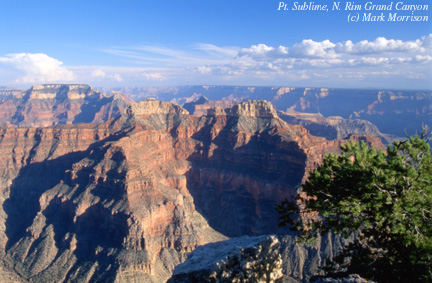
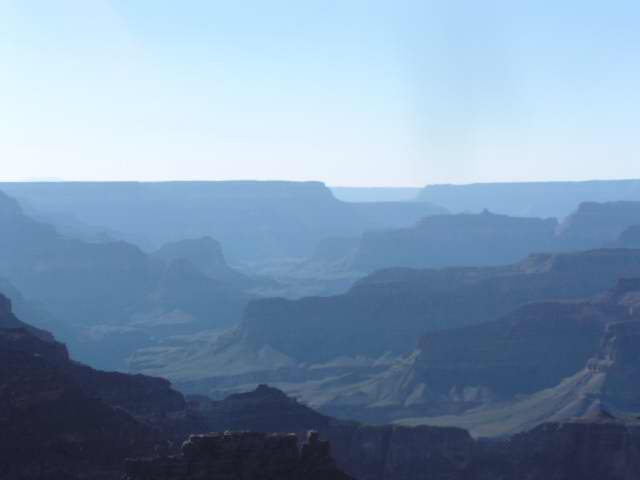
| The Grand Canyon is a special place, to the people who live there, and to those who visit. My son, Nick, and I have been lucky enough to visit the Grand Canyon 3X in the past four years. We're hoping to go again this summer. |
| We have joined a group of 6th grade teachers from Delaware who travel to the canyon each summer. Many visitors stop at the canyon for 3-4 hours. We get to stay for seven days! We attend many of the rangers' programs, take day trips to Hopi & Navajo reservations, collect fossils and rocks (outside of the National Park!), take lots of pictures, and one group hikes to the bottom of the canyon. Nick will tell you all about the hikes. |
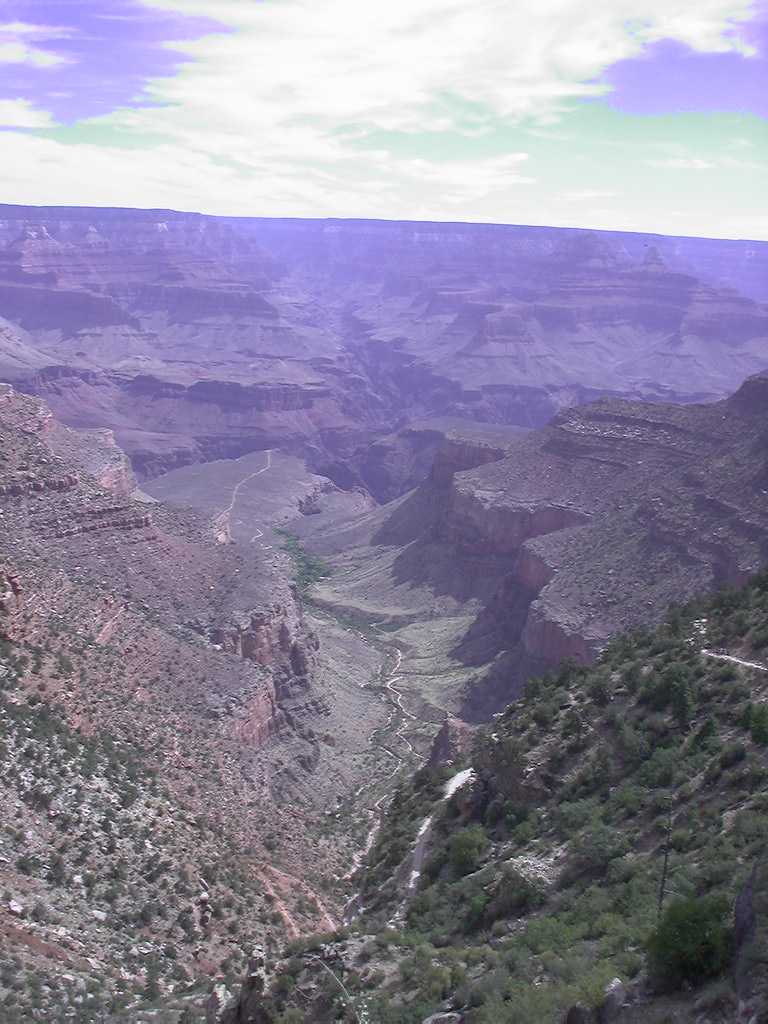 |
| This is a view of the creekbed that passes through Indian Gardens, where hikers spend the night. If you look carefully you can see the trail out to Plateau Point,an overlook with a great view of the inner canyon. This view is along Bright Angel Trail. This trail is about nine miles from the rim down to the bottom and the Colorado River. The canyon is about one mile deep. It is a very challenging hike, with steep trails, lot of dust, and summer temperatures of over 100 degrees. |
 |
 |
 |
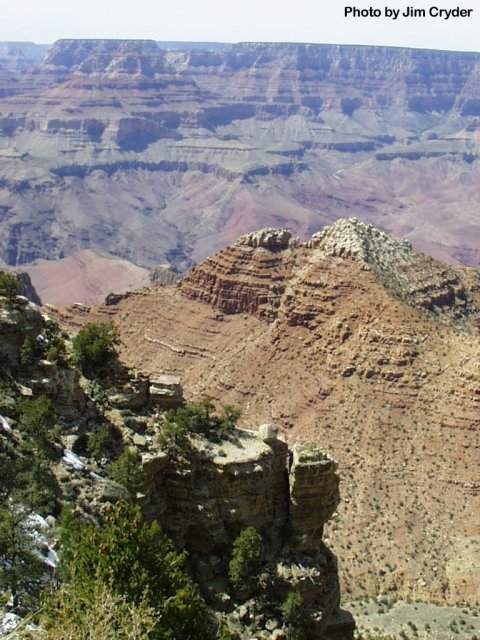 |
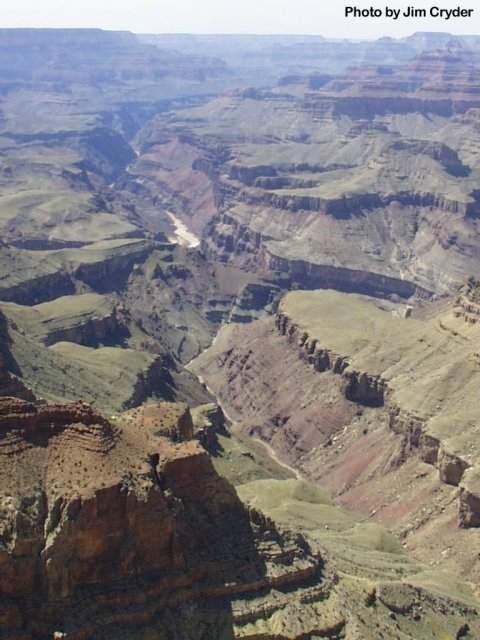
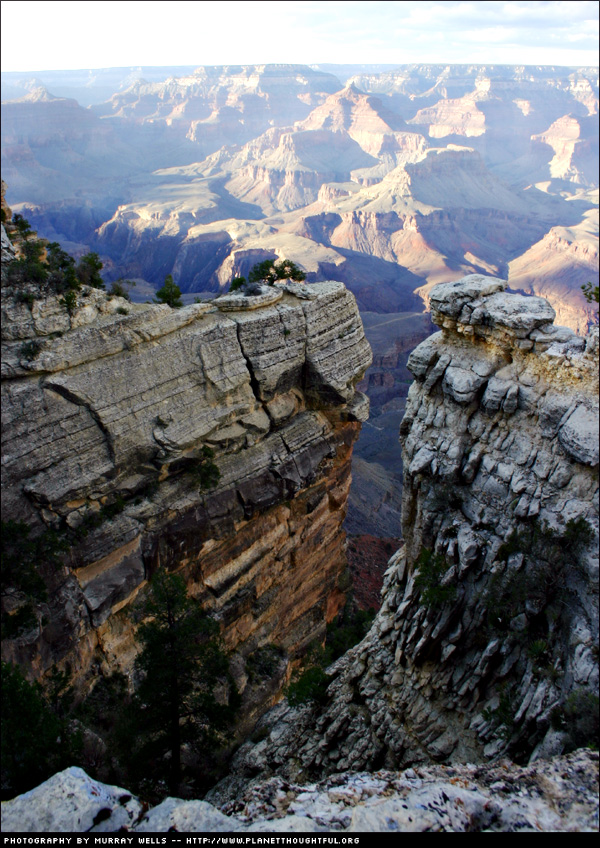
| 6th grade classes throughout Delaware use the Earth History kit to study the Grand Canyon. This science unit uses the canyon as a model of the earth's geologic history and the rock cycle. At the canyon, layers of rock are exposed all the way down to rock that is several billion years old. The history of the earth is there to see, if you know what to look for. |
 |
| The canyon is all about layers of rock, and rock layers mean sedimentary rock. We will study three types of sedimentary rock: sandstones, shales, and limestones. There are ten major rock layers from the top to the bottom of the canyon. Follow the links to find out more about the canyon. |
 |
 |