Feeding
Your Dog
I
can hear it now—feeding your dog? What’s so hard about that? You just buy a bag
of kibble that’s cheap/recommended by your vet/the most expensive you can find
and pour it into the dog’s bowl and the dog’s fed. Right?
Not
so much.
To
really delve into this discussion, we need to look at what the dog is. Your
dog—your little Toy Poodle or Great Dane sitting there in you lap—is a wolf.
The scientists have agreed—the dog is a wolf. They’ve even been reclassified is
Canis lupus familiaris.
Well, with only a .02 difference between mitochondrial DNA (mDNA—the little stuff, not the big stuff), go figure.
There’s that much difference between human races.
So. Little Fluffikins sitting in his bed
and gazing at you adoringly is a wolf.
Okay,
so now that I’ve freaked some of you out that your dog is going to start
suddenly acting like a wolf, we’ll move into why this is relevant to a
discussion about food. What do wolves eat? If you’ll watch a show
on Discovery or National Geographic about wolves, you’ll see they don’t go hunt
down a bag of pellets. No, they go hunt down deer, rabbits, fish if they can
get them, elk, caribou—prey animals, let’s say.
What’s
in a prey animal? Bones, organs—and lots and lots of meat.
Juicy, yummy, lets-sink-our-teeth-into-it meat. Good
stuff. They’ve been surviving on this stuff for millions of years, so it’s gotta be good, yes?
Okay,
fine. Wolves eat meat. My dog isn’t a wolf going out to hunt down his own food.
I still don’t get the point of this discussion.
Maybe not. But let’s look at what most dogs eat first.
Kibble. What is it? In most cases, it is a little pellet comprised of
corn, wheat, soy, or some other plant matter, a little bit of meat, a slightly
larger amount of meat by-products (the stuff you wouldn’t feed a dog—oh wait.
We are.), and gobs and gobs of chemicals—hydrochloric acid to break down the
indigestible corn (a friend of my dad actually made the pipes and pumps that
Purina uses to get the HCl from one place to another
in the process), preservatives galore, salts, sugars, vitamins since all the
vitamins are cooked out of it…yummy. A bag chock full o’ chemicals, euthanized animals, and any by-products that happen to get
in—you know, antibiotics, shavings off the floor, peanut hulls. The good stuff. All of this is, of course, shaped into those
nifty shapes you find—pebbles, or bones, or whatever—and cooked at extremely
high heats (destroying the vitamins, minerals, altering proteins dramatically,
and making fat toxic and cancerous) then sprayed with leftover restaurant
grease that’s been sitting out for a while so the dog will actually eat it, and
packaged up and sent to stores.
“What
do you feed your dog?”
“Well,
I feed it a bag of chemicals and 4D animals (dead, dying, diseased, and
disabled).”
This
is the norm now?
“Well,
all right smarty pants—what are we supposed to feed our dogs?”
Ah,
now, that’s the easy question. Meat, bones, and organs.
Whole chicken, whole fish, beef ribs, pork ribs, pork butt, whole turkey, goat,
deer, brisket, liver, kidney, brain, lung, intestines (ever heard of chitlins?) quail, pigeon, lamb ribs, lamb shanks, pig
stomach, cow stomach, pig legs, pig feet, pig ears, a ham, cow tongues, pig
tongues, duck, goose, whole rabbit, buffalo meat, kangaroo meat, pheasant,
ostrich, emu—if it’s a game animal, your dog can eat
it. Raw.
“Raw?
You’re kidding, right?”
Nope.
Serious as a heart attack.
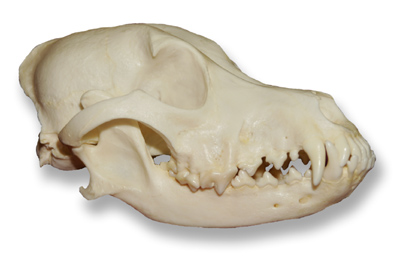
Look, dogs are descended from wolves. Wolves eat raw
food—bones, meat, organs…that’s what they eat. You can see it in the skull
structure:
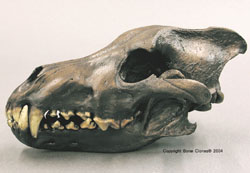
Picture courtesy of
boneclones.com
Picture courtesy
of skullsunlimited.com
This
is a picture of a wolf
skull. This is a picture of the skull of an
Australian Cattle Dog.
See the pointy teeth on
both of them—front and back teeth?
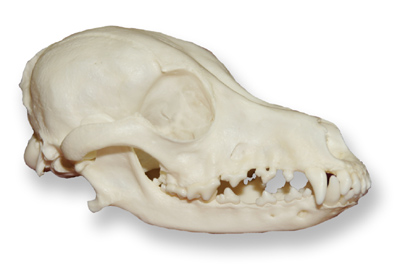
Picture courtesy of skullsunlimited.com
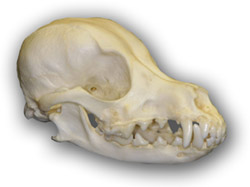
Picture courtesy of
skullsunlimited.com
This
is a Dachshund skull. This
is a poodle skull.
See
the pointy teeth?
See the pointy teeth?
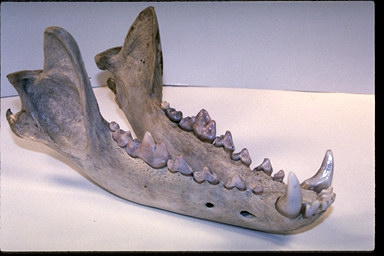
Picture courtesy of searchingwolf.com
This is the lower mandible—lower jaw—of a
wolf.
Better
picture of the pointy teeth.
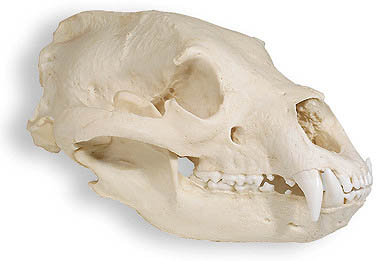
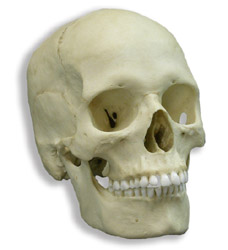
Picture courtesy of skullsunlimited.com
Picture
courtesy of skullsunlimited.com
This
is the picture of an American Black Bear.
This
is the picture of a human.
See
the flat back teeth? This is an omnivore.
See the flat teeth? We are
omnivores.
“Everyone
said not to feed my dog chicken bones.”
That
would be cooked chicken bones. Raw chicken bones are handled just fine. And no,
I’m not kidding. Look at it this way—we feed herbivorous horses vegetation, our
omnivorous selves a combination of both, why don’t we feed our carnivorous dogs
meat? Yes, I said carnivorous—as in carnivores. Dogs, and wolves, are
carnivores. So why are we feeding them grains? Especially
since they happen to be the leading cause of allergies in dogs. Why are
we feeding vegetables? Because someone spread the myth around that wolves, and
therefore dogs, eat the stomach contents of their prey—they don’t. I’ve heard
first hand accounts of raw feeders’ dogs shaking out and leaving said stomach
contents, and L. David Mech, leading wolf expert,
said in his book Wolves: Behavior, Ecology, and Conservation that they
shake them out and leave them as there is no interest in it—but they do like
the stomach wall. Would you feed a horse a steak? Or a snake
a broccoli floret? Then why are we feeding dogs against what they’re
designed to eat?
For
more info on raw feeding myths, go to Carrie’s Raw Feeding site and check out the
stellar work of Carissa--she debunks multiple myths
out there, including the omnivore one, the “meat makes dogs bloodthirsty” one
(and don’t forget to check out the link to Colby the “Killer”), and a whole
slew of others, while Carrie offers a comparison of kibble fed cat teeth vs rawfed cat teeth, some info on
starting your dog on raw, and a lot of other excellent info.
Moving
on…
“My
vet says that my dog needs SuchandSuch Brand because
he has SuchandSuch Disease/Sensitivity/Whathaveyou.”
Poppycock. In the first place, your vet—while a wonderful surgeon, I have
no doubt—has very little education in the way of diet. Very little—like, 3 or 4
hrs in the 4 yr or so program taught, for the most part, by the pet food
companies.
Why
would a vet recommend a raw diet? Dogs on raw diets are healthier, don’t come
in hardly at all, don’t require those expensive dentals to get their teeth
cleaned/removed, have low incidences of cancer, diabetes, pancreatitis,
peridontitis…the list goes on. Not to mention that if
you buy the Science Diet your vet recommends, he gets a nice kickback—good
reason not to recommend a raw diet.
Okay,
I don’t really believe that of vets—they love animals or they wouldn’t be vets,
and they’re only saying what they’ve been taught. The problem I see is the huge
number of them who don’t have any interest in learning why what they were
taught is wrong.
So…let
me pose a question to you: your dog has a health problem—maybe kidney or
pancreatic problems. Why on earth would you feed them an improper diet to fix
it? There is no way that a pelleted food full of
grains, rendered meat products, and preservatives can be better for a dog than
a proper raw diet. It just ain’t happening.
Birds
gotta fly, fish gotta swim,
vets gotta make money, and I owe it to my dog to give
him the best health possible.
“I
feed my dog Barf.”
Congratulations.
Now take that last step into a proper diet and get him off the ground, reduce
the bone, get rid of the grains and veggies and start feeding that puppy
properly.
“But
so and so said that Barf is best.”
Okay,
let’s take a look at the Barf (Bones and Raw Food/Biologically Appropriate Raw
Food) diet.
One:
Barf recommends chicken backs, necks, and wings as a staple “raw meaty bone”.
If you’ll look at a chicken neck or back wing, you’ll see that 1) they’re
comprised mostly of bone, and 2) they’re small. Barely more
than a gulp for the larger dogs—ie, choking hazard.
They do better when attached to the whole bird.
Two:
Barf recommends ground.
Let me ask you something: you fed your dog kibble and he gulped it down. What’s
the point of moving from one gulped food to another? I fed my dogs ground hamburger in the beginning, partially because
that’s the main meat I could find, and partially because it is what was
recommended on the first sites I found. Both my dogs gobbled it up in about 2
seconds and looked at me for more. There’s no point to it—it doesn’t give the
dog a workout, doesn’t exercise the brain, and goes down so fast that it sits
in the stomach for a while before the stomach kicks into gear and starts
digesting. Now, compare that to giving your dog, say, a hunk of beef roast
bigger than his head—he can’t gulp it down, so he has to work at tearing it
into swallow-able chunks, which primes his gut for digestion and engages his
brain. Compare that to an even better whole chicken, or a large fish, or a
large slab of ribs—that really takes some work, and the dog derives more
satisfaction from his meal.
Three:
Barf recommends veggies.
It’s the opinion of other prey model feeders and myself
that Billinghurst discovered that the amount of bone
he recommended caused constipation/impaction in dogs, so he added veggies to
compensate. Or maybe it was the other way around—the vegetables caused
diarrhea, so he added too much bone to compensate. Either way, there is no
reason to feed your dog vegetables. They go in, they go out, there
isn’t a whole lot that happens to them in the interim. Sure, they’re great as
treats—my guys love peaches and green beans, so I use the green beans sometimes
as training treats—but do not make them a large part of the diet. Treats
comprise 5% or so of the entire diet—that includes freeze dried liver, potato
chips they grab, any cooked meat they beg off of me, any bread they beg off of
me, and any veggies they beg off of me. Dogs are opportunistic and will eat
just about anything, but it doesn’t mean they should. And just as an FYI and a
FWIW—I started feeding my dogs a raw diet and they almost immediately stopped
eating carrots, olives, and apples—three fruit/veggies that they used to love.
Do with that what you will.
We’ll put grains under this topic—even Billinghurst
says that grains are not a natural food for dogs, but he does not go so far as
to say they shouldn’t have them as a large part of the diet, so I’ll say it—if
your dog likes bread or rice or pasta, great. Use it as bits of training
treats. But don’t cross that 5% or so of treats. Another thing to keep in
mind—carbohydrates, which is what grains are, are basically sugars. Cancer
cells feed on sugars. Conclusion? Cut out the grains,
cut way down on cancer rates—that includes humans as
well.
Four:
Barf recommends supplements.
That, in and of itself, should be a red flag that the diet is not proper. Why
do you need to add stuff to a proper diet? I’ll answer that—you don’t.
Therefore, there’s most likely something lacking. On the flip side, adding
supplements to a proper diet can throw it off and turn it into a not so good
diet. Most prey model feeders recommend leaving off the supplements—the only
one that many use is fish body oil to make up for the Omega 3 fatty acids
missing in grain fed meat, but just as many don’t supplement with the oil and
just feed fish high in Omega 3’s—mackeral, sardines,
salmon, etc..
Five:
Barf recommends dairy.
I don’t know how many barf recipes I’ve come across that urge people to add
yogurt as part of their dog’s diet. Yogurt is dairy.
Dogs can’t digest dairy—they don’t make the lactase to digest the lactose.
Humans are one of the only animals on the planet with the ability to digest
dairy after a certain age, and not even all of use can do it! In fact, the
majority of us can’t—it’s those who can have dairy without…aftereffects…that
are the minority. Also, yogurt is recommended for its probiotics.
What they don’t get is that the acid in the dog’s stomach renders said probiotics useless before they even hit the intestines, so
it’s pointless. Not to mention your dog creates enough probiotics
on his own, thank you very much.
My
main problem with the barf diet is the amount of bone—I have never heard of an animal
that is more than 10-15%, maybe 20% bone, and yet Barf recommends around 50%.
It’s impossible for an animal to have that much bone—ask any biologist and
they’ll probably ask what you’ve been drinking and if you need a lie down. That
much bone also causes problems, as I mentioned before, and the types of bones
recommended cause problems—dogs, even the smaller dogs like the 20 lb or so
breeds—can easily choke on a chicken wing or neck or back because it’s small
enough for them to try and eat in one gulp. Add that to the fact that it is way
too much bone, and you get a situation of “Why am I feeding my dogs this?” If
you have a small dog and it needs a bony meal, sure go ahead. But if you have a
retriever, or a husky, give that dog a chicken leg quarter or even a half or
whole chicken.
The other problem I have with Barf bones are the “recreational” bones he (and
other vets) recommends—the weight bearing bones of the large animals like cows.
Those are more commonly referred to as “wreck” bones on the Raw Feeding list
because they are too big and too dense—they cause tooth breakage or cracking.
Even the wolves don’t bother with the leg bones of the elk or deer they take
down, except to strip any meat off. If you want a bone or a meal that a dog has
to work at, find an odd shaped one, or give him a slab of ribs, or something
odd like a goat or pig head. Something that is actually
consumable, just clumsy and time consuming. Heck, I’ve discovered that
even raw pig ears take my chewing machine around a half an hour to get through.
“I
feed my dog a home cooked diet. That’s just as good, right?”
Wrong.
First,
it’s cooked. These are dogs we’re talking about—wolves in different looking bodies.
Do you see wolves running down an elk, then lighting a fire to cook it on? I
didn’t think so. Cooking, as I mentioned when talking about kibble, kills
minerals, vitamins, and enzymes, alters proteins, and makes fats toxic and
cancerous. Not to mention that cooked bones are extremely dangerous—very splinterable—so the balance of a dog’s proper diet is
thrown off already.
“But people have been
cooking for dogs for years, so their digestive systems have adapted to it.”
Not
exactly true—it’s only in recent years that dogs have attained the status they
have today as beloved pets. It used to be, dogs got the leftover meat that the
humans didn’t cook and they hunted for the rest of their diet. Cooked meat was
too valuable—humans needed that. Not to mention, it takes millions of
years for that sort of adaptation to happen—not fifty.
“I
feed my dog a vegetarian diet.”
What
are you, nuts? Would you feed a horse an all meat diet? Come on people—dogs are
carnivores. Say it with me—car-ni-vores. It’s not a difficult
concept to grasp. See the above pics for examples of
just the jaw structure that supports that dogs are carnivores, and when the
mouth is for a carnivore, the rest of the body follows suit.
Dogs
are not omnivores. Pointy teeth unsuitable for grinding plant matter, short
digestive system—they are designed to eat meat. It’s time we stop trying to
convince ourselves that just because we need vegetables and feel we need grains
in our diet that our animal friends need them as well.
“I
feed my dog a pre-made commercial raw diet. That’s as good, right?”
Again,
wrong. One—you have no idea what quality of ingredients got put in. Two—you
have no idea what “additives” wound up in it “accidentally”, like floor
sweepings or whatever. Three—it’s ground. What’s the good of ground? I covered
this above, but I’ll cover it again: ground offers no work out and does not
keep the teeth clean like bones do. Four—I have yet to see a pre-made ground
diet that was pure meat. Every single one I’ve seen had either vegetables,
grains, or both added. Not a species appropriate diet. Five—why pay uber high prices for pre-made ground that’s not
nutritionally adequate, not species appropriate, and overall just not as good
as saving your money and buying some beef ribs, chickens, pork ribs, etc? No
good reason I can think of.
“If
the dog’s doing all right, why change their diet?”
I’ll
tell you why—because they can do better. I thought my Collie was doing well on
kibble. She was a little overweight, and couldn’t run for more than a few
minutes at a time, but I figured—hey, it’s old age dog
stuff. It’s normal. Her breath stank—it’s normal. Her teeth were close to
needing a clean—it’s normal. She smelled sometimes—it’s normal. She’s almost
8—it’s getting to that time that her health starts to deteriorate. It’s normal.
It’s
NOT normal. Or rather, it shouldn’t be normal. It’s normal now because it’s been happening for half a century, over time. It’s
normal now because people think, and
are told by other people, that this is the way things are. Dogs smell. They get
cancer. They get fat. They get arthritis. They’re breath stinks. They have huge
poops that never decay.
People
need to change their way of thinking. Why does their breath stink? Because they have peridontitis.
Why do they have peridontitis? Because kibble does
nothing to keep their teeth clean. Why do they have huge poops that never
decay? Because of all the grains and preservatives and additives in the regular
dog poop—low digestibility combined with additives that don’t break down =
major dog poop. Why do they get fat? Because of all the carbs in the dog food (same answer for humans—too many carbs). Why do they get arthritis by age 7 or 8? Bad nutrition.
So…your
definition of a dog that is doing “well” on a dog food may be that he keeps a good
weight, maybe has a shiny coat, has a reasonable amount of energy.
My
definition of a dog that is doing “well” is clean teeth, nice breath, good
muscle, small turds, a good amount of energy that
they can turn on and off (unlike the energy spikes found with carbs) and little to no health problems—no cancer, no peridontitis, no diabetes, no IBD, no nuthin’.
Maybe I ask too much. Your call.
If
you’ve gotten this far, then I’m going to assume you’re at least willing to
check out this raw feeding thing, so here are a handful of excellent sites for
more information:
Raw Fed Dogs—An excellent source of information for those of you who want
to do it and insist on recipes.
Raw Learning—An
excellent source of information on how to start, why you should, what raw
feeding is about, and all those little questions you may have like, can my dogs
eat eggs? (short answer—yes) What about my
pregnant/lactating bitch? And so on.
Raw
Feeding Group—An excellent list to join for those who want to switch
their dogs to a proper diet, or just want to learn more—the archives are chock
full of posts by people who had the same questions you probably have, and if
they didn’t, just ask!
And
for those of you just dying to know what goes into dog food: