 |
|
|
|
|
|
|
|
|
|
|
|
|
|
|
|
|
|
|
|
|
|
|
|
|
|
|
|
|
|
|
|
|
|
|
|
|
|
|
|
|
Isla Isabela |
|
|
|
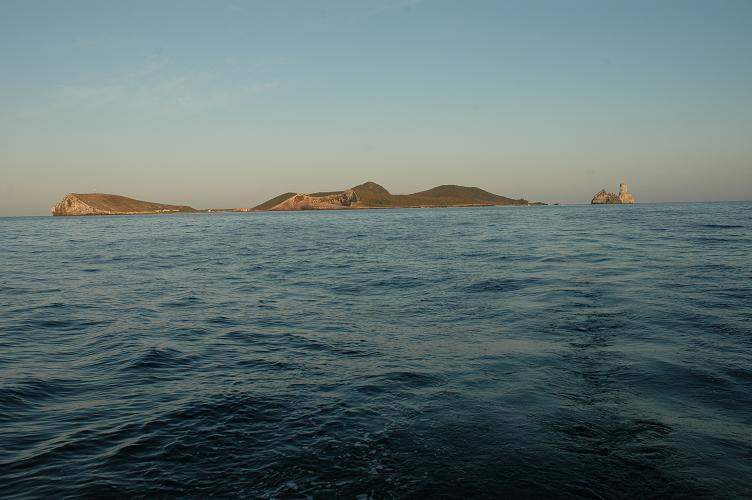
After sailing for two days across the southern Sea of Cortez, we arrived at Isla Isabela, 40 miles from mainland Mexico at a latitude between Mazaztlan and Puerto Vallarta. We set the anchor at sunrise on the east side of the island, and watched from the cockpit as thousands of sea-birds left their roost and headed out to sea.
Isabela is an unassuming place, a small, arid, rocky island, not more than two miles in diameter. The remnants of a long extinguished volcano, cauldrons now knit together by a filigree of fired rock and tangled vegetation. But, the unpretentious appearance of the island belies the truth; Isabela is a very special place.
We sat in the cockpit in the morning sun, in the same indescribably brilliant light as that of the Sea of Cortez, the light Steinbeck referred to as 'miraculous air.' We sipped coffee and ate our breakfast, and a Humpback whale did the same nearby, frequently displaying his large flukes as he lazily stitched himself in and out of the surface of the calm sea. Several other whales went about their morning routines on the near horizon. |
|
|
|
 |
|
|
|
|
|
Isabela |
|
|
|
|
|
 |
|
|
|
|
|
Mike Kayaking Isabela |
|
|
|
|
|
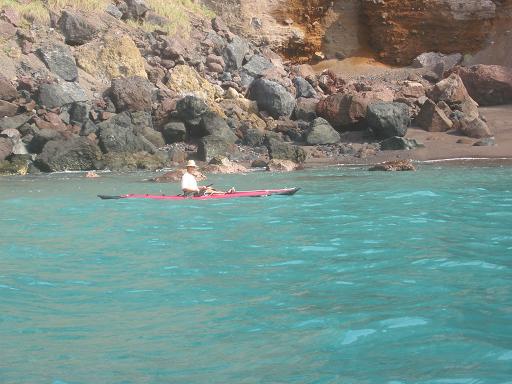
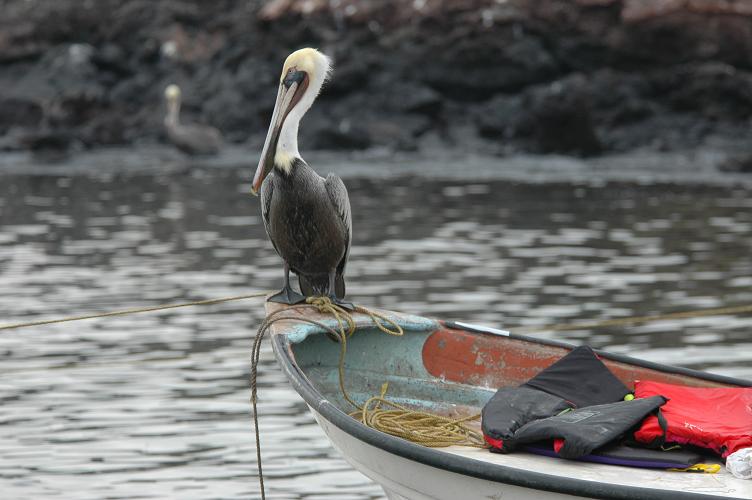
After breakfast we kayaked around the island, past rocky outcroppings frosted with guano, and giant sea turtles bobbing at the water's surface; we landed on a beach in a small cove at the southern end. Although the island has no permanent residents, a row of red, ramchackle huts line the rock and coral strewn beach and serve as a temporary residence for a small group of fishermen. As we walked the beach, collecting bits of colorful polished glass, Brown Pelicans sat patiently atop the fishermen's pangas as if waiting for a ride back out to sea. |
|
|
|
|
 |
|
|
|
|
|
|
 |
|
|
|
|
Brown Pelican and Panga |
|
|
|
|
|
|
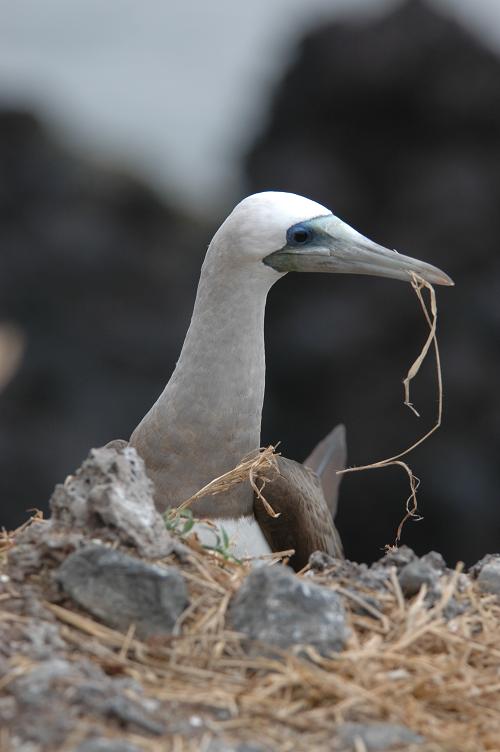
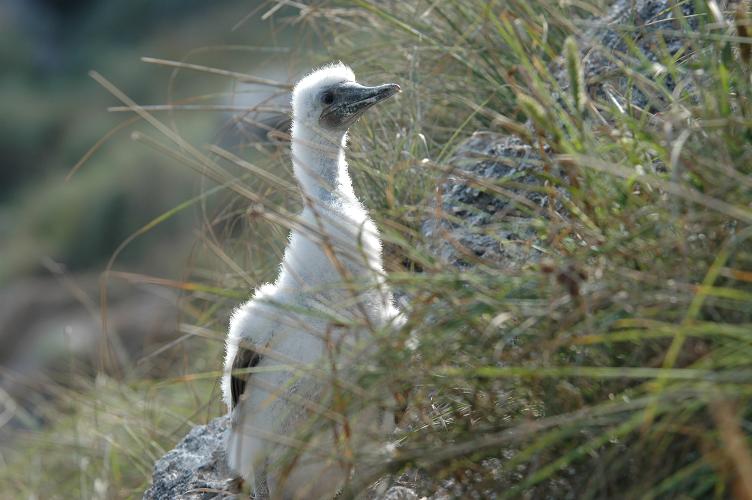
Booby Chick |
|
|
Isabela is a National park and ecological preserve, a sanctuary and essential rookery for several species of birds, most notably Frigates and Boobies. As we followed a narrow dirt path from the research facility to the lighthouse at the top of the island, several Brown Boobies sat on nests in the clumps of rock and grass alongside the trail, indifferent to our presence. Where parents were absent, fuzzy young peered out of the nest in anxious anticipation of their return with food.
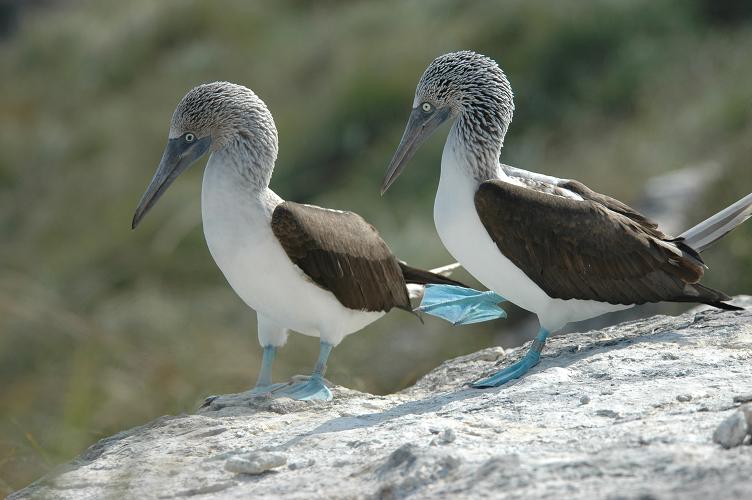
While the Brown Boobies were nesting, the Blue-Footed Boobies were still courting. We watched a prospective couple, the male whistling, as if he were blowing into a flute he had not yet learned to play, and lifting his bright blue feet high into the air from side to side. She appeared to be impressed; perhaps color does matter. |
|
|
|
|
|
|
|
|
|
 |
|
|
|
|
|
|
Brown Booby Nesting |
|
|
|
|
|
|
|
|
|
 |
|
|
|
|
Blue-Footed Boobies
Courting |
|
|
|
|
|
|
|
|
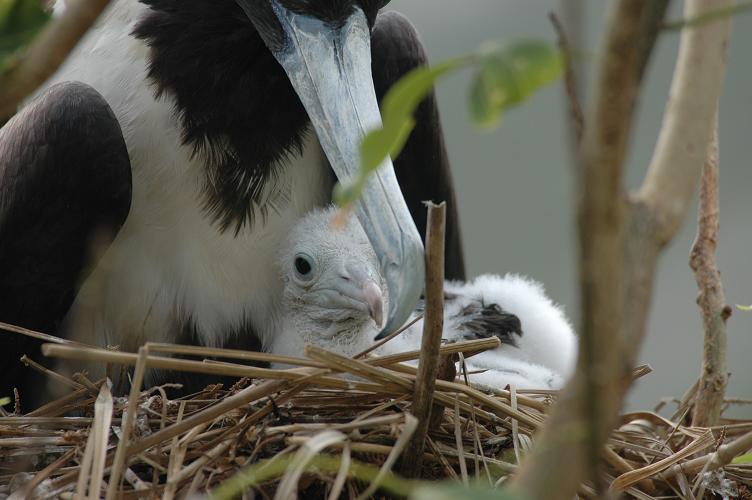
Frigate birds, the most abundant birds on the island, nest communally atop squat trees in dense tangles of vegetation. Like a modern-day pterodactyl, dihedral wings give these birds a prehistoric appearance, and lend credence to the theory that birds are the descendants of dinosaurs.
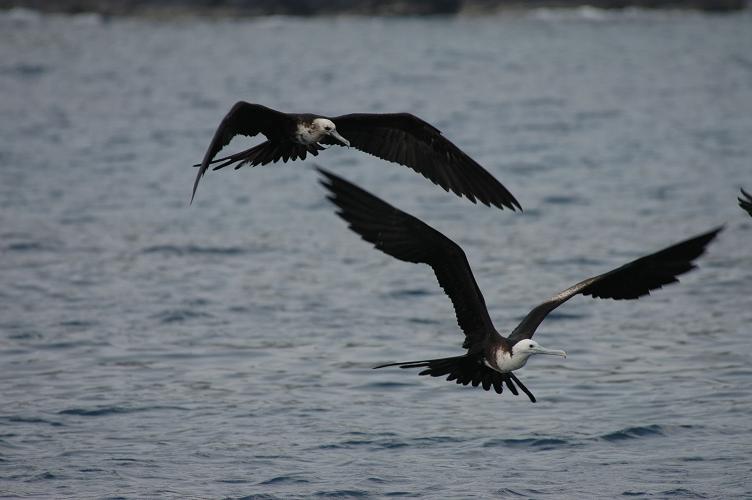
Though frigate birds nest communally, they are not congenial birds, especially to the Boobies. Throughout the day, the Frigate birds circled the island, soaring near shore, waiting to intercept the Boobies as they returned with a cache of food for their young. The frigates pursue and badger the Boobies, descending on them and forcing them to regurgitate their catch. I screamed at them, but they ignored me, and continued their relentless harassment. |
|
|
|
|
 |
|
|
|
|
Frigate
Nesting |
|
|
|
|
|
|
|
|
 |
|
|
|
|
Frigates |
|
|
|
|
|
|
|
|
|
Click to Continue |
|
|
|