History of the Amiga
Date Event
1982 Hi-Torro company created by Jay Minor and Dave Morris (later
renamed to Amiga Inc). Team included RJ Mical, Carl Sassenrath,
Dale Luck and others. They developed the first prototype Amiga
called 'Lorraine' made of loads of breadboards and lots of chips
(which broke .. frequently).
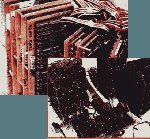
 Lorraine Jay Miner
1984 January 4th. First Amiga prototype hardware displayed at
the Winter CES. Boing ball demo shown.
1985 * Amiga Inc getting very short of cash. Atari and SGI were
first interested but Commodore gave the best offer of
$4.25 a share.
In June, the first silicon based Amiga shown. Not many
people could believe the kind of graphics it could do.
Lorraine Jay Miner
1984 January 4th. First Amiga prototype hardware displayed at
the Winter CES. Boing ball demo shown.
1985 * Amiga Inc getting very short of cash. Atari and SGI were
first interested but Commodore gave the best offer of
$4.25 a share.
In June, the first silicon based Amiga shown. Not many
people could believe the kind of graphics it could do.
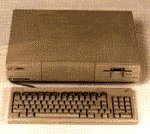 A1000
On July 23rd, the A1000 was displayed with Andy WarHol
at the launch who drew a picture of Blondie on the spot.
* The A1000 was released in September. It cost half the
price of a EGA based PC.
Amiga World magazine released. The famous Juggler demo
released.
1986 Original A2000 designs were rejected by Commodore, instead
they went for a German design. As a result, more than half
of the original Amiga crew were laid off. Within months,
none of the original crew remained.
Defender of the Crown game released. It was so impressive
that it sold thousands of Amigas.
A1000
On July 23rd, the A1000 was displayed with Andy WarHol
at the launch who drew a picture of Blondie on the spot.
* The A1000 was released in September. It cost half the
price of a EGA based PC.
Amiga World magazine released. The famous Juggler demo
released.
1986 Original A2000 designs were rejected by Commodore, instead
they went for a German design. As a result, more than half
of the original Amiga crew were laid off. Within months,
none of the original crew remained.
Defender of the Crown game released. It was so impressive
that it sold thousands of Amigas.
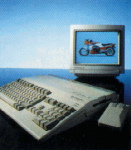
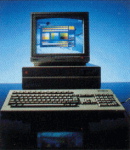 A500 A2000
1987 * The Amiga 500 and the A2000 were released. Both came with Workbench
1.2, although upgraded to Workbench 1.3 later (which has Hard disk
boot code, Recoverable RAM (RAD:) and New Console).
A500 A2000
1987 * The Amiga 500 and the A2000 were released. Both came with Workbench
1.2, although upgraded to Workbench 1.3 later (which has Hard disk
boot code, Recoverable RAM (RAD:) and New Console).
 A1500
1988 Sales of the Amiga rose.
1989 Batman Pack (A500) released. It sold in the 100,000s.
1990 The Amiga became the world's best selling home computer.
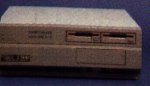
A1500
1988 Sales of the Amiga rose.
1989 Batman Pack (A500) released. It sold in the 100,000s.
1990 The Amiga became the world's best selling home computer.
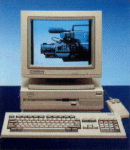
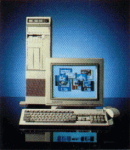 A3000 A3000T
On April 24th, the Amiga A3000 was unveiled and in May
it was released. It had the new Workbench 2.0.
A3000 A3000T
On April 24th, the Amiga A3000 was unveiled and in May
it was released. It had the new Workbench 2.0.
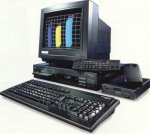 Commodore Dynamic Total Vision (CDTV)
In June, the CDTV was released, which looked like a VCR
with a CDROM and used the old Kickstart 1.3. It was very
expensive, and marketed not as a Amiga computer but a
home appliance.
* In August, the A500+ was released which had ECS chipset and
Workbench 2.04 There were problems with software
compatibility as a lot of programs hit the hardware which
didn't work on the new hardware which caused a few problems
for new buyers.
In November, the Newtek Video Toaster was released. It was
widely used in TV and Video productions including some
famous ones such as B5, Seaquest DSV, Star Trek TNG,
Quantum Leap, Robocop, Alladin and Jurrasic Park etc.
1991 The CDTV was a financial failure and Commodore themselves
made some mistakes as well. The A600 was unveiled which was
no better than the A500+ (although it included PCMCIA port
and IDE interface, but some had ROMs with no scsi.device
in it!), it didn't have a keypad.
1992 The A3000+ was shown which had AGA and was very expandable,
but Commodore scrapped it, in favour of the A4000.
Commodore Dynamic Total Vision (CDTV)
In June, the CDTV was released, which looked like a VCR
with a CDROM and used the old Kickstart 1.3. It was very
expensive, and marketed not as a Amiga computer but a
home appliance.
* In August, the A500+ was released which had ECS chipset and
Workbench 2.04 There were problems with software
compatibility as a lot of programs hit the hardware which
didn't work on the new hardware which caused a few problems
for new buyers.
In November, the Newtek Video Toaster was released. It was
widely used in TV and Video productions including some
famous ones such as B5, Seaquest DSV, Star Trek TNG,
Quantum Leap, Robocop, Alladin and Jurrasic Park etc.
1991 The CDTV was a financial failure and Commodore themselves
made some mistakes as well. The A600 was unveiled which was
no better than the A500+ (although it included PCMCIA port
and IDE interface, but some had ROMs with no scsi.device
in it!), it didn't have a keypad.
1992 The A3000+ was shown which had AGA and was very expandable,
but Commodore scrapped it, in favour of the A4000.
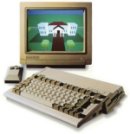 A600
* In March the A600 was released, it caused an outcry for
those people who still bought the older A500/A500+ (CBM
never released information until the last minute).
Amiga Format magazine, reached reader figures of 130,000
and peaked at 160,000 readers.
On September 11, the A1200 was unveiled which had AGA
and Workbench 3. It was an actual prototype but if it
was developed further it could have been even better.
A600
* In March the A600 was released, it caused an outcry for
those people who still bought the older A500/A500+ (CBM
never released information until the last minute).
Amiga Format magazine, reached reader figures of 130,000
and peaked at 160,000 readers.
On September 11, the A1200 was unveiled which had AGA
and Workbench 3. It was an actual prototype but if it
was developed further it could have been even better.
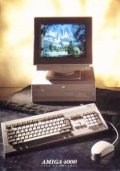
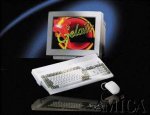 A4000 A1200
* The A4000 was released in December and the A1200 was
released slightly later to cash in on the Christmas
sales. The A4000 was good but was priced too high.
1993 Commodore starts laying off people, the new AAA chipset
is shelved due to lack of money. Rumours of Commodore's
demise is rife and the PC starts to gain a lead over the
Amiga.
Amiga Report, an online magazine by Jason Compton, was
started in March.
By April, the A1200 reached 100,000 sales.
Workbench 3.1 was released to developers for testing.
The Emplant Emulator was also announced this month, which
emulates the Apple Mac.
A4000 A1200
* The A4000 was released in December and the A1200 was
released slightly later to cash in on the Christmas
sales. The A4000 was good but was priced too high.
1993 Commodore starts laying off people, the new AAA chipset
is shelved due to lack of money. Rumours of Commodore's
demise is rife and the PC starts to gain a lead over the
Amiga.
Amiga Report, an online magazine by Jason Compton, was
started in March.
By April, the A1200 reached 100,000 sales.
Workbench 3.1 was released to developers for testing.
The Emplant Emulator was also announced this month, which
emulates the Apple Mac.
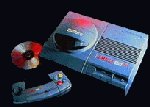 CD32
In September, the CD32 console was released (contained a
CDROM drive and AGA chipset). It had a lukewarm reception
and Commodore promised lots of games for it - which never
appeared. They planned advertising, costing �7million.
1994 In March, Commodore announced huge losses and by April
they laid off a lot of their staff. By the 25th, only
30 employees were left, of the original 1000.
On Wednesday the 27th, the West Chester facility was
closed down.
* Finally, on Friday April 29th, 4:10, Commodore filed
for liquidation.
Later, another sad event, occured, Jay Miner, the 'father'
of the Amiga, died on June 20th due to a long illness
in El Camino Hospital In Mountain View.
1995 Chelsea Football Club considered taking legal action
against Commodore for due sponsership money.
Commodore UK tried a management buyout until the last
minute.
On March 1st, the Amiga World magazine was cancelled.
* In April, Escom and Dell fought over Commodore. Escom
offered �7m while Dell offered �15m but wasnt sure they
wanted the Amiga...!? Escom won the contest.
CD32
In September, the CD32 console was released (contained a
CDROM drive and AGA chipset). It had a lukewarm reception
and Commodore promised lots of games for it - which never
appeared. They planned advertising, costing �7million.
1994 In March, Commodore announced huge losses and by April
they laid off a lot of their staff. By the 25th, only
30 employees were left, of the original 1000.
On Wednesday the 27th, the West Chester facility was
closed down.
* Finally, on Friday April 29th, 4:10, Commodore filed
for liquidation.
Later, another sad event, occured, Jay Miner, the 'father'
of the Amiga, died on June 20th due to a long illness
in El Camino Hospital In Mountain View.
1995 Chelsea Football Club considered taking legal action
against Commodore for due sponsership money.
Commodore UK tried a management buyout until the last
minute.
On March 1st, the Amiga World magazine was cancelled.
* In April, Escom and Dell fought over Commodore. Escom
offered �7m while Dell offered �15m but wasnt sure they
wanted the Amiga...!? Escom won the contest.
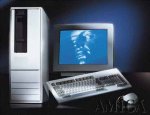 A4000T
Escom created Amiga Technologies to sell the A1200
and A4000T which went back into production. There was
a small problem with Escom made A1200s, the floppy drive
had a small flaw that caused some programs to fail to
load! The A4000T was priced at �2000-�2500 for 040/060
Amigas...!
On April 16th, GVP went out of business. They were very
popular hardware manufacturers for the Amiga (GVP-M have
now taken over).
1996 On April 11th, Viscorp (STB company) announces that it
will try to buy the Amiga from Escom (they tried all
year, keeping the community in the lurch).
A range of 15" and 17" monitors will be released for use
on the Amiga by Microvitec on 8th May.
May 15th, Phase 5 announces its PowerUp accelerator
boards for the Amiga.
Also, Eagle Computers announce that they will make
A4000TE computers.
A4000T
Escom created Amiga Technologies to sell the A1200
and A4000T which went back into production. There was
a small problem with Escom made A1200s, the floppy drive
had a small flaw that caused some programs to fail to
load! The A4000T was priced at �2000-�2500 for 040/060
Amigas...!
On April 16th, GVP went out of business. They were very
popular hardware manufacturers for the Amiga (GVP-M have
now taken over).
1996 On April 11th, Viscorp (STB company) announces that it
will try to buy the Amiga from Escom (they tried all
year, keeping the community in the lurch).
A range of 15" and 17" monitors will be released for use
on the Amiga by Microvitec on 8th May.
May 15th, Phase 5 announces its PowerUp accelerator
boards for the Amiga.
Also, Eagle Computers announce that they will make
A4000TE computers.
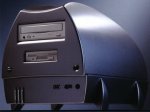
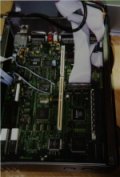 Walker prototype Walker Innards
The Walker was shown to the public, it used AGA, had a CD,
floppy drive, a standard sized motherboard and Zorro slots
but the Black curved casing caused some controversy -
Darth Vader's helmet, a vacuum cleaner?!
* On July 15th, Escom filed for bankrupty. They bought out
hundreds of shops across the country and underestimated
the growth of PC sales.
In a shock move, Carl Sasserath (author of Amiga's Exec)
resigns from Viscorp on Nov 24th.
On Nov 29th, Viscorp's bid for the Amiga was cancelled.
Jason Compton (author of Amiga Report) resigns as spokes
man from Viscorp, disillusioned, on Dec 4th.
Amiga Power, a games magazine, was closed in September.
1997 On Feb 1st, QuikPak (makers of A4000s) makes a bid for
the Amiga.
On March 2nd, Phase 5 announces that they will be making
the CyberStormPPC and BlizzardPPC boards which will
use fast PowerPC 603/604 chips along with 68040/68060
to run OS functions.
Villagetronic discovers that the number of OS 3.1
upgrade kits are in short supply by March 19th.
Vulcan and Clickboom took on the Amiga market and managed
to release new games. Myst and Quake were converted to
the Amiga and sold thousands of copies.
* On March 27th, a new owner was found for the Amiga.
Gateway 2000, bought out Amiga from Escom and rename Amiga
Technologies to Amiga International to sell the remaining
stocks of Amiga to the public. They have sold a lot to
various third world countries including India.
May 9th, Haage & Partner announces that they will bring
Java to the Amiga (we are still waiting in '99).
Amiga Inc, the Research and Development arm was opened to
develop the new Amiga. Staff includes Jeff Shindler,
Dr Havemose, Bill McEwen and Fleecy Moss (who later left).
In June, Amiga User International magazine closed and
Amiga Computing in July. Finally, Amiga Review closed
as well due to lack of advertising.
Walker prototype Walker Innards
The Walker was shown to the public, it used AGA, had a CD,
floppy drive, a standard sized motherboard and Zorro slots
but the Black curved casing caused some controversy -
Darth Vader's helmet, a vacuum cleaner?!
* On July 15th, Escom filed for bankrupty. They bought out
hundreds of shops across the country and underestimated
the growth of PC sales.
In a shock move, Carl Sasserath (author of Amiga's Exec)
resigns from Viscorp on Nov 24th.
On Nov 29th, Viscorp's bid for the Amiga was cancelled.
Jason Compton (author of Amiga Report) resigns as spokes
man from Viscorp, disillusioned, on Dec 4th.
Amiga Power, a games magazine, was closed in September.
1997 On Feb 1st, QuikPak (makers of A4000s) makes a bid for
the Amiga.
On March 2nd, Phase 5 announces that they will be making
the CyberStormPPC and BlizzardPPC boards which will
use fast PowerPC 603/604 chips along with 68040/68060
to run OS functions.
Villagetronic discovers that the number of OS 3.1
upgrade kits are in short supply by March 19th.
Vulcan and Clickboom took on the Amiga market and managed
to release new games. Myst and Quake were converted to
the Amiga and sold thousands of copies.
* On March 27th, a new owner was found for the Amiga.
Gateway 2000, bought out Amiga from Escom and rename Amiga
Technologies to Amiga International to sell the remaining
stocks of Amiga to the public. They have sold a lot to
various third world countries including India.
May 9th, Haage & Partner announces that they will bring
Java to the Amiga (we are still waiting in '99).
Amiga Inc, the Research and Development arm was opened to
develop the new Amiga. Staff includes Jeff Shindler,
Dr Havemose, Bill McEwen and Fleecy Moss (who later left).
In June, Amiga User International magazine closed and
Amiga Computing in July. Finally, Amiga Review closed
as well due to lack of advertising.
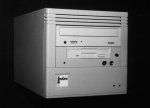 Access
On July 5th, Index Info. gets a licence to make Amigas
such as the Access machine and the BoXeR.
On July 10th, Intrinsic Computers also get a licence!
On Sept 15th, Amiga Intl now has a list of spare parts
to sell.
Cloanto releases Amiga Forever CD containing UAE and
Kickstarts and Workbenchs licenced from Amiga Intl
on 10th Oct.
DCE Gmbh gains a licence to sell its own Amigas on
October 29th.
On Nov 11th, Index releases their Access Amiga box to
the world. Ideal for information points etc.
Amiga Intl. announces that a large order of Amiga
1200s are going to India on Dec 21st.
1998 * 15th May, World of Amiga show, gave a shock to the Amiga
Community. They announced Amiga OS 4 (actaully Amiga OS 5
dev) to be run on an industry standard developer machine
(x86 based) at around US$999.
The current Amiga range is declared to be legacy or
'Amiga Classic'. Amiga OS 3.5 upgraded has been cancelled.
AmigaOS 5 machines will be aimed at Digital Convergance
platform for customers. No details of processor or
hardware were released.
* At the Amiwest show in July, further details about the
AmigaII or AmigaNG were released:
3D graphics, Dolby AC3, multi-MPEG decoding, Internet,
scalable multimedia processors, HDTV, OpenGL, Java,
Firewire, USB, ADSL and Autoconfiguration!
At the MAE show in October, Amiga Inc, announces that
AmigaOS 3.5 WILL after all be developed as a gift for
the Amiga community. Features includes new interface,
better CDFS, Internet capabible, better printer support,
RTG and RTA (later dropped), PPC support, new FFS, plus
bugs fixed from WB 3.1.
On November 11th, Amiga Inc, announces that QNX Software
Systems Ltd will utilise the QNX realtime OS as the
foundation for the Next Generation Amiga.
Due to loss of a partner the Developer box did not appear.
1999 On February 26th, Jim Collas will take over Amiga Inc
and has moved its HQ to San Diego and start Fast
Track Development Plans. Former head, Jeff Shindler
will take over product strategy for the new Amiga.
On July 16th, Amiga Inc releases Technology brief detailing
their new Amiga Operating Environment using AmigaObjects,
and Java using the Linux (instead of QNX) operating system.
Access
On July 5th, Index Info. gets a licence to make Amigas
such as the Access machine and the BoXeR.
On July 10th, Intrinsic Computers also get a licence!
On Sept 15th, Amiga Intl now has a list of spare parts
to sell.
Cloanto releases Amiga Forever CD containing UAE and
Kickstarts and Workbenchs licenced from Amiga Intl
on 10th Oct.
DCE Gmbh gains a licence to sell its own Amigas on
October 29th.
On Nov 11th, Index releases their Access Amiga box to
the world. Ideal for information points etc.
Amiga Intl. announces that a large order of Amiga
1200s are going to India on Dec 21st.
1998 * 15th May, World of Amiga show, gave a shock to the Amiga
Community. They announced Amiga OS 4 (actaully Amiga OS 5
dev) to be run on an industry standard developer machine
(x86 based) at around US$999.
The current Amiga range is declared to be legacy or
'Amiga Classic'. Amiga OS 3.5 upgraded has been cancelled.
AmigaOS 5 machines will be aimed at Digital Convergance
platform for customers. No details of processor or
hardware were released.
* At the Amiwest show in July, further details about the
AmigaII or AmigaNG were released:
3D graphics, Dolby AC3, multi-MPEG decoding, Internet,
scalable multimedia processors, HDTV, OpenGL, Java,
Firewire, USB, ADSL and Autoconfiguration!
At the MAE show in October, Amiga Inc, announces that
AmigaOS 3.5 WILL after all be developed as a gift for
the Amiga community. Features includes new interface,
better CDFS, Internet capabible, better printer support,
RTG and RTA (later dropped), PPC support, new FFS, plus
bugs fixed from WB 3.1.
On November 11th, Amiga Inc, announces that QNX Software
Systems Ltd will utilise the QNX realtime OS as the
foundation for the Next Generation Amiga.
Due to loss of a partner the Developer box did not appear.
1999 On February 26th, Jim Collas will take over Amiga Inc
and has moved its HQ to San Diego and start Fast
Track Development Plans. Former head, Jeff Shindler
will take over product strategy for the new Amiga.
On July 16th, Amiga Inc releases Technology brief detailing
their new Amiga Operating Environment using AmigaObjects,
and Java using the Linux (instead of QNX) operating system.
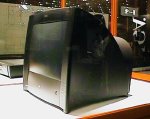
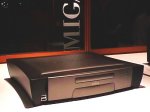 NG Monitor NG Amiga Case
They also announced the specification of the Amiga Multimedia
Convergence Computer (MCC) based on a unknown High-performance
next generation CPU and the latest hardware technology such as
SDRM, 3D graphics, DVD, MPEG, TV, 16bit surround sound etc.
Phase 5 announces the new AmiRage K2 computer based on the
PowerPC and using QNX as the operating system instead of Linux
on 5th August.
In a shock move, Jim Collas, President of Amiga, resigns,
probably due to differences of strategy with Gateway. Tom
Schmidt takes over as President (1/9/99)
Amiga files 17 new patents on various Digital Convergence
technologies.
Tom Schmidt (15/9/99) announces that Amiga will be only
developing software and the AmigaOE. The MCC computer is
cancelled, along with any hopes of a next generation Amiga.
NG Monitor NG Amiga Case
They also announced the specification of the Amiga Multimedia
Convergence Computer (MCC) based on a unknown High-performance
next generation CPU and the latest hardware technology such as
SDRM, 3D graphics, DVD, MPEG, TV, 16bit surround sound etc.
Phase 5 announces the new AmiRage K2 computer based on the
PowerPC and using QNX as the operating system instead of Linux
on 5th August.
In a shock move, Jim Collas, President of Amiga, resigns,
probably due to differences of strategy with Gateway. Tom
Schmidt takes over as President (1/9/99)
Amiga files 17 new patents on various Digital Convergence
technologies.
Tom Schmidt (15/9/99) announces that Amiga will be only
developing software and the AmigaOE. The MCC computer is
cancelled, along with any hopes of a next generation Amiga.
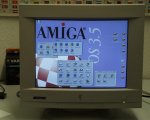
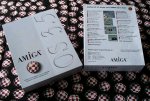 OS3.5 Screen OS3.5 Box
At the end of October, Haage & Partner releases AmigaOS 3.5
software upgrade for existing Amigas. Requires an 020, CDROM,
6Mb RAM and Hard Disk (raising the minimum standard from a
basic 2Mb A1200).
2000 Jan. Amino buys name and rights from Gateway to continue the
Classic series to the next generation. They are headed by
Fleecy Moss and Bill McEwan. They partner with the TAO
group.
The old Amiga Inc is folded into Gateway`s development group.
Phase 5 goes bankrupt due to shortage of PPC sales and delays
getting G4 boards into production.
April. Amiga announce new developer system based on a 500 MHz
AMD K6-2, 64Mb RAM, and GeForce 256 graphics which will run
Linux and Tao`s Elate OS on top. Also, announce partnerships
with major companies such as Sun, Sony, Redhat etc for the
new system.
June. New Amiga SDK developer kit released for above developer
system. Developer system changed: 500MHz AMD K6-2/III/Athlon,
Matrix AGP G400 16MB, Soundblaster 128, 128M RAM, 10GB Hard Disk,
100Mbit 10BaseT Ethernetcard.
The new Amiga OS will use Elate and Virtual Processor dynamic
translator to allow the new OS to run on any processor or platform
including other OSs such as Linux, Windows, OS9, Mobile Phones
etc and use Java (running full speed) to develop programs for it.
October. Amiga announces the zico specification for the AmigaOne
computer. Consists of a AmigaDE friendly processor (PPC, x86, MIPS,
ARM, SH4), 64Mb RAM, Matrox graphics card, EMU10K1 Sound card,
10Gb HD,CD/DVD, USB, Firewire, 10/100 Ethernet, 56K modem, PCI slots.
Eyetech will be making Amiga/AmigaDE hybrid computers for existing
Amiga users: A1200 PPC AmigaOne, A4000 PPC AmigaOne.
OS3.5 Screen OS3.5 Box
At the end of October, Haage & Partner releases AmigaOS 3.5
software upgrade for existing Amigas. Requires an 020, CDROM,
6Mb RAM and Hard Disk (raising the minimum standard from a
basic 2Mb A1200).
2000 Jan. Amino buys name and rights from Gateway to continue the
Classic series to the next generation. They are headed by
Fleecy Moss and Bill McEwan. They partner with the TAO
group.
The old Amiga Inc is folded into Gateway`s development group.
Phase 5 goes bankrupt due to shortage of PPC sales and delays
getting G4 boards into production.
April. Amiga announce new developer system based on a 500 MHz
AMD K6-2, 64Mb RAM, and GeForce 256 graphics which will run
Linux and Tao`s Elate OS on top. Also, announce partnerships
with major companies such as Sun, Sony, Redhat etc for the
new system.
June. New Amiga SDK developer kit released for above developer
system. Developer system changed: 500MHz AMD K6-2/III/Athlon,
Matrix AGP G400 16MB, Soundblaster 128, 128M RAM, 10GB Hard Disk,
100Mbit 10BaseT Ethernetcard.
The new Amiga OS will use Elate and Virtual Processor dynamic
translator to allow the new OS to run on any processor or platform
including other OSs such as Linux, Windows, OS9, Mobile Phones
etc and use Java (running full speed) to develop programs for it.
October. Amiga announces the zico specification for the AmigaOne
computer. Consists of a AmigaDE friendly processor (PPC, x86, MIPS,
ARM, SH4), 64Mb RAM, Matrox graphics card, EMU10K1 Sound card,
10Gb HD,CD/DVD, USB, Firewire, 10/100 Ethernet, 56K modem, PCI slots.
Eyetech will be making Amiga/AmigaDE hybrid computers for existing
Amiga users: A1200 PPC AmigaOne, A4000 PPC AmigaOne.
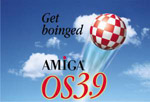 Amiga announces a new AmigaOS 3.9 for the classic Amiga. Consists of
Genesis full TCPIP, Multimedia video players, AWeb 3.4SE, Amidock,
WarpOS 5, Iomega tools, Enhanced Shell, Datatype recognition, Unpacker,
Fast search, new PPC picture datatype and other tools.
2001 Feb. First AmigaOne prototype boards from Eyetech shown with PPC and PCI
capability at the Alt-WOA show in Huddersfield.
*Mar-Apr. At the St Louis show, Amiga Inc announces that a new Sharp PDA
will be using AmigaDE operating system. Also, a Psion PDA will also run
AmigaDE in a few weeks.
AmigaOS 4.0 will be developed, which for the first time will be PowerPC
native and will run on existing PPC driven Amigas and the AmigaONE.
AmigaOS 3.9 BoingBag 1 update released as well.
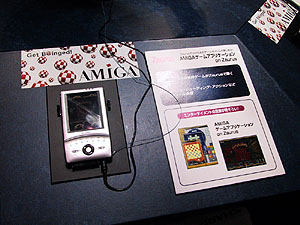
May 22 - Sharp displays the new Zaurus PDA running AmigaDE applications
at the Business Show in Tokyo.
Amiga announces a new AmigaOS 3.9 for the classic Amiga. Consists of
Genesis full TCPIP, Multimedia video players, AWeb 3.4SE, Amidock,
WarpOS 5, Iomega tools, Enhanced Shell, Datatype recognition, Unpacker,
Fast search, new PPC picture datatype and other tools.
2001 Feb. First AmigaOne prototype boards from Eyetech shown with PPC and PCI
capability at the Alt-WOA show in Huddersfield.
*Mar-Apr. At the St Louis show, Amiga Inc announces that a new Sharp PDA
will be using AmigaDE operating system. Also, a Psion PDA will also run
AmigaDE in a few weeks.
AmigaOS 4.0 will be developed, which for the first time will be PowerPC
native and will run on existing PPC driven Amigas and the AmigaONE.
AmigaOS 3.9 BoingBag 1 update released as well.
May 22 - Sharp displays the new Zaurus PDA running AmigaDE applications
at the Business Show in Tokyo.
 June - AmigaDE Party Pack released with copies of pre-release AmigaDE
and the AmigaSDK packs for a limited period.
July - Storm C 4 announced as the official C developer package which
supports C++ and compatible with GCC and Storm C 3.
October - Haage & Partner releases AmigaOS XL, a very fast Amiga
emulator for QNX based machines (AmigaXL) or AMIthlon which will boot
on any Pentium II or better based PC.
AmigaDE Player software released to run AmigaDE software on Windows
based PCs. Visit AmigaDE.
November. Hyperion have been granted a licence to write AmigaOS 4.0
for PowerPC systems including the forthcoming AmigaOne system.
2002 February. EyeTech haver just about completed the first new Amiga
motherboard based on modern technology including PowerPC processor,
PCI slots, USB, Fast IDE port etc. It currently runs TurboLinux
and is waiting for completion of AmigaOS 4 (in beta at present).
See AmigaOne page.
AmigaDE will be available for Nokia's MediaTerminal in a joint
partnership. The MediaTerminal provides digital video broadcast,
gaming, streaming and personal video recorder technology.
March. Amiga announces 'Amiga Anywhere' software based on AmigaDE
which runs on the majority of platforms including Windows, Linux,
Symbian OS and VxWorks. There are now 3,000 developers for DE
and over 67 titles available.
Boing Bag 2 has been released for AmigaOS 3.9 which has updates for
HDToolbox, Amiplifier, PlayCD, Workbench utils and Reaction interface.
AmigaOne Motherboards are now available for developers. See AmigaOne
page for pictures.
Screen shots of Amiga OS 4 interface now available on
Hyperion website.
September. Hyperion completes the Firmware for the AmigaOne which will allow
AmigaOS 4 to be integrated into the A1 hardware.
November. First AmigaOne SE and Early bird XE G3-600 or faster systems on sale
at Eyetech's shop. AmigaOS 4 not ready yet, so SuSe Linux is provided.
2003 May. Details of AmigaInput, the Amiga Gaming API, have been released on Amiga's
website.
AmigaOne SE and XE systems available in Italy.
* - Important events.
Information taken from Various sources inc. CUCUG.
Other historial sources:
'History of the Amiga' video or original Amiga crew by Devware Inc. 1992
'The Deathbed Vigil' video of Commodore's demise by Dave Haynie, IAM. 1994
(Now available with Amiga Forever 5 from Cloato)
June - AmigaDE Party Pack released with copies of pre-release AmigaDE
and the AmigaSDK packs for a limited period.
July - Storm C 4 announced as the official C developer package which
supports C++ and compatible with GCC and Storm C 3.
October - Haage & Partner releases AmigaOS XL, a very fast Amiga
emulator for QNX based machines (AmigaXL) or AMIthlon which will boot
on any Pentium II or better based PC.
AmigaDE Player software released to run AmigaDE software on Windows
based PCs. Visit AmigaDE.
November. Hyperion have been granted a licence to write AmigaOS 4.0
for PowerPC systems including the forthcoming AmigaOne system.
2002 February. EyeTech haver just about completed the first new Amiga
motherboard based on modern technology including PowerPC processor,
PCI slots, USB, Fast IDE port etc. It currently runs TurboLinux
and is waiting for completion of AmigaOS 4 (in beta at present).
See AmigaOne page.
AmigaDE will be available for Nokia's MediaTerminal in a joint
partnership. The MediaTerminal provides digital video broadcast,
gaming, streaming and personal video recorder technology.
March. Amiga announces 'Amiga Anywhere' software based on AmigaDE
which runs on the majority of platforms including Windows, Linux,
Symbian OS and VxWorks. There are now 3,000 developers for DE
and over 67 titles available.
Boing Bag 2 has been released for AmigaOS 3.9 which has updates for
HDToolbox, Amiplifier, PlayCD, Workbench utils and Reaction interface.
AmigaOne Motherboards are now available for developers. See AmigaOne
page for pictures.
Screen shots of Amiga OS 4 interface now available on
Hyperion website.
September. Hyperion completes the Firmware for the AmigaOne which will allow
AmigaOS 4 to be integrated into the A1 hardware.
November. First AmigaOne SE and Early bird XE G3-600 or faster systems on sale
at Eyetech's shop. AmigaOS 4 not ready yet, so SuSe Linux is provided.
2003 May. Details of AmigaInput, the Amiga Gaming API, have been released on Amiga's
website.
AmigaOne SE and XE systems available in Italy.
* - Important events.
Information taken from Various sources inc. CUCUG.
Other historial sources:
'History of the Amiga' video or original Amiga crew by Devware Inc. 1992
'The Deathbed Vigil' video of Commodore's demise by Dave Haynie, IAM. 1994
(Now available with Amiga Forever 5 from Cloato)
Converted with g2h, © 24.06.1998 N. DARNIS