 |
|
|
|
|
|
|
|
|
|
|
Harry's Mediterranean World |
|
|
|
The Mediterranean is renowned for its ancient history, its light and its beauty.
The Greek archipelagos is its crowning jewel.
These islands crowd the northeast part of the Mediterranean,sparkling in the sun.
There are over 3000 of them and if rocky outcroppings are included the number reaches 9500, 140 of which are inhabited.
Most of them are in the Aegean, the sea that lies between greece and Asia Minor.Delos is at the center of this sea, the home of Apollo, the god of light according to mythology.
What islands could have more light than those in Aegean ?
But these islands are not only unique for the sun and light.There is also their natural beauty,their lacy costline with its dazzling white beaches and the blue sea ruffled in summer by the cooling meltemi winds. |
|
|
|
 |
|
 |
|
|
|
|
|
The 3rd century BC saw the rise of ancient Rome. After securing most of the Italic peninsula, Rome entered into a protracted conflict with the Carthaginians for control of Sicily, Spain and the other regions of Punic domination in the Punic Wars. The former empire of Alexander was taken steadily and methodically into Roman hands. The great city of Corinth was destroyed (146 BC), Athens captured (86 BC), and Cleopatra and Mark Antony defeated at the Battle of Actium (31 BC). Their defeat marks the end of the Hellenistic Age
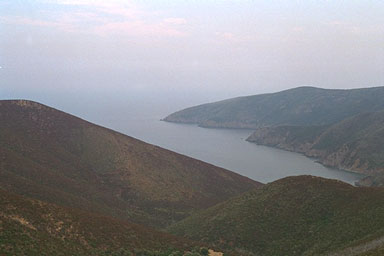
Greece is the southeasternmost region on the European continent. It is defined by a series of mountains, surrounded on all sides except the north by water, and endowed with countless large and small islands. The Ionian and Aegean seas and the many deep bays and natural harbors along the coastlines allowed the Greeks to prosper in maritime commerce and to develop a culture which drew inspiration from many sources, both foreign and indigenous. The Greek world eventually spread far beyond Greece itself, encompassing many settlements around the Mediterranean and Black seas and, during the Hellenistic period, reaching as far east as India. |
|
|
|
|
Following the death of Alexander the Great, his kingdom was split into three by his generals. The Antigonid dynasty maintained control of mainland Greece. The Seleucids governed the entire eastern empire, the largest portion of the territory, while the Ptolemies ruled the land of ancient Egypt.
The Hellenistic period was an international, cosmopolitan age. Commercial contacts were widespread and peoples of many ethnic and religious backgrounds merged in populous urban centers. Advances were made in various fields of scientific inquiry, including engineering, physics, astronomy and mathematics. Great libraries were founded in Alexandria, Athens and the independent kingdom of Pergamum. The old beliefs in Olympian gods were infused with foreign elements, especially from the east; "Oriental" ecstatic cults, such as those of Cybele, Isis, and Mithras, become popular in the Hellenized world.
|
|
|
|
|
|
 |
|
|
|
|
|
|
 |
|
|
|
|
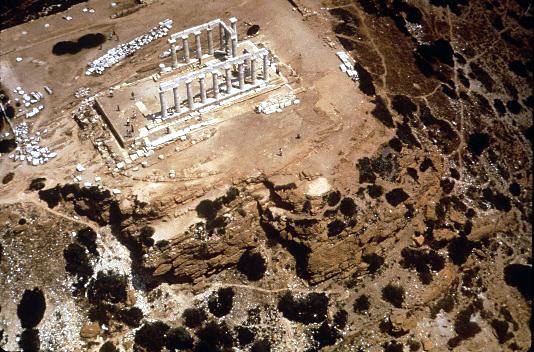
The mountains, which served as natural barriers and boundaries, dictated the political character of Greece. From early times the Greeks lived in independent communities isolated from one another by the landscape. Later these communities were organized into poleis or city-states. The mountains prevented large-scale farming and impelled the Greeks to look beyond their borders to new lands where fertile soil was more abundant. Natural resources of gold and silver were available in the mountains of Thrace in northern Greece and on the island of Siphnos, while silver was mined from Laurion in Attica. Supplies of iron ores were also available on the mainland and in the Aegean islands.
|
|
|
|
|
|
|
The Mediterranean Sea moderates Greece�s climate, cooling the air in summer and providing warmth in the winter months. Summers are generally hot and dry. Winters are moderate and rainy in coastal regions and cold and snowy in mountainous areas.
|
|
|
|
|
|
 |
|
|
|
|
|
|
|
|
|
|
|
In the late 5th century, the Peloponnesian Wars between Athens and Sparta caused turmoil throughout the Greek world. After the surrender of the Athenians, democracy was restored. Meanwhile, in Sicily and Italy a conflict was being played out between the Carthaginians and the Greeks of the region. By the end of the 5th century the Carthaginians and their main adversary, the Syracusans, arrived at a truce.
|
|
|
|
|
During the 4th century Athens, Sparta and Thebes vied for political dominance of Greece. Peace was finally established when Sparta, backed by Persia, won control. In the second half of the 4th century, a divided Greece and the decline of the polis gave rise to the powerful Macedonian state under Philip II and his son, Alexander the Great. After bringing all of the eastern world to the continent of India under his control, Alexander died in Babylon at the age of 32 (323 BC). By the time of his death Hellenism had reached much of the known world and the Classical period was over.
|
|
|
|
|
|
|
 |
|
|
|
|
|
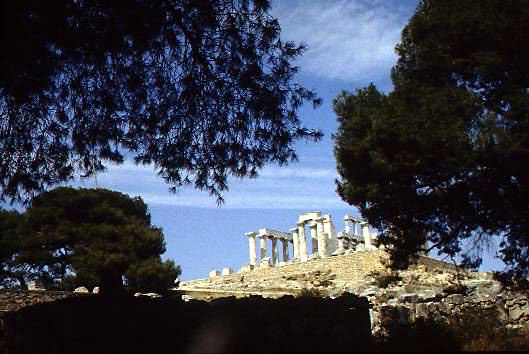
The ancient Greeks were a deeply religious people. They worshipped many gods whom they believed appeared in human form and yet were endowed with superhuman strength and ageless beauty. The Iliad and the Odyssey, our earliest surviving examples of Greek literature, record men's interactions with various gods and goddesses whose characters and appearances underwent little change in the centuries that followed. The Greeks attributed these epic narratives to Homer, a poet living at the end of the 8th century BC Each Greek city was normally under the protection of one or more individual deities who were worshipped with special emphasis, as, for example, Athens and the goddess Athena. While many sanctuaries honored more than a single god, usually one deity such as Zeus at Olympia or a closely linked pair of deities like Demeter and her daughter Persephone at Eleusis dominated the cult place. Elsewhere in the arts, various painted scenes on vases, and stone, terracotta and bronze sculptures portray the major gods and goddesses. The deities are depicted either by themselves or in traditional mythological situations in which they interact with humans and a broad range of minor deities, demi-gods and legendary characters.
|
|
|
 |
|
|
|
|
|
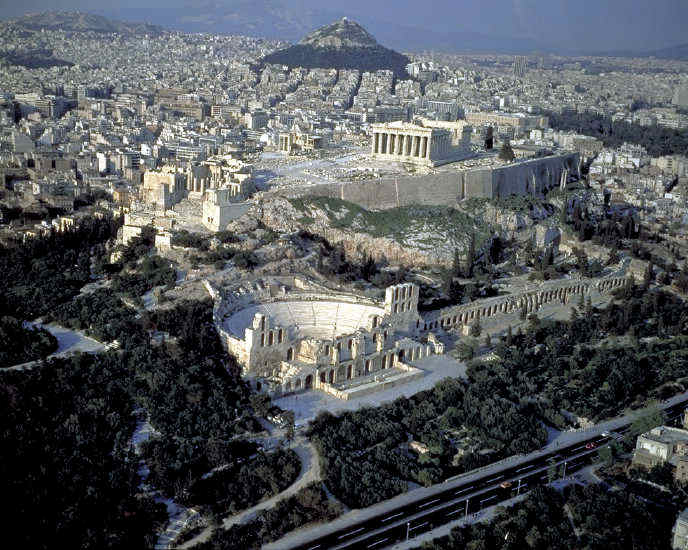
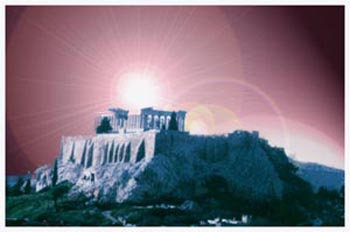
The end of the Persian Wars marked the beginning of the Classical period. In this period Athens reached its greatest political and cultural heights: the full development of the democratic system of government under the Athenian statesman Pericles; the building of the Parthenon on the Acropolis; the creation of the tragedies of Sophocles, Aeschylus and Euripides; and the founding of the philosophical schools of Socrates and Plato.
In the late 5th century, the Peloponnesian Wars between Athens and Sparta caused turmoil throughout the Greek world. After the surrender of the Athenians, democracy was restored. Meanwhile, in Sicily and Italy a conflict was being played out between the Carthaginians and the Greeks of the region. By the end of the 5th century the Carthaginians and their main adversary, the Syracusans, arrived at a truce.
During the 4th century Athens, Sparta and Thebes vied for political dominance of Greece. Peace was finally established when Sparta, backed by Persia, won control. In the second half of the 4th century, a divided Greece and the decline of the polis gave rise to the powerful Macedonian state under Philip II and his son, Alexander the Great. After bringing all of the eastern world to the continent of India under his control, Alexander died in Babylon at the age of 32 (323 BC). By the time of his death Hellenism had reached much of the known world and the Classical period was over.
|
|
|
|
|