 |
|
|
|
|
|
|
|
|
|
|
|
|
|
|
|
|
|
|
|
|
|
Project 6 Mass Balance Isostasy |
|
|
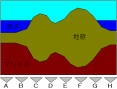
This picture explains: |
|
|
|
|
|
 |
|
|
|
|
|
|
Back Home |
|
|
|
Back to Projects |
|
|
|
|
|
|
|
|
|
homepage1.nifty.com/ptolemy/ history/modern.htm |
|
|
|
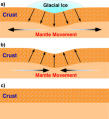
A glacier is a good example of what isostasy is. When the ice forms over the crust the ice eventually bends the crust. How much the glaceir bends the crust is what Isosstasy is. By: Lisa Marie Harris |
|
|
 |
|
| www.geog.ouc.bc.ca/physgeog/ contents/10h.html |
|
|
|
|
The outer part of the Earth can be viewed as a water filled balloon - a thin, flexible cover over deformable material. Pressure applied to the cover forces the fluid to move away until a new balance is reached. Removal of the pressure allows the fluid to migrate back, restoring equilibrium. In the context of glaciers, the pressure is the growth of a continental ice sheet -removal of the pressure is ice sheet decay. The thin, flexible cover is the Earth's lithosphere. The subsurface fluid is nearly molten rock at a depth of several tens to hundreds of kilometers (the asthenosphere). By: |
|
|
|
http://www.homepage.montana.edu/~geol445/hyperglac/isostasy1/ |
|