










What is Beer?
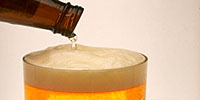
Generally speaking beer is an alcoholic beverage comprised of three main ingredients: malt, hops, and water. The main ingredient is water constituting 90 percent of beer. Beer is made by fermenting a mixture of water, malt, hops and yeast. The beer is then filtered, pasteurized, bottled and aged for a short period of time (2 to 9 months). Draft beer is not pasteurized. Beer is light golden yellow to reddish to almost black. Beer is produced worldwide. There are many types of beers: ales, lagers, malt liquors , rice, stout, porter and draft, each one having a distinct and unique character. Any type of beer can be used to make cool, refreshing summer drinks. Beer is best enjoyed chilled and served in chilled glasses.
History of Beer
Brewing is almost certainly the most ancient manufacturing art known to man, and is probably as old as agriculture. Beer is also as old as bread - in fact it is probable that either beer or bread may have been a by-product of the other. Not only is the art of brewing old, but has been discovered to have been a mainstay in all the regions of the world.
The earliest references to beer making is 5000 years ago in China were a beer called ‘Kui' was brewed. In ancient Babylon, the women brewers were also priestesses. The goddesses Siris and Nimkasi were patronesses of beer, and certain types of beer were reserved exclusively for temple ceremonies.
During Medieval times the Emperor Charlemagne (AD 742-814), the great Christian ruler, considered beer as essential for moderate living, and personally trained the realm's brewmasters. King Arthur served his Knights of the Round Table with beer called bragget.
Today, "ale" and "beer" are used as interchangeable terms. However, ale, which consisted of malt (usually made from barley although other grains were used), water and yeast, was replaced at the start of the 15th century by beer. Introduced from Flanders, beer was bittered with hops and kept better than English ale because of the preservative quality of the hops.
By the end of the century, beer had almost completely replaced the old English sweet ale, and was being exported to Europe. Records dating back to the 15th century show that almost half of the ships' cargoes taken across the North Sea and the Baltic Sea were barrels of beer.
Until the middle of the 16th century, beer making was mainly a family operation and had little commercial application. However, it was certainly an integral part of everyday diet.
Beer Styles
Ales are brew made with top-fermenting yeast, which gives it a distinctive fruitiness. Ale comes in a variety of strengths, including bitter, India Pale ale, and Scotch ale. Different types of ales:- Barley wine is British term for strong ale because it typically has between 6 and 11 percent alcohol by volume. It comes in both pale and dark versions.
- Bitter: is an ale with a depth of hop bitterness, typically on draft in British pubs. The color varies from bronze to deep copper.
- Brown ale is a dark, sweet ale low in alcohol.
- Indian pale ale: was developed by the English to be stable enough to ship around the world. The preservative properties came from high levels of hops and alcohol. Pale ale is golden to amber in color.
- Porter is a dry dark ale that is nearly opaque in color. Originally it was mixed with cheaper English beers. Robust porters have a sharp bitter taste due to black malt and hops, and have a complex flavor. Brown porter is lighter in both color and body, and the hops and malt are better balanced than in robust porter.
- Scotch ale specifically refers to a very strong and typically very dark, malty brew from Scotland.
- Stout is an extra-dark, almost black beer, made with highly roasted malts. There are two basic types. Sweet stout, an English style, usually contains milk sugars; dry stout, the Irish style, sometimes contains roasted unmalted barley.
- Bock is a strong but smooth, malty lager. A small amount of hops is added to balance the malt, not to add flavor. Traditional bocks range from golden brown to dark brown with a malty sweetness.
- Dopplebock or commonly referred to as double bock, is stronger - although not twice as strong - and has a more intense malt flavor.
- Pilsner like traditional lager, is golden in color, but is drier and has a stronger hop bouquet.
Malt liquor is not liquor, and it isn't particularly malty. This beverage is a stronger version of lager, sometimes containing substantial amount of cheaper sugars. Most beer drinkers disparage malt liquors flavor.
N/A beer is non-alcoholic beer. The early term was near beer and refers to any beers that have gone through a variety of processes to remove all or almost all of the alcohol content.