| Series History: |
| Notes: 1st Edition - The original titles 1 through 38 were written from 1927 to 1959. 1st editions are excluded from today's sets. Authors: 1-16, 22-24 Leslie McFarlane 17-21 John Button 25 Harriet Adams 26 Amy McFarlane 27 George Waller 28-30 Andrew Svenson 31, 33 William Dougherty 32 Richard Cohen 34 Charles Strong 35-36 John Almquist 37-38 James Lawrence 2nd Edition - The titles 1 through 38 were re-written from 1959 to 1973. 2nd editions make up the series set of today. Edition alterations included: - some cover art changed to reflect new storylines - some stories edited to respect racial sensitivities - some phrasing and descriptions were modernized - some books were completely re-done with new plots |
| Base Text written by: Kevin B. Smith Paraphrased and Expanded by: D.F. Vust Originally created in 1927 by Edward Stratemeyer, whose New Jersey-based Stratemeyer Syndicate, founded in 1906, was also responsible for (Carolyn Keene), (Victor Appleton II), (John Blaine), and dozens of others. The Hardy Boys remain the all-time best-selling series of books for boys, with over 300 titles published, including three series of paperback books. The Hardy Boys literary institution also launched such spin-offs as a television series, board games, toys, comics, records, coloring & puzzle books, audio book cassettes & CD's, retro-tv DVD's, and numerous lines of merchandise. The setting of the series is Bayport, New York. While the locations for most of the other series are fictional, it is believed that the Hardy Boys' hometown was based on the actual town of Bayport, on Long Island. With additions to the area such as Barmet Bay, the Hardy home at the corner of High and Elm streets, Shore Road, etc... the statistics of the era are consistent with this coastal region. Of course, there was no Franklin W. Dixon. He was merely the house pen name for the long list of authors working for the syndicate on the Hardy series. They worked from supplied plot outlines, and followed some strict guidelines, some of which were: minimal death rates, utilizing as many action verbs as possible, and no mention of physical intimacy beyond the odd hug or embrace. Supposedly, Edward Stratemeyer discreetly scheduled his appointments so the various writers would not inadvertently come into contact with one another. Although the syndicate took credit for the pseudonym Franklin W. Dixon, the author of the first sixteen, and ultimately twenty novels (for $100.00 per book) was Canadian novelist Leslie McFarlane, who created the pen name after two of his brothers, Frank and Wilmot (also known as Dick, hence the W and Dixon). McFarlane wrote many other novels for the syndicate, including some of the early Nancy Drew series. Story 26 of the Hardy series was co-authored by Leslie and his wife Amy, with Amy receiving the credit for the finished work. Leslie and Amy McFarlane are the parents of author Brian McFarlane, who is best known for his television work as a sports commentator for many years on CBC's Hockey Night in Canada. Starting in 1959, the first 38 stories were revised, abridged, or re-written into a second edition. These alterations ranged from minor word and phrase changes to entirely new storylines. The stories were also reduced in length, outdated prose updated (roadsters became cars, etc.), and racial stereotypes removed. However, the action and danger atmosphere of the original stories was too often replaced with a cautious and polite environment, which created a somewhat sterile plotline for the readers. Whether you read the first or second editions, or in most cases, a mixture of both, you can look back with fond memories of the series main characters: Frank and Joe Hardy, the "Hardy Boys"... Fenton and Laura Hardy, the boys' parents... Chet Morton and Biff Hooper, the boys' best friends and partners in danger... Gertrude Hardy, the boys' spinster aunt... Callie Shaw and Iola Morton, Frank and Joe's girlfriends... Ezra Collig, Chief of the Bayport Police Dept... Sam Radley, Mr. Hardy's chief operative and family friend. Even today, the visionary series continues. In 2005, the boys were re-created for another generation of young readers as the "Undercover Brothers", who are special undercover operatives for a clandestine American government agency called ATAC (American Teens Against Crime). The new concept was released as books and manga-style graphic novels. All this began with Edward Stratemeyer, who started his career writing dime novels, and actually penned several of them under the name Jim Bowie (the real Bowie was killed at the Alamo). Upon his death, Edward's two daughters, Harriet and Edna, inherited the company. Edna had little interest in the family business and sold her shares to Harriet within a few years. Harriet did very well with the firm, developing it into a large corporation. When Harriet Stratemeyer Adams died in 1982, Simon & Schuster publishing house purchased the Syndicate from it's partners. |
| The Hardy Boys By: Franklin W. Dixon |
 |
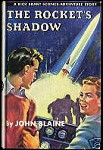
| Series: Rick Brant Pseudonym: John Blaine Setting: Spindrift Island, New Jersey Publisher: Grosset & Dunlap, 1947 The Set: 24 titles (1947-1990) In Print?: No Style: Hardcover (most common style pictured) Cover: Color Picture Spine: Silver Purchase: amazon / ebay |
 |
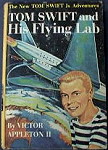 |
| Series: Tom Swift jr. Pseudonym: Victor Appleton II Setting: Shopton, New York Publisher: Grosset & Dunlap, 1954 The Set: 33 titles (1954-1971) In Print?: No Style: Hardcover (most common style pictured) Cover: Color Picture Spine: Yellow (only type the entire set was done in) Purchase: amazon / ebay |
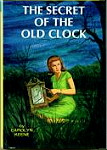 |
| Series: Nancy Drew Pseudonym: Carolyn Keene Setting: River Heights, Illinois Publisher: Grosset & Dunlap, 1930 / 1957 The Set: 56 titles 1-34 (1st edition 1930-1956, 2nd edition 1959-1975) / 35-56 (1957-1979) In Print?: Yes (1-34 in 2nd edition only) Style: Hardcover (most common style pictured) Cover: Color Picture Spine: Yellow Purchase: amazon / ebay |
 |
|
|
| Series Details: The original series history contains 4 significant transitions, which we will refer to as phases. PHASE 1: Novels 1 through 38 were rewritten in a second edition, as outlined above. PHASE 2: Novels 39 through 50 comprised the remainder of the initial series, and were only done in a first edition. PHASE 3: Novels 51 through 58 were added later, with a switch to a more international theme. The authors basically abandoned the local setting of Bayport - for various locations around the world. This group of 8 books is regarded by almost everyone as part of the original collection. PHASE 4: Novels 59 through 66 are the last of the era that is generally known as the Hardy Boys series. These later books display a slightly different modern-style, but maintain the integrity of the entire genre. Some, such as myself, include the "final 8" in their sets - while staunch Hardy historians do not. The many combo-books, digests, graphic novels, etc. which followed are not considered part of the Hardy canon. Although the series numbering continued beyond 66, there is little relation between the later digests and the main books. Phase 4 also was the end of the Stratemeyer Syndicate's involvement, as the rights were sold to Simon & Schuster. A couple of the authors who had written for the actual series contributed briefly to the new publications. |