|
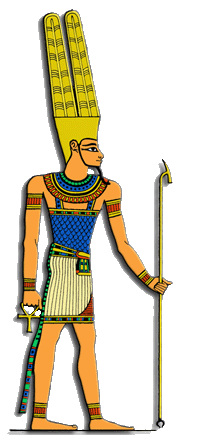
His name meaning "That Which is Hidden", Amun was perhaps the most important state god to the ancient Egyptians. His worship was what helped unify the country. He probably began as a local god of Khmun, or Hermopolis, but he was soon embraced by the Theban pharaohs during the 11th dynasty. Amun has many representations. Among them, a goose, a frog-headed man, a handsome young man in full human form with a double-plumed crown, and most importantly, a ram. The ram was the most sacred animal to him. The Avenue of Sphinxes at his great temple in Karnak are testiment to this. He even had a symbolic color which was blue. This represented the power of the invisible. Amun was the patron of many things, as well. He was a god of politics, invisibility, wind, and most important, the poor. In fact, one of his names means "Vizier of the Poor", often being called upon to help the defenseless. This not only made him a beneficent god, but also helped his ascention as a prominent god in all of Egypt. Amun was also part of the important Theban Triad, along with his consort Mut and son Khonsu. In many myths, Amun is named as the creator of the universe and the god from which all others came. During the New Kingdom though, Amun became equated with the sun god Ra, thus creating the more famous Amun-Ra. The combining of gods was a common practice in ancient Egypt. This probably served a political reason as a means of uniting more people on common grounds. For more in depth information on Amun, visit the temple of Amun by clicking here.
|