Shakespeare
Biography
|
His
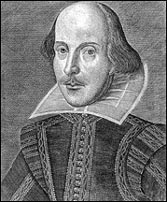
Life Shakespeare married Anne Hathaway, who was 8 years older than him, on November 27th, 1582, when he was just 18 years old. Six months later, Shakespeare's daughter, Susanna, was born. Three years later, Shakespeare's twins, Hamnet and Judith, were born. Hamnet lived to be only eleven years old, while the other two children lived long lives. Shakespeare worked for much of his life in the theatre. He owned shares in the Globe Theatre, and wrote and acted in numerous plays in his life. Shakespeare was a member of The Lord Chaimberlain's Men, an acting company that became so popular that their name was changed to The King's Men in 1603. Shakespeare died on his birthday, April 23, 1616, at the age of 52. He wrote 37 plays and 154 sonnets, and is claimed by some to be the greatest writer ever in the English language. His
Times & Theatre Females were not allowed on the stage at this time, so young boys played the female parts in plays. The stages did not have many props in these times, however the costumes were elaborate. Costumes were important in establishing the status of a character on stage. For instance, if a character was poor they would wear less elaborate clothing, but if they were a rich nobleman they would be decked out in lavish clothing. Performances were done during the day to utilize the sunlight, and the huge theatre's were often dirty. Audiences ranged from the upper-class to the poorest, with better seats and more space cost more money. |