
The past year has had good progress in many areas. It was encouraging to have one of the WISH ice plant employees come with a container of about � gallon of moringa leaf powder that he had made on his own and that looked as good as ours does. He wanted to be sure it was ready to use without any further processing and I assured him that it was and encouraged him to continue making leaf powder. The mission station and teams have kept Cory busy in Anse a Galets so there was less transfer of plants to the mountains than planned but the rains are starting early this year and we are currently hosting our last team so there will be more transfer this spring
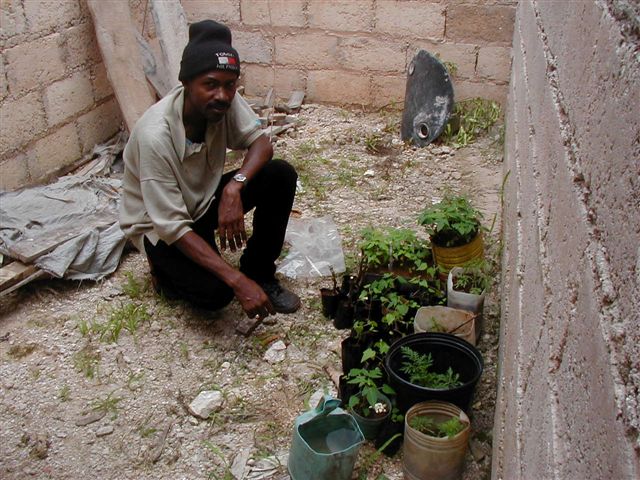
Bertrand, a member of the Palma church, likes working with plants and grafting trees. He introduced me to many of the families that garden around the Palma church as we took a walk to educate people about the virus that attacks the Papaya trees. The gardeners aren�t getting any significant papaya harvest since the trees are several years old, infected with virus, and being attacked by papaya fly which spoils the fruit. They are eager to replant with some new varieties. If they all work together controlling the pests, they will have a good income from selling papaya in Anse-a-Galets. Cory is also sharing new varieties of fruit with Bertrand and his neighbors.
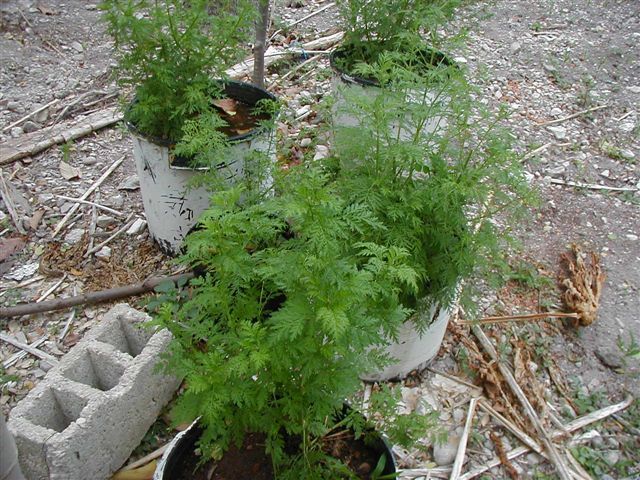
Cory purchased seed of this plant at the ECHO conference last fall. This plant has been used as a medicine for thousands of years in China. In the 70�s they found it was very effective against malaria but has very few side effects. Now it is being used in the combination antimalarial therapies in countries that have resistant malaria. A simple tea is the best way to take Artemisia as a medicine. Artemisia kills the malaria parasites faster than any other medicine so it should be popular here even before Chloroquine resistant malaria becomes prevalent in Haiti. Recent research is showing that Artemisia cures some cancers and that it helps AIDS patients. This type of Artemisia is an annual subtropical plant that has been hybridized so that it will tolerate the tropics. It is difficult to grow in Anse-a-Galets. The literature says it won�t grow on the coast and doesn�t tolerate salt or sea-spray. Heat with any drought stress will cause it to go into flowering mode and it stops growing and dies after flowering. It will grow better in the mountains and areas where it is more humid and cool, like Northern Haiti. It can be propagated for years by cuttings. Cory shared plants during a pastor�s conference, and helped plant some near the Palma and Plein Mapou churches
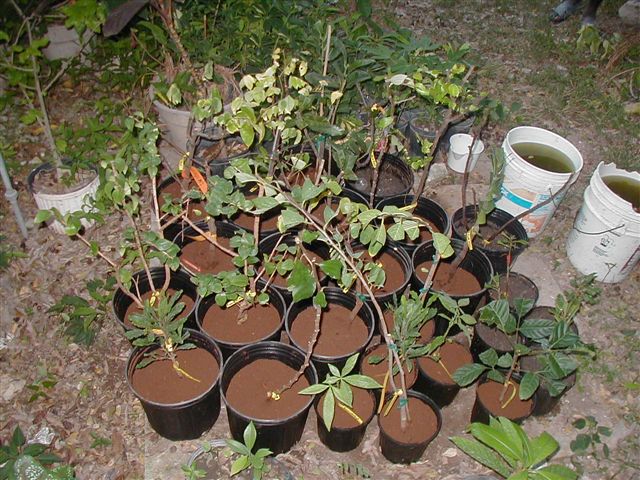
In January Cory carried in a footlocker full of fruit and nut trees from ECHO. These are varieties or species that he hasn�t been able to find in Haiti, including macadamia, miracle fruit, and superior varieties of jujube and star fruit. One set is for LaGonave and one set for Northern Haiti. We intend to obtain additional varieties this summer while in the States.
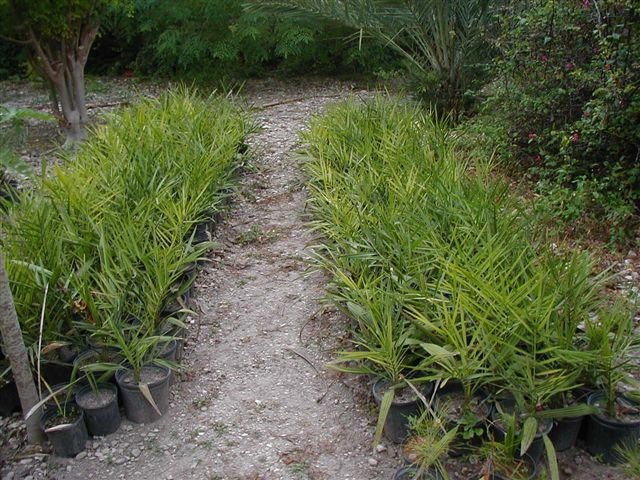
The date palms purchased last May are shown above. All 200 are growing well and we will start planting them this year. Unfortunately it seems that the climate at the Anse-a-Galets mission is so hot all year that it doesn�t trigger yearly blooming in the commercial varieties that we have. There are three new varieties included in this latest purchase to evaluate. This past winter seemed to be as cool as normal but there hasn�t been bloom yet so unless they bloom later this spring they will need to be planted in areas with a cooler winter. The mid-elevation areas of LaGonave, like Palma are probably best and the coast of Northern Haiti, which gets about 10� cooler than LaGonave, may also be good. I received some �Barhee� date pollen this spring from the USDA to cross with the date palm that has produced every year for the past 4 years to try to breed some seedlings with fruit that can be eaten fresh off the tree.
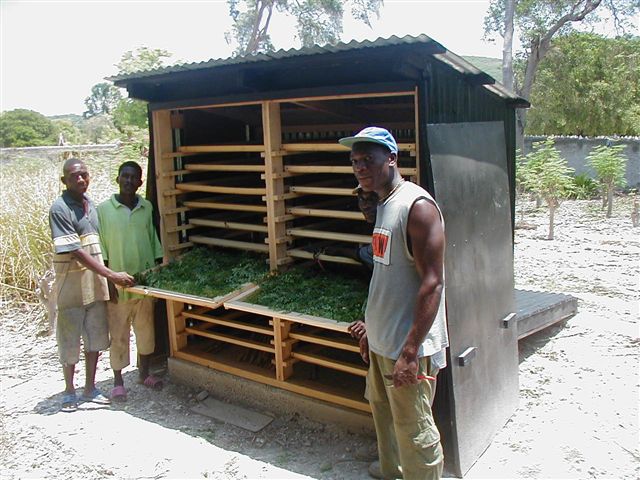
The His Hands team built another Moringa dry shed in February. It is shorter than the first but this allows it to get hotter. It should help us keep up with the leaf production in late summer. In late winter it looked like we would run out of leaf powder so we stopped selling it in the pharmacy for about a month to conserve it for the serious hospital patients. A week of good rains came in late March so we were able to start drying leaves in April.
Moringa has continued to amaze us. Dr. Monica Marcu�s book titled �Miracle Tree� gives an interesting summary of research. It also has a long list of nutrients that Moringa is rich in and how each nutrient promotes health and healing.