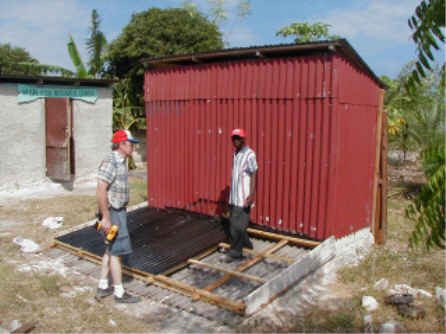
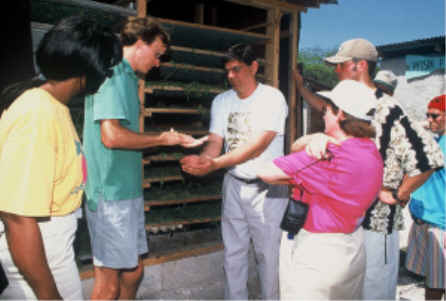
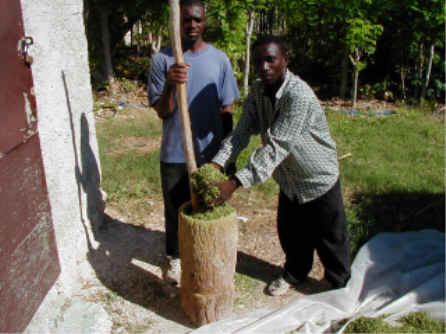
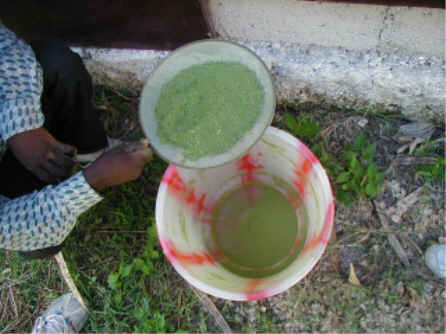
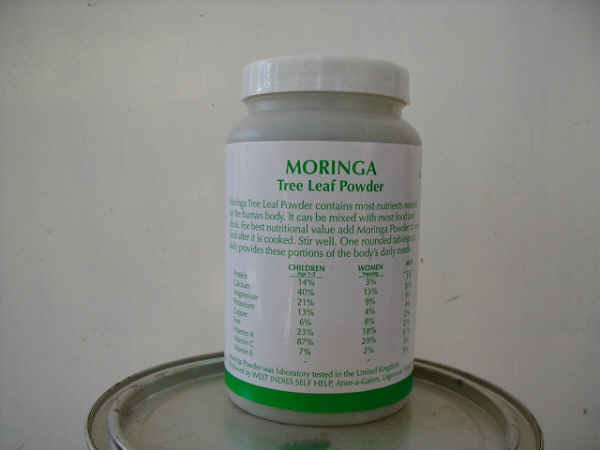
to be made into a powder. This powder is now accepted as a food
supplement in the Wesleyan hospital and clinic.
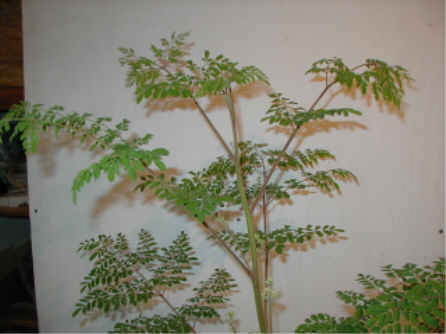
Local knowledge about the tree leaf's benefits is expanding. The leaf powder is about 27% protein and high in the amino acids that are often in short supply in the diet. Dr. Frank Martin says in Survival and Subsistence in the Tropics that "among the leafy vegetables, one stands out as particularly good, the [Moringa] tree. The leaves are outstanding as a source of vitamin A and when raw, vitamin C. They are a good source of B vitamins and among the best plant sources of minerals. The calcium content is very high for a plant. Phosphorous is low, as it should be. The content of iron is very good (it is reportedly prescribed for anemia in the Philippines). They are an excellent source of protein and a very low source of fat and carbohydrates. Thus the leaves are one of the best plant foods that can be found." The leaves are also reported to be rich source of Lutien and Omega-3 oils. Studies are being done now in some countries with TB and AIDS patients to see if moringa striengthens the immune system beyond what can be explained based on its nutritional values.
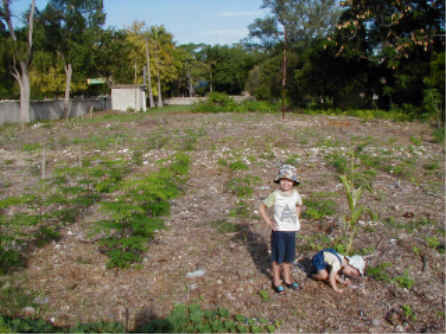
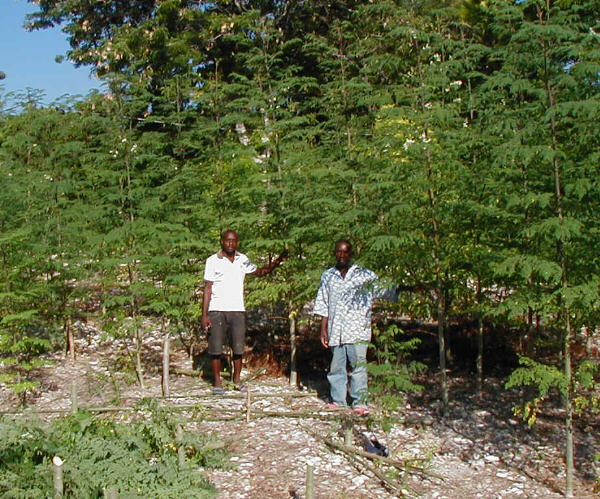
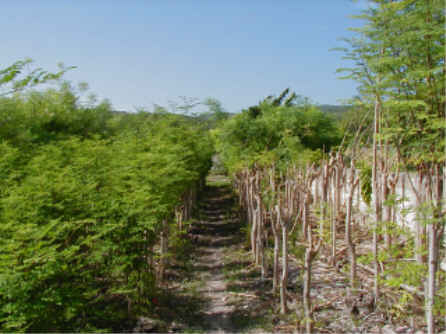
The moringa trees are growing in rows like a corn field and cut back to about knee height every few weeks. They grow well in the local salty, gravely soil and are rarely damaged by any insects or diseases. In the past the most damage has been done by mission employees who like to take the tender shoots home to cook like spinach. We have had to limit them so that there are enough leaves for making leaf powder. We are selling fresh leaves with a merchant in front of the WISH ice factory in hopes that others will get the idea to grow extra moringa trees and sell the leaves in the markets.
The trees also provide seeds that are distributed worldwide through the Christian group Educational Concerns for Hunger Organization (ECHO). Cory occasionally gets E-mails
requesting information about Moringa from far-away lands. We praise the
Lord for His provision of this tree. We also are thankful to those people
who have supported this project financially and with prayer.