 |
|
|
|
|
|
|
|
|
|
|
|
|
|
|
|
|
|
|
|
|
|
|
|
|
|
|
|
|
|
|
|
|
|
|
|
|
|
|
|
|
|
|
|
|
Date Variety Report |
|
|
|
 |
|
|
|
Ashrasi.
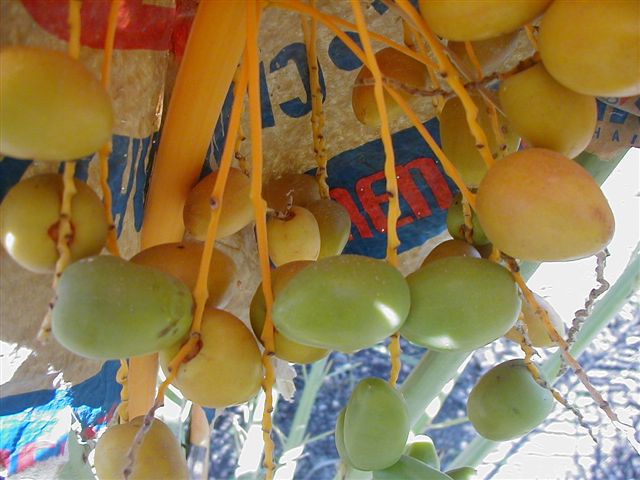
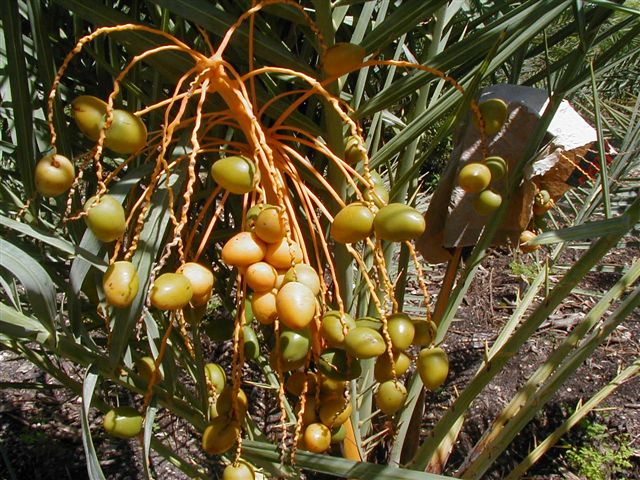
On each variety I covered some bunches and left others exposed to compare rain damage. Ashrasi dropped much of the fruit, shedding fruit at a near constant rate throughout growth. The paper covered ones seemed to drop less fruit. The ripest ones in this photo are edible boiled, similar to sweet potato. They didn't reach natural ripening stage before I left Haiti August 25. They are probably too sensitive to rain, but we will need to wait for a normal summer to see. This tree was donated by the USDA. The one from Date Palm Developments (DPD) also fruited. |
|
|
|
 |
|
|
|
Ashrasi |
|
|
|
 |
|
|
|
Barhee |
|
|
 |
|
|
|
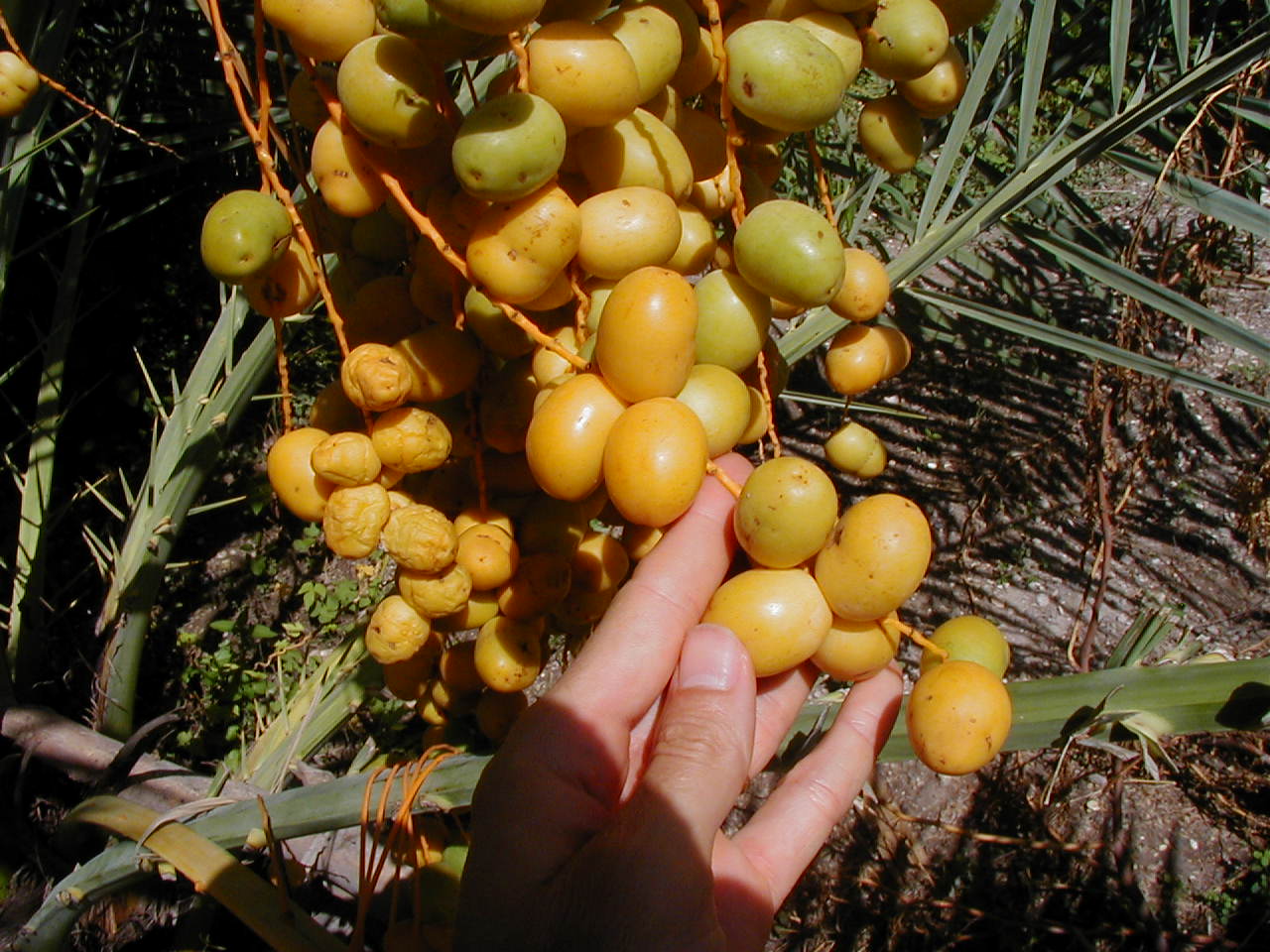
August 25. Barhee fruit showing skin blemishes and cracking due to high humidity. The first half of August had at least a sprinkle almost every night. This fruit was inside an open box to shelter it from rain but the fruit hanging below the box, (photo below), had better color and less damage. Surface blemishes don't really reduce the price of LaGonve produce. Fruit is in such short supply and the economy so bad that aesthetics is very low on the shoppers priorities. This kind of damage would be readily accepted in the market. There was almost no fruit drop. The thin fruit set is probably due to inadequate pollination. |
|
|
 |
|
|
 |
|
|
|
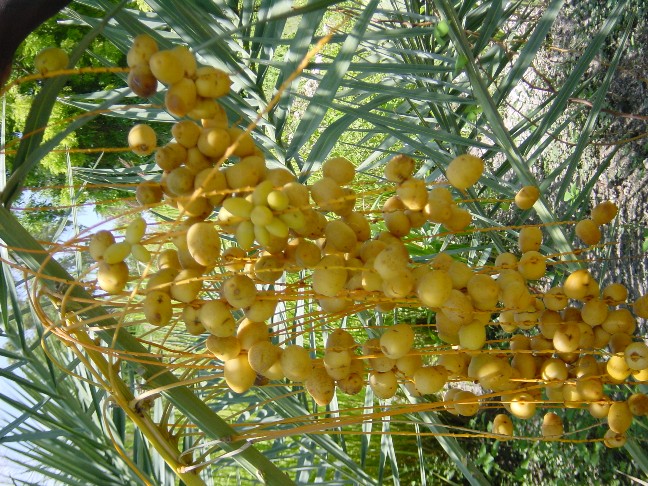
Barhee Sept. 13. I don't have a report from Haiti about how they taste at this stage, only the photo. |
|
|
|
 |
|
|
|
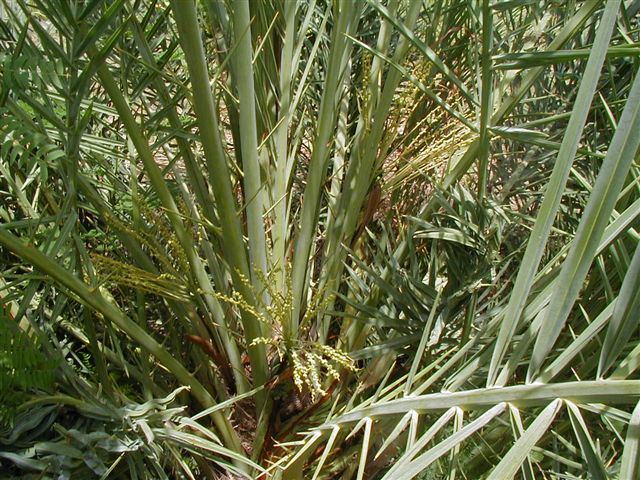
July 15. Dayri, summer bloom. This palm has so many offshoots we didn't notice the blooms until it was almost done so there will only be a few good fruits..
The number of offshoots should be good for multiplying this variety.
Medjool also made a small bloom but wasn't pollinated in time. Hilali bloomed about a month later. This is a very good discovery of adaptation to our climate of wet fall and dry, warm winter. They will ripen in the dry season. |
|
|
|
 |
|
|
|
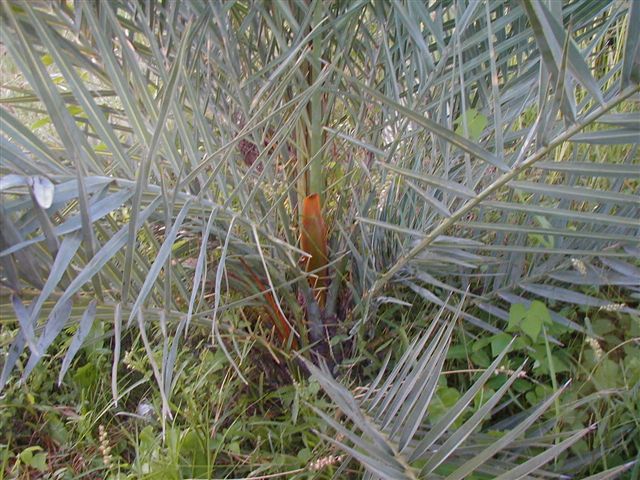
August 1. Male seedling of Medjool with flower bud. Pollen can keep for about a year but summer bloom will be helpful if good storage isn't available for pollen. Most males bloom December to April.. |
|
|
|
 |
|
|
|
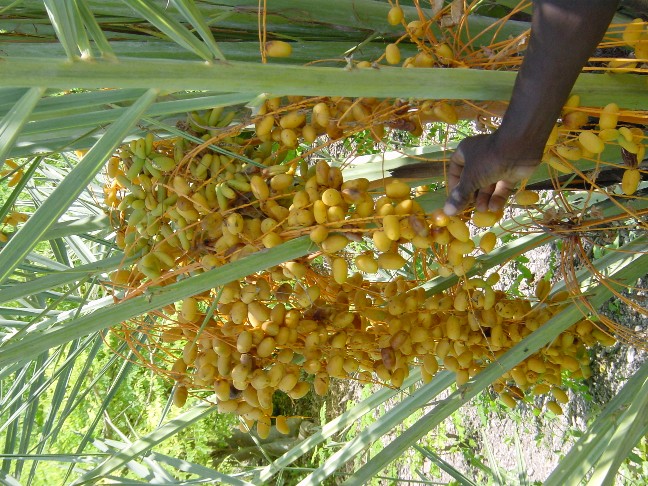
Thoory. Sept. 13. Looks like some fruits are spoiling. Skin appeares to still only have minor damage. This variety wasn't ripe enough to artificialy ripen before I left, will have to try next year. It grows vigorously and had a heavy crop this year. Planted 2000 from DPD. |
|
|
|
Piarom (no photo) bloomed this spring but no pollination so no good fruit this year.. |
|
|
|
 |
|
|
|
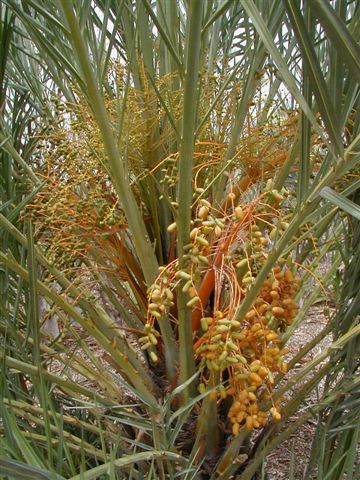
April 22. Seedling that blooms November to April. We had good pollination the past two years and very poor pollination this year so I think our most productive male, which bloomed for the first time this year, is a dud. This date is more sensitive to rain than Barhee or Thoory. It has a large seed and not much meat on the fruit but flavor is excellent and it is the most vigorous grower. |
|
|
|
 |
|
|
|
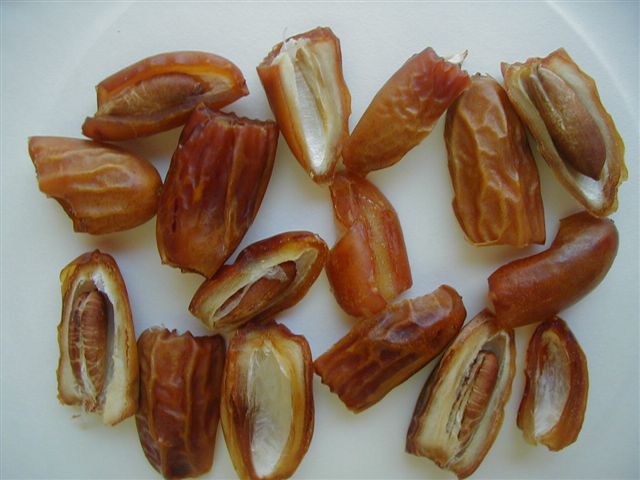
Seeding fruit, dried indoors with end cut off or cut in two to aid drying. |
|
|
|
 |
|
|
|
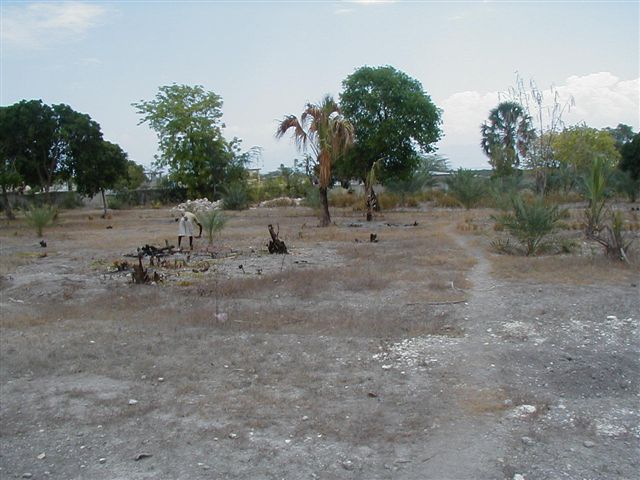
Upper end of garden, dry season. Barhee is barely visible in the far background, right center.. |
|
|
|
 |
|
|
|
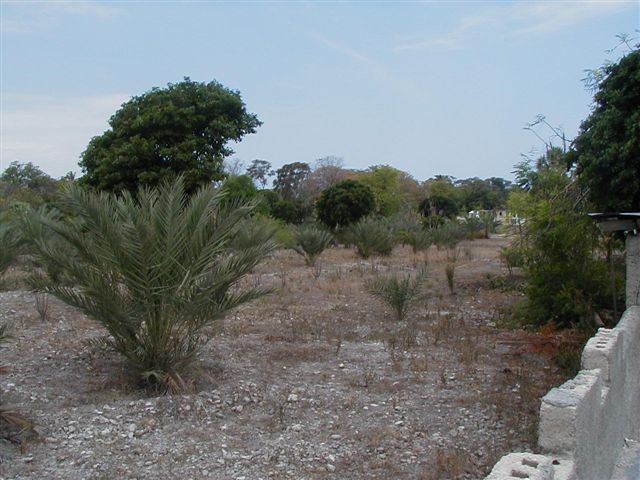
Another view of the garden. The medjool seedlings in these two rows are stunted from drought/salinity. The Medjool variety is less vigorous than most others but should do well in irrigated areas, especialy if it still blooms in the summer without drought stress in the spring.. None of the dates are irrigated. The water table is 20-30 feet down and is about 3% seawater or about 1ppt salt. Seawater is about 34ppt.. The soil is recent alluvial: limestone and chalk gravel with some clay layers.
I think Barhee should be planted on a larger scale, especialy in plantations, larger gardens and at missions with agricultural programs. This winter we should see if Dayri and Hilali are also appropriate for more widespread planting. In a few years when date cropping ability is better proven (and local farmer acceptance is proven), Offshoots from maturing palms would soon be available for small gardeners who can't afford any risk of failure with a new crop. The risk would be from several years reduced garden yield between planting time and first heavy cropping of the date palms. Haiti has very fertile soil so widely spaced, mature date palms in areas with irrigation might not hinder crops grown under the dates. This is because the partial shade and wind protection should be beneficial to crops which are stressed by the strong winds and intense sunshine along the dry coastal areas of West-central Haiti. This could double the yield of irrigated plantations/gardens. |
|
|
|
 |
|
|
|
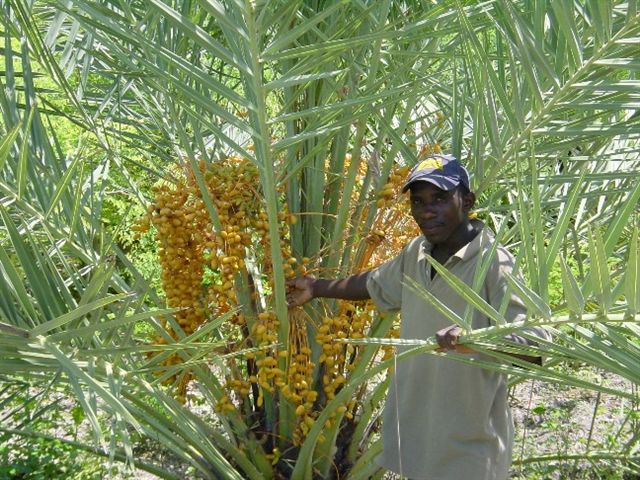
Jeantiny, Cory's gardener for the past 7 years with Thoory date palm. |
|
|
|
Home page |
|