|
|
|
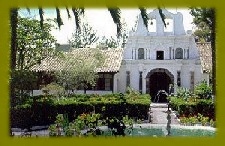
Francisco Javier was one of the most outstanding patriots of Quito who participated in the 1809 revolution. He was appointed Lieutenant Colonel by the Supreme Board, upon request of Juan de Salinas, who was then Colonel of the Falange of Fernando VII. He was captured in Sapuyes and transferred to the Royal headquarters in Lima where he was cowardly assassinated, together with other patriots, by the soldiers of Colonel Arredondo on August 2, 1810.
 |
His brother, Jos� Javier, obtained a doctorate at Law at Saint Thomas University in Quito and was accepted as attorney before the Royal District in February 1774. He married his cousin, Do�a Mar�a Ana Matheu y Herrera, a sister of Juan, First Class Count of Pu�oenrostro Grande de Espa�a. For this reason, the couple had to obtain a Royal permit to get married. Just as his brother Francisco Javier, he also supported with enthusiasm the independence movement.
On August 10, 1809, he was appointed by the people Governor to the Senate; once the Spanish authorities were reestablished, he was imprisoned with his brother in the Royal Headquarters in Lima and he miraculously escaped from being assassinated on August 2, 1810. In 1816 he was condemned by the Spanish authorities to be sent to the Peninsula, but he elude this sentence by hiding out. During this period his wife fell ill and she died without seeing her husband again since the Spanish authorities did not grant Jos� Javier a permit to visit her wife in agony. Jos� Javier filed a claim against the Royal District authorities through Count Pu�oenrostro for such an inhuman action, as evidenced in the corresponding docket kept the Royal Archives of the Indies in Sevilla.
Jos� Javier de Asc�subi and his wife, Mar�a Ana Matheu, had a son, Don Manuel de Asc�subi y Matheu, one of the most prestigious men at that time--the beginning of our republican life. As Vicepresident and acting President of the Republic, he proved to be energetic in difficult circumstances. Don Manuel married Do�a Mar�a del Carmen Salinas, daughter of Juan Salinas, a hero of the Independence. Thus, two families of heroes go together. Asc�subi and Salinas were the owners of La Ci�nega, whose austere rooms witnessed part of the plans of the Independence. The persecution undergone by the heroes' relatives, specially by Juan Salinas' widow and children, whose property was confiscated upon mandate of the Count Ruiz de Castilla, moved Marshal of Ayacucho, Antonio Jos� de Sucre, to visit La Ci�nega after the Spanish armies were defeated and the property belonging to Do�a Mar�a del Carmen de Asc�subi was given back to her.
 |
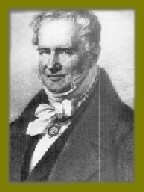
Baron Alexander von Humbolt was a renowned guest at La Ci�nega when he carried out his study on the Cotopaxi in 1802. He was accompanied by Bompland and Carlos Mont�far.
President Gabriel Garc�a Moreno married Do�a Rosa de Asc�subi y Matheu and after she died, he married her niece, Do�a Mariana de Alc�zar y de Asc�subi. Because of this family relationship with the owners of La Ci�nega, the President frequented it specially in his trips to the South and to Guayaquil.
When Manuel de Asc�subi and Carmen Salinas died, La Ci�nega passed to the hands of their daughter, Do�a Avelina de Asc�subi y Salinas, who married Don Jos� Mar�a Lasso de la Vega y Aguirre. They had two descendants: Colonel Juan Manuel Lasso y Asc�subi and Avelina Lasso y Asc�subi. The former married Do�a Mar�a Carri�n y Mata and the latter, Colonel Leonidas Plaza Guti�rrez who was President of the Republic in two occasions.
Colonel Juan Manuel Lasso and Mar�a Carri�n had three children: Patricio Lasso y Carri�n, Bol�var Lasso y Carri�n, and Elsa Lasso y Carri�n. La Ci�nega has become one of the most prestigious hostelries in the country. This country house, the only one that has been preserved in its original state, was built in 1580 in a site that is unique in Ecuador and probably also in Latin America. It has been classified by the Central Bank of Ecuador as a historical monument.
|
|
|