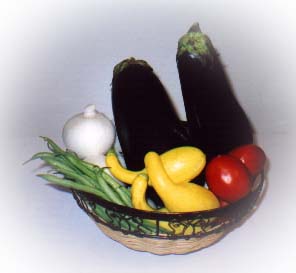
* The tomato is in the same family as the potato, pepper, eggplant, and petunia.
* There are thousands of different tomato varieties.
* The French used to refer to the tomato as the “apple of love.”
* Scientists at Cornell University have identified two cancer-fighting substances in the tomato: P-courmaric and chlorogenic acids.
* Tomatoes are a good source of vitamins A and C.
* A versatile vegetable for cooking, tomatoes can be prepared stuffed, baked, boiled, stewed, pickled, and fried, and are the base for many sauces.
* Florida is the number one producer of fresh market tomatoes.
Actually a fruit, it took a ruling by the Supreme Court in 1893 to make the tomato a vegetable.
Fresh tomatoes are a delicious source of vitamin C, but recent findings attribute an even more important nutritional asset to this favorite vegetable: It is one of the best sources of lycopene, a carotenoid with cancer-fighting properties. Preliminary research suggests that lycopene may fight heart disease as well. Americans eat a lot of tomatoes in processed form—as sauce on pasta or pizza, in soups, stews, and chilies, and as tomato juice—and as it turns out, this is one case where a vegetable is more healthful cooked than it is raw: Tomatoes contain a lot of water, so they become more concentrated as the water evaporates during cooking. The result is that a half cup of cooked tomatoes, in the form of sauce or paste, for instance, is a far more concentrated source of lycopene than a half cup of fresh tomatoes. And your body absorbs more lycopene from cooked or processed tomatoes, especially when the tomatoes are cooked with a little oil, as they often are. (Serving raw tomatoes with oil—a drizzle of olive oil, for instance—also enhances lycopene absorption).
The Tomato
(Lycopersicon esculentum)
Originally cultivated by the Aztecs and Incas as early as 700 A.D., the tomato is native to the Americas. Europeans were first made aware of the tomato when explorers brought back seed from Mexico and Central America in the 16th century. Tomatoes quickly became popular in the Mediterranean countries but received resistance as they spread north. The British in particular considered the fruit to be beautiful but poisonous. This fear was shared in the American colonies and it was years before the tomato gained widespread acceptance. By the middle of the 19th century, tomatoes were in use across America. Today the tomato is generally considered to be the favorite vegetable of the American public.
Nutrition Chart
| Tomatoes: 1 cup raw chopped | |
|---|---|
| Calories | 38 |
| Total fat (g) | 0.6 |
| Saturated fat (g) | 0.1 |
| Monounsaturated fat (g) | 0.1 |
| Polyunsaturated fat (g) | 0.2 |
| Dietary fiber (g) | 2 |
| Protein (g) | 2 |
| Carbohydrate (g) | 8 |
| Cholesterol (mg) | 0 |
| Sodium (mg) | 16 |
| Vitamin C (mg) | 34 |
| Tomato Juice: 1 cup canned unsalted | |
| Calories | 41 |
| Total fat (g) | 0.2 |
| Saturated fat (g) | 0 |
| Monounsaturated fat (g) | 0 |
| Polyunsaturated fat (g) | 0.1 |
| Dietary fiber (g) | 1.9 |
| Protein (g) | 2 |
| Carbohydrate (g) | 10 |
| Cholesterol (mg) | 0 |
| Sodium (mg) | 24 |
| Vitamin B6 (mg) | 0.3 |
| Vitamin C (mg) | 45 |
| Vitamin E (mg) | 2.2 |
| Folate (mcg) | 48 |
| Potassium (mg) | 535 |
