| Model number: MS-06K Code name: Zaku Cannon Unit type: mass production artillery test type mobile suit Manufacturer: Zeonic Company Operator(s): Principality of Zeon, Earth Federal Forces First deployment: UC 0079 Accommodation: pilot only, in standard cockpit in torso Dimensions: overall height 18.4 meters; head height 17.7 meters Weight: empty 59.1 metric tons; max gross 83.2 metric tons Powerplant: Minovsky type ultracompact fusion reactor, output rated at 976 kW Propulsion: rocket thrusters: 41000 kg total Performance: maximum thruster acceleration 0.49 G; maximum ground running speed 73 km/h Equipment and design features: sensors, range 4400 meters Fixed armaments: 1 x 180 mm cannon, mounted on backpack over right shoulder; 1 x 2-tube smoke discharger Optional fixed armaments: 2 x 2-tube rocket launcher |
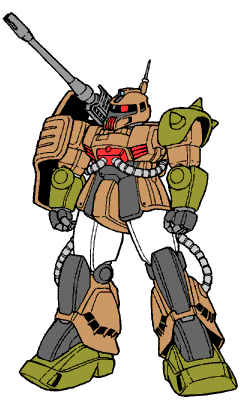 |
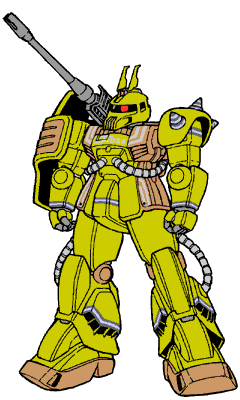
| The Zaku Cannon was originally conceived of as simply an anti-aircraft version of the J type Zaku, with the model number MS-06J-12. However, when its developers received intelligence on the Federation's prototype mobile suits, the Zaku Cannon was redesigned to serve as a support unit for anti-mobile suit combat. Development began anew at Zeon's California Base, and the completed prototype was given the model number MS-06K. In accordance with its new role, the Zaku Cannon was given several unique features. These included supplemental thrusters in the legs, a 360-degree mono-eye, and a 180 millimeter shell-firing cannon integrated into the backpack. Though the Zaku Cannon's mobility was inferior to that of a normal J type Zaku, its performance could be improved by swapping its cannon backpack for a standard model. Ultimately, field testing revealed that the shell-firing cannon created serious recoil and balance problems, and so the mobile suit's development was canceled. The nine completed prototypes were stationed at California Base, and defended the base throughout the last months of the war. This Zaku Cannon company was led by 1st Lieutenant Ian Greydon, whose mobile suit sported a distinctive "spider" color scheme and a pair of communications antennae that earned it the nickname "Rabbit Type." |
 |