first chapter from:
THE RICH FARMERS
translation: http://babelfish.altavista.com/
If one continued concerning provincial gone, that passes through clay village in the length gone, the village, one left and Right saw the large houses and scour of the rich farmers. Some lived a beetje further afterwards, but the meesten lived in the immediate immediacy of the hoofdweg. The allerrijksten lived flat to the hoofdweg, the one at the left-hand side other one to: right-hand side. One could without delay to the houses see if one passed through the village, but mainly to the barns: there the richest farmers lived, at, the kings of the village. Yes, that was they actual: the kings of the village, because their large ground possession gave all power in hands them. Municipal authorities, polder governing board, closed streets and ways and excursions everything were in their power and according to their will and wish were managed.That came in fact this way automatically and was also predict much there. It was not possible differently and was also no longer than fair that the largest owners had also it most to say.
They were also m. main point the employers, because what could do it work poor people differently than for the rich farmers. There, were no industry, no factory, no railway no boat, movement in this rural village, therefore some that was there, agriculture was and the lands belonged to the rich farmers.
Now went that in the summer fairly well. Then could one use all hands and was allerwegen pressed there enough. But if the autumn came in and the outside work and the harvest was done, the potatoes and suikerbieten dug up products and the cattle on stable stood then came the dark days for kerstmis and that was dark days also for the work people. 0 yes, one had an open winter then got these or gene that to the vlugsten belonged, still once a ditch to remove or what drains some arrived others to dig and in the zwingelkooi. But for the greater part of the loose work people it were then but dark days.
For the fixed workers was that of course differently. Those had the whole year work. Those had fixed work and therefore fixed money:. in summertime five and in the wintertime celebrate and a half guilder in the week. The outside work had been done then came which ensured in the outhouse and the barn and established cattle and "thresh".
Thus went out the year in, year. father Had this way worked, father worked this way and the younger line fathers would take place tomorrow or the day after tomorrow. How poorly and bekrompen this exists also was, nevertheless there was always a certain satisfaction and how strange it should seem also, nevertheless there was always heart for the well-being, the importance and the advantage of the boss. That seemed be ingeboren an appetite at poor people, which of parents on children proceeded. One felt responsibility compared with its boss and one observed its duty this way getrouw possible.
The work people had much larger responsibility compared with their boss then the boss compared with its work people, because there stuck generally a lot to.
0 yes, one belonged to the same church, or dutch reformed or reformed. The places in the church had been always occupied, both by the poor and by the realms. That in social and business area everything according to rank and score were now regulated and, the authority and control to them that it had most belonged, a commonplace was in fact and, when no abuse of power was made, it was also not wrongful. But datzelfde scheme was also found in the church and how out of place there also was, had there deeply taken root very. The richest farmers sat also there, as well as in municipality - and polder governing board, vooraan, in the ouderlingen - and deacon banks. Families also their sat vooraan on the bests and main place house in god. Also that came however this way automatically, since the zitplaatsen s were sold afternoon on new year day at bidding for a year zitrecht to the highest tenderers. Thus therefore the gegoeden came sit automatically vooraan and poor people in the church. But that of parent on child had this way been and by poor people against it was also not protested there. However, weet still well I to remind that, then during the farmer war in South Africa it under the ordinary work people usual became himself in a African manner, a cap instead of carrying a cap, I heard say a rich farmer woman: "we moesen the baanken már wir are wá opjoagen, because them bowl veul too far noar vurrene in the church, mi of the hoeie on l"
I have thus seen always much more plichtsbetrachting and accuracy at the
work people compared with their bosses then goedwilligheid and appreciation of
the bosses compared with their work people. The boss knew that he had them in
its power - if they could not work for him, where she had go then. Thereby had
four and half and five guilders are deserved and this way acid possible. They
knew best how difficult it will live of about a beetje money with a house family.
They knew best that it was not possible in fact. They saw how poorly everything
shutted there to, that there never a bit cheese, bacon or sausage on their bread
was and the kleren which them aanhadden were not much more than rags. They saw
their children with broken out gland variola because there was enough none in
their food, which is nevertheless if necessary for a healthy increase of the
body. I have myself the large tone against its woman hear say then the young boy
who worked for him of the table stood up where he is bread had eaten - the table
where also eating stood up of the large tone and its woman -: Zaagde nie how he
to dieë kais looked at? I yet: Ash ge hum there n piece of gaaft, wá zoa which
bites there in!
Yes, the boss knew best that Hanneske ' s winter evening, as rapidly as he at
home its bread on had, in hoekske of ' t outhouse at small lantaarnpitje zat at
zwingelen, until ten hours and, in the morning, if the work people passed to
shut where to the farmer, he must have sat also gone, already a couple hours
with the zwingelspaan on the pow, for: there a couple pennies to supplement the
family igncome. But never was there also but lowest indulgence, because for a
bucket buttermilk, which 95 per cent water were nevertheless, pennies still two
had be even paid.
Toch Hanneske it had brought still far. In the years then the government the large work had, a couple villages further, Hanneske at the farmer had remained, but two of its arriving boys more than two years for the lock and the bridge had worked and it was well paid there. The boys got Saturdays a good pocket penny, because those gave everything to mother, and when the work was ready Hanneske a cow had bought. That, was the largest blessing that he ever had received. What was possible he, with gratitude to its koeike stand look at if it stood in the wintertime in the outhouse on stable. And as its woman then zat to milk and he heard the gezipzap of the milk in the bucket, then he stood laugh sometimes. he had such a pleasure then. The neighbours came buy at him and the younger children got also sometimes a glass full and ' s Sunday evening had them always "rômede" pulp.
Yet that brought with to work automatically also, because there hay for the winter and strooisel had be. That strooisel could he, however, get, because there stood groin enough in closed. That cut he and empty on the side it to dry. That cost nothing him. But he had buy hay of the farmer. He usually bought side hay along closed and - the gripskanten of the construction country. If it was then light maan, drew he at night to mow because one hour already it, at five o'clock she had be at the farmer. In, a couple nights had he - it ready. If it had been obtained then dry and to house, he had, had become decrease always to a couple beast. As soon as it celebrates then hour was, he went on. Then he ate already going are bread but on and if he arrived on the place, zat Mieke, youngest méske are, already wait. Those had brought the wheelbarrow with the rack and those could help then immediately. Already she could do then this way not yet much, she nevertheless did a beetje and dát helped. Because all that side hay had he with a rope on its head carry out and that did not turn out better than expected, this way along the gripskanten and ditch sides. And then it Saturday was ' he exactly nothing got, because side hay and the two beasts who ' he had not worked, reached exactly up to five guilders and six pennies. , The boss, he said the six pennies there next week, however, would keep back.
There he had however all nothing for data. That gladly did he. That had lost money also none. That returned on its time all, already he had that also two or do three times on a summer enough get down hay for the winter. But there was one thing where he has much charge of has and where he stillekens have sometimes, however, cried for.
And that not the boss, but the woman was of the boss, who him has this moved. She was be the richest woman of the whole village and belonged in fact also main, but was there far from. Them never came to the fore and were never seen, nor at birth of children, nor at sickness - or sterfgevallen. She was never heard or was seen. One will have said that she did not exist for the village.
They, that saw deeper, knew, however, improve. Those could its even in municipality Council and polder governing board descry, where its influence was too often felt but. Because them one levensgenot and that was "prengelen" and them left no chance lost will its influence would have let money and of it, enjoy or personally or by its influence on others. And was also as a result, that them Hanneske such a sorrow has caused.
t was late in spring and its cow had gestierd becomes. The stier stood at the boss on stable. He had already taken along in the morning the halter and this way rapidly such as the twelve hours, went he was to the wei, obtained its cow and brought back her at the stier on the dam, and then rapidly to the wei. He had done rapidly as as he but was possible, but when he got away on the dam, the work people was correctly broad beans will chop on the high land. The woman of the farmer stood in the door and said against him: "ge zijt laot, Hanneske!" "Joa," said he, to "hé motte haste ' k for ' et at hoale!"
He followed the work people hastily and came still exactly right with them
on the country and on the work. But piet the wafer said against him: "is
called oe mie seen, because them ston in the door then we weggongen!"
"joa," said Hanneske, "them sense still tege me da'k Ioat were."
"Dá cost oe unne stuiver!" piet said then. DA nevertheless nie woar
will be! said Hanneske.
"Doar knowledge mar of opoan!" piet, "she answered ston doar
uie vur nothing!"
The meesten assisted piet and said: "Dá never cost oe unne stuiver, da
loat mie goan."
When it was Saturday night and receive the work people on the "geut" stood for their remunerations, was open the door to the woonvertrek. And then the boss against Hanneske said: "Ou koei are gestierd of the weak, therefore da's veur ' ou zeuve stuivers less," sounded it suddenly by the open door from the woonvertrek: "Neeë, aacht!" Thereby got Hanneske considers paid stuivers less and mie had its sense. She had him nevertheless still a stuiver afgeprengeld.
There Hanneske much charge of has had. That was not honest, that stuiver
one of him had stolen. He a beetje had been late on the dam, but what gave that!
There they did not work nevertheless and he was equal with the others on the
country and to the work. There had therefore lost no time gone.
There he has had much charge of. Not for that stuiver. That was not most
terrible, but for the way was done.
He was possible but understands how someone, who was opulent and abundance of
everything had, could, poor people zó treat.
Then it a couple months later night time was, had he that week correctly the wei gebloot flat beside the church court and then this way many ideas by its head has there nevertheless concerned right and gerechtigheid, god omnipotently and perpetuity, which he did not dare that Sunday to the night time table go and he was possible but understands that mie dared, however. And then the boss, who was also ouderling, Mondays against him said: "Hanneske, ge zijt nie oan the taffel geviest!" he had said nothing then "neeë!" and this way but had walked away.
And he has nevertheless come across, because this way complete long afterwards did not read the small Mieke, because this way well he could, at noon after eating from the bible and heard read them the words from the klaagliederen: "complete, gij have seen the verkeerdheid which one has ' me moved, judgement mijne matter." Then it peace in its heart has become. He knew actual not well why, but then he had of it all of a sudden no more charge.
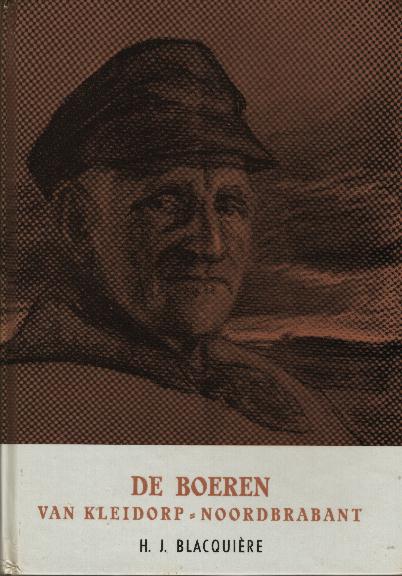
From: The farmers of clay village, North brabant, of hendrik J. Blacquiére.
January 1956
The book concerns the village Genderen at the end of 19e / beginning 20e century. It outlines the proportions such as which then layers. Such recovering could tell my father also. My opa (Nico the gangster, * 1907 + 2005), told regularly recovers that he the quarter for 3 at night without with or drink the country was sent in to work and then but water from the ditch had drink.