About Sybase
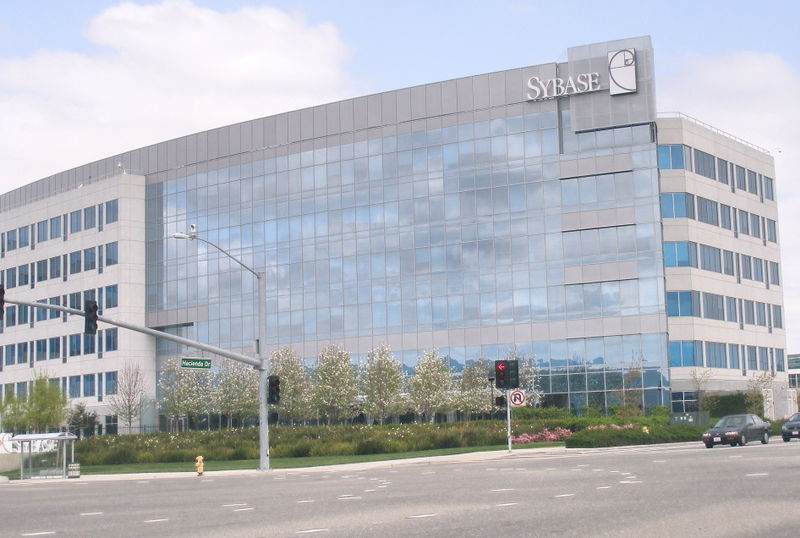
It was originally created for UNIX platforms in 1987. In 1988, SQL Server for OS/2 was codeveloped for the PC by Sybase, Microsoft, and Ashton-Tate. Ashton-Tate divested its interest and Microsoft became the lead partner after porting SQL Server to Windows NT.
Microsoft and Sybase sold and supported the product through version 4.21. In 1993 the codevelopment licensing agreement between Microsoft and Sybase ended and the companies parted ways while continuing to develop their respective versions of the database management system.
In 1995, Sybase released SQL Server 11.0. Thereafter, it decided to better differentiate its product from Microsoft SQL Server by renaming it to Adaptive Server Enterprise in versions 11.5 and beyond.
Sybase was founded by Bob Epstein, the architect of a product called the Intelligent Database Machine (IDM) from Britton-Lee. This was a computer that only did relational database. It used IDL as its native language (similar but not identical to SQL). The architecture of that product was used as the starting point for Sybase, which began development from 1984. Beta testing of Sybase's first product started in 1986.
15 reasons to use Sybase
Ref: http://searchenterpriselinux.techtarget.com/expert/KnowledgebaseAnswer/0,289625,sid39_gci1195994,00.html
There are many reasons to use Sybase products.
I would go for Sybase since it has a well-established and skilled workforce, both in the infrastructure and development teams who are fully familiar with the Sybase range of products
Applications developed using Sybase have now been running for a while. They provide adequate service to the business community. There is absolutely no guarantee that migrating these applications to other DBMS, such as Oracle, will result in the same level of service and, consequently, the business will not suffer. Additionally, there has been no known, published case where a migration from Sybase to Oracle or otherwise has resulted in a noticeable performance gain
Sybase products are generally perceived within the DBA community to be very reliable and easier to maintain, compared to peers like Oracle.
Any move from Sybase to other DBMS have got to be justified in terms of the current level of dissatisfaction with Sybase and the level of desire to use other. In the investment banking arm, neither of these conditions prevail and I cannot recall anywhere else this is valid.
The exit barriers from Sybase and the entry barriers to others are high. For a medium-to-large application, it will take an average of ten years for investment for ROI. A simple cost/benefit analysis will verify this statement.
Sybase enjoys a far more favourable Total Cost of ownership (TCO) compared to Oracle.
Following TCO, on average, based upon experience in the City, one requires 2.5 Oracle DBAs to provide the same level of service as a single Sybase DBA.
Sybase is fairly modular with a simpler syntax. This needs to be contrasted with what Oracle offers. In most cases with Oracle, you require a third-party product to allow the DBA to reduce his/her workload. Perhaps that may be a reason why TOAD, a non-Oracle product, is the most popular GUI interface for Oracle!
The majority of complex trading systems of bank use sophisticated replication technology to provide publisher-subscriber or peer-to-peer replication. At this juncture, none of the competitors, including Oracle, can provide the same degree of functionality that Sybase Replication server provides. This will expose banks to unnecessary risks. Buying third party products, such as Golden Gate etc., will add additional complexity, dependency on multiple vendors and cost.
Linux is becoming an ideal and cost-effective platform for the development teams and small- to medium-sized companies. With the availability of heterogeneous dump and load of Sybase databases across different operating systems, Sybase, by virtue of its modularity and ease of use is an ideal DBMS for Linux. This needs to be contrasted with Oracle which is, pound for pound, a far heavier beast and resource hungry.
The latest Sybase flagship product, ASE 15, has filled much of the perceived functionality gap between ASE and others if there was any. ASE 15 also provides additional functionalities that others do not offer. It is also debatable how much this functionality that other RDBMS claim to have and ASE not, are practical as opposed to being over-engineered and esoteric. An example would be Oracle functionality claims.
The future of Sybase is secure. More than half of Wall Street runs on Sybase. Since Sybase arguably provides the most secure database (please read articles on security issues with regard to Oracle and Microsoft), it is a favourite with the US Dept. of Defense and CIA.
SAP's release of its lightway product for Sybase on Linux and IBM's steps towards selling their line of P5 Linux servers with ASE, while they have DB2 and Informix themselves, are pretty strong statements about the future of Sybase.
Sybase realizes the importance of financial services as its prime market. Thus, it works closely to react to banks' requirements whereas with Oracle and Microsoft, despite the size of banking organizations, they are to some extent "just another customer." This is one reason why Sybase is reacting quickly in bringing the security features required by the investment banking customers, such as extensive Kerberos support, programmable authentication and data encryption to the market..
Also it is worthwhile noting that that several major financial institutions have switched Sybase from SELL or HOLD to BUY. This cannot be proved openly, because these customers' names are confidential - but it is true.