Oscars breed similarly to other cichlids with the exception of Oscars are not mouth breeders like some of there african cousins. The majority of the Cichlids are excellent parents, and the Oscars are no exception. Once the eggs have been fertilized, the parents will take turns guarding the eggs. . Oscars do not secrete any special compounds for feeding, as do Discus and other cichlids. The fry are left to feed themselves
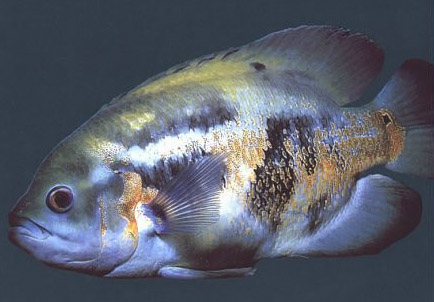
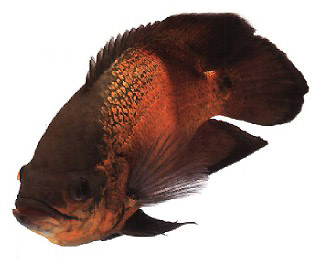
The Oscar has been subjected to breeding programs designed to bring out certain color combinations. Common Oscar variations include the Tiger Oscar, Albino Oscar, Common Oscar, Fantail Oscar, and Red Oscar. The Red Oscar is the most similar to the naturally occurring Oscar. It is a mostly greenish brown, with a large red streak on its underbelly. The Tiger Oscar maintains a similar greenish brown color, with red streaks throughout its body, the streaks running in a generally vertical direction. Common Oscars appear similar to both the Tiger and Red varieties, but generally have muted coloration, if at all. Albino Oscars are distinguished by a white body with a pinkish hue. Orange marbling, similar to a Tiger Oscar, occurs in the Albino variety. Finally, the Fantail Oscar is basically a Tiger Oscar with an elongated tail, in both directions. As a result of selective breeding, the captive born specimens available today, are far different than the naturally occurring varieties available.
Oscars are generally found in a variety of waters, temperatures, and pH levels. Of important note, is the degree of extremes an Oscar can survive. This, and it's behavior and coloration, have made it a big hit in the aquarium world. Ideal conditions for an Oscar would be a pH of 7.2, a temperature of 72-78 Fahrenheit, and an unlimited supply of food. These parameters loosely simalar to the Oscar's native environment. Many of it's native waters reach excesses of 90 Fahrenheit during the hotter months. Similarly, pH levels and Oxygen saturation may fluctuate greatly also.
Oscars are omnivorous ( eatung both plant and animal) and piscivorus (fish eaters).Omnivorous cichlids make up the greatest majority of cichlids. In nature, these fish feed mostly on insects, crustaceans, and worms, but at times also eat plants. Thus in aquaria these species should be offered a mixed diet of live foods, flakes foods, and plant or vegetable matter.� Carnivorous cichlids are predatory species which are specialized for eating other fish. Generally these species will eat small tank mates, although not fish of a similar size. In aquaria, carnivorous cichlids can be fed live fish, worms, insects, insect larvae, and crustaceans. They will pretty much eat anything that fits in ther mouth. Ive seen oscars choke on oversized food. In captivity, Oscars will make virtual pigs of themselves. |