|
SLIDING
This is another guitar technique that is extremely
popular, and one that needs to be mastered by all budding guitar players.
As with all other techniques, learning to slide well will take a bit of
practice, but you should get the hang of it almost immediately.
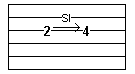
Here's the basic concept - we're going to fret a note, play it, then slide
the note to another one on the same string, without re-picking. In the
above example, we're starting on the third string, second fret. Play the
note, then briskly slide your finger up to the fourth fret on the same
string.
Done? Chances are, the note died as soon as you started to slide it. The
key is to keep exerting downward pressure on the string with our finger
while sliding the note. Try it again, making sure you keep pressing the
note down as you slide.
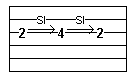
This second example is almost the same as the first - it just adds another
step. This time, try sliding on the third fret from the second fret to the
fourth fret, then back to the second fret, all without re-picking the
string.
Sliding
Practice
It's important to try and use all the guitar techniques
we learn to play many different things. For example, try playing the A
blues scale using the sliding technique, hitting each string only once .
To play it this way, you'll need to use only one finger to play the entire
scale. You can also try something similar using hammer-ons and pull-offs,
and also utilize all these techniques on different scales we've learned.
You
Should Know:
- You'll commonly hear a squeeking sound when sliding
on the lower strings. Notice that this doesn't happen as much on the
thinner (unwound) strings.
- When sliding, only press down as hard as you need to
in order for the note to keep ringing. Pressing too hard will slow
your finger down too much, and the slide won't sound smooth.
- When sliding to another fret, focus your eyes on the
fret you're aiming to slide to, and your finger will naturally slide
to that fret.
|
