 |
|
|
|
|
|
|
|
|
|
|
|
|
|
|
|
|
|
|
|
|
|
|
|
|
 |
|
|
Vatican City: The Holy See, The World's Smallest Country But the Most Influential Micro-nation in the World |
|
|
|
 |
|
|
|
|
|
|
|
|
|
 |
|
|
|
|
|
|
 |
|
|
|
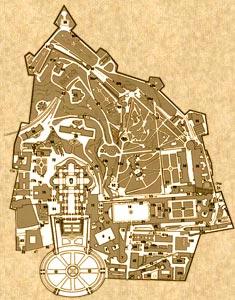
The State of Vatican City is an independent country within the city of Rome which contains the Holy See, that is the leadership of the Catholic Church. Only 108.7 acres in area, Vatican City nevertheless has a greater impact on more people around the world than any other country on earth. The Pope is the sovereign of the Vatican City State and as such it is both the only Christian theocracy and the only Christian absolute monarchy left in the world. In Italian, it's official name is Stato Della Citta del Vaticano though the official language of the Vatican is Latin. It must be the only country in the world where cash machines allow the user to choose from English, Italian or Latin. The Pope himself lives in Vatican Palace, also called the Apostolic Palace. |
|
|
|
|
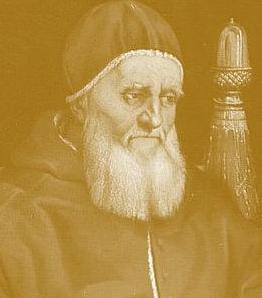
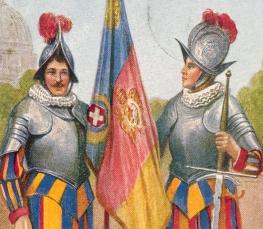
Vatican City is actually the remains of the larger Papal States which once covered most of modern central Italy. They reached their peak during the reign of Pope Julius II, a great art patron who was also known as the "Warrior Pope" and "Julius the Terrible". Pope Julius II drove the French out of Italy and united most of the country under Papal control. He also famously employed a troop of Swiss mercenaries to serve as the guardians of the Pope. 500 years later, the Papal Swiss Guard still perform this duty and are the oldest regiment in the world still on active duty. The most horrific day for the Vatican came on May 6, 1527 during the 'Sack of Rome' when 142 Swiss Guards fought to the death to buy time for Pope Clement VII to escape to Castel Sant' Angelo. After putting things back in order a period of relative calm followed, until the outbreak of the French Revolution. Republican forces, and later Napoleon himself, invaded the Papal States, annexed them and took Pope Pius VII prisoner. After Napoleon's defeat, the Papal States were returned to the control of the Church.
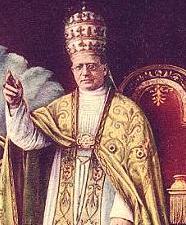
The French Revolution however had spread a new nationalistic ideology that was not easily suppressed. Pope Gregory XVI had to rely on Austrian troops to put down a rebellion in Rome and his successor, Blessed Pope Pius IX, was forced to flee Rome, was later restored by French forces but was finally conquered by the Italian liberals who proclaimed the new Kingdom of Italy. The Pope withdrew behind the walls of the Vatican, declaring himself a prisoner. His successors did likewise, continuing the Vatican exile until the reign of Pope Pius XI who was determined to normalize relations with Italy and settle the status of the Church and the former Papal States, which it was now clear were never going to be recovered. |
|
|
|
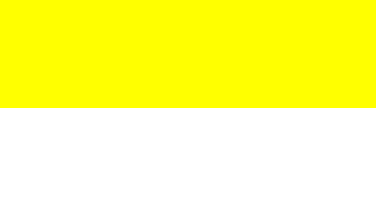
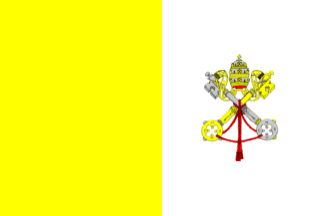
Italy's new ruler, Benito Mussolini, was also anxious to see the problems with the Church solved, and so, after long and heated negotiations Mussolini and the Pope agreed to the "Lateran Treaty" in 1929 which recognized Vatican City as a sovereign, neutral state within Rome, along with certain extra-territorial possessions and other concessions. In return, the Pope surrendered all claim to the former Papal States and recognized the legitimacy of the Kingdom of Italy. This was really the "birthday" of the modern Vatican City State. An official flag was adopted, a national anthem and all the other trappings of a sovereign nation. Vatican City now has its own newspaper, radio station, television station, post office with unique stamps, its own coins, medical facilities, heliport, train station, police force (papal gendarmes) and army (the Papal Swiss Guard Corps) as well as its own civil government. |
|
 |
|
|
|
|
The government of Vatican City is administered by a lay Governor who is appointed by the Pope. Some of the most important parts of the Vatican are the Apostolic Palace, the Vatican Museum, Library, Archives and the Vatican Gardens, as well as the Sistine Chapel, where conclaves are held and of course St Peter's Basilica which has the distinction of being the largest Christian church anywhere in the world. It was built over the tomb of St Peter near the old Vatican Circus where the first Bishop of Rome was martyred during the reign of Nero. The area where the city stands got its name from being on top of Vaticanus mons or Vatican Hill. During the reign of Pope Pius XII this ancient tradition was put to the test, and proven correct, when the remains of St Peter himself were found exactly where they were said to be.
Both the State of Vatican City and the Holy See (the supreme governing body of the Church) are fully recognized as sovereign entities, united in the person of the Supreme Pontiff and protected by international law. As such, the Vatican City State has the status of an observer at the United Nations as well as other groups and international organizations in which she may voice her concerns and opinions without becoming involved in votes which could endanger the Holy See's neutrality. |
|
|
|
 |
|
|
|
 |
|
|
|
Official Website
of the State of
Vatican City |
|
|
|
|
|