
of Church History


There have been family connections fairly early on in the papacy. It has been alleged that Pope Innocent I (r.401-417) was the son of his predecessor Pope Anastasius I, recognized as a saint his name was removed from the Church calendar in 1969. Pope Saint Paul I (r.757-767) was the younger brother of his predecessor Pope Saint Stephen II. There were rumors at the time that Pope John XI (r.931-935) was the son of Pope Sergius III (r.904-911) but there is no concrete evidence of this. This was during the very chaotic "Dark Ages" and it was during the turn of the century that the Crescentii family became a powerful force in papal history. Popes John XVII, John XVIII and Sergius IV were all lifted to prominence by the Crescentii family before a revolution in Rome removed them from power to be replaced by the Tusculana family which supported Sergius' successor Pope Benedict VIII (r.1012-1024) who was the son of Gregorio de Tusculana. Benedict VIII was succeeded by his brother who became Pope John XIX who was in turn succeeded by his nephew Pope Benedict IX in 1032, who had a very troubled reign to say the least. A "Tusculan Pope" he was succeeded by another Crescentian Pope, Sylvester III who passed the papal throne to his godfather Pope Gregory VI.
Thankfully, the period of decay which afflicted the Church (and the rest of Europe) during the Dark Ages was coming to a close, but it did not mean that the role played by "Papal Families" came to an end. Sometimes these papal families were royal families. In the past, several popes were relatives of the Roman Emperor. During the recovery, Pope Calixtus II was famous, not only for his strong leader-ship as pope, but for being related to the royal familes of England, France and Germany. The reforms of Pope Gregory VII were essential in setting down regulations for the election of the Pope, so the Church was not to see the sort of family influence which existed in the past, but nonetheless several families produced a number of pontiffs, many of them being extremely great and holy men. A superb example is the Conti Pope Innocent III who carried the Church to her greatest height of influence in Europe, becoming the single most powerful force on earth, in both the spiritual and temporal spheres.
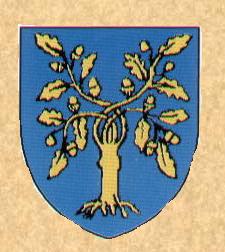
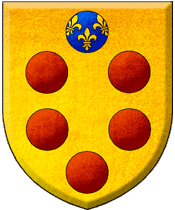
However, when anyone thinks about families gaining papal prestige, it is the "Renaissance Popes" who always come to mind; that group of men who have been given a largely un-deserved bad reputation. One of these who is the most famous is the Rovere family. Part of this is because of the famous feud between the Rovere family and that other powerful house which supplied a number of popes, the Medici family. The first to be elected was Cardinal Francesco della Rovere who reigned as Pope Sixtus IV. His greatest accomplishment can justly be said to be the work he funded to rebuild, embellish and beautify the city of Rome. He allowed the creation of the Spanish Inquisition, but also admonished the institution when it began to become too extreme in its methods (though nowhere near as extreme as many claim, as the facts have now shown). His call for a crusade was largely ignored, and toward the end of his reign Muslims had landed on the Italian mainland. Sixtus IV is also famous for first approving the Feast of the Immaculate Conception of the Virgin Mary.
The successor of Sixtus IV was supported by the Rovere family, a man who was in turn succeeded by Pope Alexander VI, of the Borgia family, who was a nephew of Pope Calixtus III. His actions are well known, though often exaggerated, and covered elsewhere in detail. After Alexander came Pope Pius III, a nephew of Pope Pius II. He was followed in turn by the most famous pontiff of the Rovere family, Giuliano della Rovere, who reigned as Pope Julius II, the "Warrior Pope" from 1503 to 1513. He drove the French out of Italy, sponsored some of the greatest art masterpieces and building projects in the history of the world and was in every way the definition of a "Renaissance Man" which had positive as well as negative aspects for a pope. Following Julius was the first pontiff of the Medici family, Giovanni de' Medici, who reigned as Pope Leo X (r.1513-1521). Although often criticized for his "worldliness", Leo X was extremely popular in Rome, and during his reign even people who had an unfavorable view of the Church had to admit that Rome reached the greatest height of culture and civilization that Europe had yet seen. He also took steps to clarify the position of the Church regarding indulgences and disciplined those, most famously John Tetzel who contributed to the abuse of indulgences.
However, it was also during the reign of Leo X that the Protestant Revolt, launched by Martin Luther, erupted across Germany. One of the men who had to deal with Protestantism at its worst was Pope Clement VII, grandson of "Lorenzo the Magnificent" of the Medici family. A good and devout man, Clement was overwhelmed by the events around him, at one point becoming a prisoner in Castel Sant'Angelo in Rome. His successor, Pope Paul III, of the prestigious Farnese family, started the Catholic Reformation, excommunicated King Henry VIII of England and supported the Holy Roman Emperor Charles V. The next Medici Pope, Pius IV, was also a great leader in cleaning up the Church and reconvened the Council of Trent. The short reigning Medici Pope Leo XI (r.1605) was also noted for his great holiness and drive for true reform. Even after the Renaissance, some families came back to prominence, notably the very old Conti family in the 18th Century when Michelangelo dei Conti was elected Pope Innocent XIII who had immense problems to deal with when the temporal power of the Church was dwindling.
In modern times, "Papal Families" seem to have largely gone away. In fact, some Catholics respond with shame when anti-Church forces attack Catholicism on this score, but the history of the papacy is something Catholics should only ever be proud of. Family influenced is often linked to nepotism, but it would be simply untrue to say that this was always the way a man from one of the prominent families became pope. Some of these men could have been much better, but some were also saints. Some damaged the reputation of the Church, but others still lifted it up. As Catholics we also know, and can trust, that the Holy Spirit chooses our Pope and that God always protects the Church from doctrinal harm at every level. No matter the family, the papacy always belongs to God first.