In Italy the struggle gained some aspects of a nationalistic one, though the major cities were more or less divided between the two camps. For example. Florence Bologna and Milan were Guelph cities while Siena, Verona and Pisa were for the Ghibellines. The conflicts lasted mostly through the 12th to 15th Centuries eventually degenerated into a really large scale family feud or mob war, with both sides losing sight of what the division originally started over. The first big confrontation came when the famous German Emperor Frederick Barbarossa invaded northern Italy as a challenge to Pope Alexander III. However, the Guelph city states formed the Lombard League, with the Pope's support, and defeated Barbarossa at the battle of Legnano in 1176, after which the Emperor was forced to sign a surrender treaty in Venice.
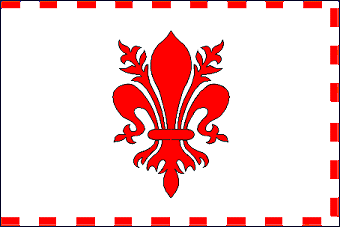
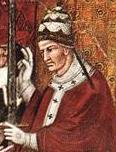
Florence was also a major center of conflict. Originally, the Ghibellines held power in 1244 but were driven out by the Guelphs who set up a council of the guilds directed by a "Captain of the People". However, in 1260 the Ghibellines took Florence back and instigated brutal vengance on the Guelphs, however, this really turned the people against them, the Emperor disavowed the action and so Pope Clement IV, a Guelph supporter, was able to arrange a peaceful end to the hostilities. Eventually though, despite having won every major battle against their enemies, the Guelphs split into the Black (zealously pro-papal) faction led by the Donati family and the White (more moderate) faction led by the Cerchi family. Pope Boniface VIII, not surprisingly, was a strong supporter of the Black Guelphs. The rivalry in fact was so famous between the Guelphs and Ghibellines that William Shakespeare used them in his play "Romeo and Juliet" with Romeo being a Ghibelline and Juliet a Guelph. Also on the literary front, Dante was counted among the White Guelph camp.
However, the bloodshed was real and not confined to the written page. In 1268 the Guelphs won another triumph at the battle of Tagliacozw but in 1315 they were defeated by the Ghibellines at Montecatini. Things seemed to quiet down for a time, but flared up again during the years of the Avignon Papacy when Louis of Bavaria took on Pope John XXII, igniting of course the Guelph and Ghibelline camps to have at each other once again. Over time, the feuds became more and more personal and less about any sort of cause. Each adopted odd ways of showing which side they were on. A feather on one side of the cap meant a Guelph, if on the other side it marked a Ghibelline; or if the corpus on a crucifix faced a certain way it was Guelph, if the opposite it must be Ghibelline. Even the presence of the modern princely House of Grimaldi goes back to the fact that they were Guelphs exiled from their homeland who took possession of Monaco.
As the Holy Roman Emperors became less of a factor in Italian politics, the struggle began to lose focus. Pope Gregory X worked to reconcile the two sides, which was helped by the fact that Emperor Rudolf (House of Hapsburg) surrendered all claims to papal territory in Sicily. The fighting that did continue was ultimately denounced by the Church and in 1334 Pope Benedict XII forbid anyone to use the names of Guelph and Ghibelline. However, what the rivalry was originally about did not and has never gone away. Secular power still tries to impose itself over spiritual power and so the conflict has continued. Later on, in the 19th Century, when Italians began to call for unification of their people, those who supported a united Italy under the guidance of the Pope were called the Neo-Guelphs because of their desire to see the Pope given the place of honor above the temporal authorities of Italy. So, really, as long as there are political figures who try to dominate the Church, and as the Pope always stands firm against this, in one form or another there will always be Ghibellines and Guelphs to oppose them.