 |
|
|
|
|
|
|
|
|
|
|
|
|
|
|
|
 |
|
 |
|
 |
|
|
|
|
|
|
|
|
|
Pope Pius XI and Christ the King Day |
|
|
|
 |
|
|
|
|
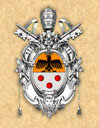
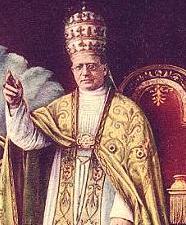
| Pope Pius XI had long taught that for the sincere and devout Catholic, Christ must be first in the hearts of all people and central to the life of all societies. He was quite against what we would call today "Cafeteria Catholics" who want to pick and choose those doctrines they find acceptable and ignore those they find inconvenient. Pius XI was adamant that Catholics follow the greatest commandment absolutely, that is to love God with all of your heart, soul and mind; and that this meant making Christ central to each and every aspect of our lives and our communities as well. His inauguration of the Feast of Christ the King was a dramatic way of telling the world, you cannot put your faith in your back pocket or only be a Christian on Sundays and Holy Days of Obligation. Christ is the King of all and He must be in every way our Alpha and Omega. |
|
|
| In his encyclical instituting the Feast of Christ the King, Pius XI condemned the "plague of secularism" he saw sweeping the world, from Mexico to Russia. In some cases things are better, in others far worse, but if Pius XI considered secularism a "plague" in 1925, we can only imagine what he would think of our society today. To combat this is to promote the reign of Christ the King in our private lives and in public. That means we live as subjects of Christ and we do all we can to see to it that our world is ordered according to his will. |
|
|
| Pius XI was of the opinion that no good could come from any political theory which was not inspired by true Christianity. He played no favorites in this principle and caused no small amount of controversy by condemning the French political movement Action Francaise which had considerable Catholic support among the conservative French royalists. However, the leader of the group, Charles Maurras, was a total non-believer who saw the Church as nothing more than a tool for social order. He was extremely anti-Semitic, dismissive of the "Hebrew Christ" and as the Pope believed, was not using politics to advance the reign of Christ the King, but rather was using religion to advance his own political goals and ambition. Christ the King must be where we start and where we end, not simply the means of having an efficient society in between. |
|
|
| Without Christ the King as our supreme ruler, Pius XI predicted that the world would be reduced to simply all-powerful secular governments and powerless, lone individuals. We can see this very clearly today coming true as government power and influence increases and the role of the Church and of the family, really any traditional institution not part of politics, decreases. In the encyclical Quadragesimo Anno Pius XI laid out the principles of subsidiarity to combat this trend, but the social teaching of the Church, focused on Christ the King, remains largely untried. This is so, at least in part I feel, because of a total disregard for Christ the King specifically, and the desire to see Him replaced by some worldly creation of man; essentially the age-old enemy of idolatry still creeping in. For liberals of the radical, socialist sort this means replacing the Divine Majesty of Christ the King with an all-encompassing national government to solve the ills of the world. This was certainly on the mind of Pope Pius XI who called the communists, "missionaries of Antichrist" and of carrying out, "satanic preparations for a conquest of the whole world", which naturally is part of the reason he tried so hard to stress that Christ was King of all Creation and no good could come from a denial of that fact. |
|
|
| There are other examples of course, from secret societies like the Freemasons to the worshippers of materialism or those whose only principle is to take joy in tearing down all other principles. Selfishness may be the worst. Western culture may soon go extinct due to selfishness and rebellion against Christ the King. Few people truly appreciate the things of real value anymore, even sacrificing them for things that "shall pass away". Examples can be seen everywhere. While one family prays and struggles for the gift of life, another that has the ability to have children discards It in favor of a few luxuries, vacations or fear of responsibility. Another person will pray for years, crying out to God for relief from their loneliness while a once happily married couple divorces each other at the first inconvenience. Some even disregard the greatest gift of all, the real presence of Christ the King in the Most Blessed Sacrament, simply out of laziness, frivolity and generally taking for granted this greatest gift God has ever given. |
|
|
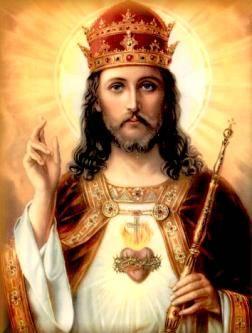
| All of this shows that if Christ is not the center of our lives, we are ultimately wasting every grace we have been given, gathering dust around us and turning a blind eye to our one and only hope of salvation. This is why, I feel, the image of Christ the King is so significant and vital. In the time of Pope Pius XI he had to show that Christ was above and supreme over the brutal, anticlerical regimes fighting for power in Mexico, Spain, Germany and Russia. Today, in a similar way, the symbolism of Christ the King is vital because of how easily we ignore Christ and His Church. Too many people today view Christ as a sort of social philosopher or a self-help guru, who gives us only a little advice we can accept or reject as we please. He is not often viewed as an authority figure who must be obeyed, which is all too obvious when we see so many people who call themselves "Christian" who claim that Christ would not "discriminate" against gays by refusing to let them "marry" or that He would be so intolerant as to refuse women entry into the priesthood or the "freedom" to have abortions. The symbol of Christ the King is an old fashioned wake up call for those laboring under such ignorance. |
|
|
| In the first place, we have the symbolism of the king, the quintessential traditional authority figure. Since the time of the American and French Revolutions the world has seen virtually all kings either overthrown or stripped of all but purely symbolic power. Like Christianity itself, kings and queens are something the modern world feels it has outgrown. Worse to some is the lingering impression, at least concerning the Windsor Royal Family and their coronation ceremony, that a king or queen reigns "by the grace of God" rather than by adherence to popular opinion. This is at heart why the image of Christ the King is so powerful, and so necessary today. No matter what changes in the world, people will always see a king as a symbol of authority, one that is absolute and cannot be changed by losing public favor. |
|
|
| In an age when nothing seems permanent, Christ the King represents the unchanging, unalterable power of God which we can obey or rebel against but which we cannot change. "Christ the President" would hardly have the same effect. Christ the King is supreme and eternal, He cannot be thwarted or manipulated and He cannot be voted out of office if His policies displease us. This is what Pope Pius XI was talking about in 1925 when he addressed the need for Christ to be at the center of our lives. Christ is not someone to be debated or negotiated with, we cannot compartmentalize our religion, Jesus Christ the servant is also Christ the King and He must be obeyed absolutely. We may not have many traditional authority figures left in the world, but Christ the King is one who is omnipotent, omnipresent and eternal. |
|
|
| Christ the King also stands for another traditional authority figure today and that is the father. A king, after all, is a family figure; the origins of the world going back to chief, which derives from the head of a clan, which at heart is the head of a family. The king at the head of the Royal Family of a people is father to his people as he is to his family, connected by bonds of history and culture that no other figure could imitate. In the same way the father of a family, the Pater Familias, is leader and guardian of his house, not by popular choice, but by God's authority, what I like to call the "Divine Right of Parents". Today, parenthood is under attack from all sides from the abortionists attacking motherhood to the gay agenda attacking marriage itself and a general trend away from marriage and family at all. Christ the King sets an example in defiance of this trend. For each Christian household, the father is the king, the mother is the queen and their children are their (sometimes resistant) subjects. If firmly united and dedicated to imitate Christ the King it is a set-up that can withstand anything, and in today's world that is definitely a lot. I cannot speak from experience other than as one familiar with the role of a subject, and there were times in my teenage years I felt like "storming the Bastille", but from that alone I know that a Christ-focused family can overcome almost any obstacle; which is why of course it is so fiercely opposed by secularists today. |
|
|
| This may not be the best defense of Christ the King, but like my Grandfather always says, it's better to go ahead and do something, even if you do it wrong. I do think, like Pius XI, that if the meaning of the Feast of Christ the King can be taken to heart it could go a long way to stopping the secularization of the world, and reaffirm absolute moral truths in the face of what my hero Pope Benedict XVI called, the tyranny of relativism. Have a happy Feast of Christ the King and God Bless! |
|
|
| Joseph A. Crisp II |
|