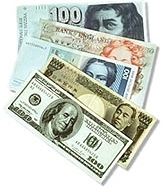
UNIT TITLE: WORLD’S FAIRE
Author:
Pam Ware
E-Mail Address: [email protected]
School:
Prairie View
Middle School : Tinley Park,
Illinois
School Home Page URL:
(optional)
THEME : Countries around the world
BROAD CONCEPT: Understanding
Cultural Differences, Patriotism, Cultural
Diversity
GRADES: 7th or 8th Grades
INTEGRATED SUBJECTS: Math,
Language Arts, Social Studies, Economics,
Technology
UNIT GOALS AND PURPOSE:
Develop a better understanding and appreciation for other cultures ;not looking down on someone because they are different
Develop a better understanding and appreciation for what makes our country such a great place to live in
Develop better computer and software skills
Develop an interest and curiosity about other countries
TIME FRAME: 10 Days
OBJECTIVES:
In this lesson, students will:
MATERIALS:
__Desktop Publishing- Desktop Publisher __ Brainstorming -Inspiration
__Word Processing -Microsoft Word __Spreadsheet -Excel
__CD-ROM Encyclopedia – Encarta _ Multimedia- Power Point
__The World Wide Web
STATE
STANDARDS ADDRESSED BY THIS UNIT:
STATE GOAL 6: Demonstrate and apply a knowledge and sense of numbers, including numeration and operations (addition, subtraction, multiplication, division), patterns, ratios and proportion
6.A.3 Represent fractions, decimals, percentages, exponents and scientific notation in equivalent forms.
6.B.3a Solve practical computation problems involving whole numbers, integers and rational numbers.
6.C.3a Select computational procedures and solve problems with whole numbers, fractions, decimals, percents and proportions.
6.C.3b Show evidence that computational results using whole numbers, fractions, decimals, percents and proportions are correct
and/or that estimates are reasonable.
6.D.3 Apply ratios and proportions to solve practical problems.
STATE GOAL 7: Estimate, make and use measurements of objects, quantities and relationships and relationships and determine acceptable levels of accuracy.
7.B.3 Select and apply instruments including rulers and protractors and units of measure to the degree of accuracy required.
7.C.3a Construct a simple scale drawing
STATE GOAL 8: Use algebraic and analytical methods to identify and describe patterns and relationships in data, solve problems and predict results. for a given situation.
8.C.3 Apply the properties of numbers and operations including inverses in algebraic settings derived from economics, business and the sciences.
8.D.3b Propose and solve problems using proportions, formulas and linear functions.
STATE GOAL 10: Collect, organize and analyze data using statistical methods; predict results; and interpret uncertainty using concepts of probability.
10.A.3a Construct, read and interpret tables, graphs (including circle graphs) and charts to organize and represent data.
10.A.3c Test the reasonableness of an argument based on data and communicate their findings.
10.B.3 Formulate questions (e.g., relationships between car age and mileage, average incomes and years of schooling), devise and conduct experiments or simulations, gather data, draw conclusions and communicate results to an audience using traditional methods and contemporary technologies.
N.C.T.M.
STANDARDS ADDRESSED BY THIS UNIT:
Number
and Operations Standard for Grades 6–8
Understand
numbers, ways of representing numbers, relationships among numbers, and number
systems
work
flexibly with fractions, decimals, and percents to solve problems;
compare
and order fractions, decimals, and percents efficiently and find their
approximate locations on a number line;
develop
meaning for percents greater than 100 and less than 1;
understand
and use ratios and proportions to represent quantitative relationships;
Compute
fluently and make reasonable estimates
select
appropriate methods and tools for computing with fractions and decimals from
among mental computation, estimation, calculators or computers, and paper
and pencil, depending on the situation, and apply the selected methods;
develop
and analyze algorithms for computing with fractions, decimals, and
integers and develop fluency in their use;
develop
and use strategies to estimate the results of rational-number computations and
judge the reasonableness of the results;
develop,
analyze, and explain methods for solving problems involving proportions, such as
scaling and finding equivalent ratios
Algebra Standard for Grades 6–8
Understand
patterns, relations, and functions
represent,
analyze, and generalize a variety of patterns with tables, graphs, words,
and, when possible, symbolic rules;
relate
and compare different forms of representation for a relationship; Use
mathematical models to represent and understand quantitative relationships
model
and solve contextualized problems using various representations, such as graphs
tables, and equations.
Analyze
change in various contexts
use
graphs to analyze the nature of changes in quantities in linear relationships.
Measurement Standard for Grades 6–8
understand
relationships among units and convert from one unit to another within the same
system;
solve
problems involving scale factors, using ratio and proportion;
Data Analysis and Probability Standard for Grades 6–8
Formulate
questions that can be addressed with data and collect, organize, and
display relevant data to answer them
formulate
questions, design studies, and collect data about a characteristic shared by two
populations or different characteristics within one population;
select,
create, and use appropriate graphical representations of data, including
histograms box plots, and scatterplots.
Develop
and evaluate inferences and predictions that are based on data
use
observations about differences between two or more samples to make conjectures
about the populations from which the samples were taken;
make
conjectures about possible relationships between two characteristics of a sample
on the basis of scatterplots of the data and approximate lines of fit;
use
conjectures to formulate new questions and plan new studies to answer them.
understand
and use appropriate terminology to describe complementary and mutually exclusive
events;
use
proportionality and a basic understanding of probability to make and test
conjectures about the results of experiments and simulations;
Problem Solving Standard for Grades 6–8
build
new mathematical knowledge through problem solving;
solve
problems that arise in mathematics and in other contexts;
apply
and adapt a variety of appropriate strategies to solve problems;
monitor
and reflect on the process of mathematical problem solving.
Reasoning and Proof Standard for Grades 6–8
recognize
reasoning and proof as fundamental aspects of mathematics;
make
and investigate mathematical conjectures;
develop
and evaluate mathematical arguments and proofs;
select
and use various types of reasoning and methods of proof.
Communication
Standard for Grades 6–8
organize
and consolidate their mathematical thinking through communication;
communicate
their mathematical thinking coherently and clearly to peers, teachers, and
others;
analyze
and evaluate the mathematical thinking and strategies of others;
use
the language
Connections Standard for Grades 6–8
recognize
and use connections among mathematical ideas;
understand
how mathematical ideas interconnect and build on one another to produce a
coherent whole;
recognize
and apply mathematics in contexts outside of mathematics.
create
and use representations to organize, record, and communicate mathematical ideas;
select,
apply, and translate among mathematical representations to solve problems;
use
representations to model and interpret physical, social, and mathematical
phenomena.
STUDENT ACTIVITIES WHICH WILL PROMOTE ENGAGED LEARNING:
In
Lesson 1, the students will be placed into groups of three or four and will
draw(out of a hat) a country to research. Each group will be asked to
research the monetary unit for their country, a brief timeline of their country,
and a famous landmark in their country . Students will use
information found on the World Wide Web at some of the suggested sites.
A KWL/KWLH Chart will be used to organize this information that will be used in
further lessons.
In
Lesson 2, the students will be asked to create a poster using Microsoft Word.
The following information needs to be included on the poster: the name of
the currency from their country, some pictures of their currency, and what the
current value of their currency is in comparison to United States currency.
This information can be found on the World Wide Web, from their KWL/KW LH
charts, the 2002 World Almanac, or the World Book Encyclopedia.
In
lesson 3, the students will be asked to find out how much a Big Mac would cost
in their country and compare the price to the United States and at least 6 other
countries of their choice. This information can be received
either from the World Wide Web or the book Mathematics &Economics:
Connections For Life. After obtaining the information, the student
will be asked to record the information on a spread sheet using Microsoft
Excel, and create a bar graph displaying the data..
In
Lesson 4, the students will be asked to find out the average daily salary of
their country and a least 6 other countries of their choice. After
obtaining this information either from the World Wide Web or in the book Mathematics
& Economics: Connections For Life ,they will be asked to figure out what
percentage of the daily income from these countries are needed to buy a Big Mac.
After obtaining and calculating this information, the student will be asked to
record the data on a spread sheet using Microsoft Excel and then create a
bar graph displaying the information.
In
Lesson 5, the student will create a web using Inspiration. This web
will be used as an alternative way to display the relationships between
countries and what percentage of their daily income is needed to buy a Big Mac.
The center circle will represent the title, “ Daily Income Needed To Buy
a Big Mac.” The next three circles should be labeled, “Same as or
Close to The Daily Income”, “Over the Daily Income”, and “Under the
Daily Income.” The next circle will represent the names of the
countries in each category. The final circle will contain the actual
percentage numbers. This information will come from the spreadsheets
created from previous lessons.
In lesson 6, the students will create a McDonalds menu from their country on Desktop Publisher. They will need a current menu from a United States McDonalds’ menu and the currency exchange rate from their country. At least 10 items need to be included on the menu. Each item will need to be converted to their countries currency by using ratios and proportions. Include a cover to the menu, featuring the name, some pictures relating to your country, and the students’ names.
In lesson 7, the student will use the information gathered from the web search on the history of their country, to create a multi media presentation Power Point Slide Show. In this slide show the students will be asked to create at least five slides to show a brief timeline of their country. Students may also gather information from the World Book Encyclopedia, Encyclopedia Britannica Online, and the 2002 World Almanac. This lesson may need to be adapted depending on the number of days needed to create the slide show.
In lesson 8, the student will be asked to create a scale drawing of a famous landmark from their country. The scale that will be used is 2 feet=1 inch. Using the Excel spreadsheet, calculate the dimensions that will be used for the scale drawing. Create a scale drawing of the monument using a Paint program. Be sure to include the name of the monument, the country, and the scale that was used.
In lesson 9, the student will create a 3-dimensional model of their landmark, using the dimensions found in lesson 8. The students can use a variety of materials including Legos, clay, wood, poster board, construction paper, paper towel rolls, etc. The monument must be to scale for both the height and width of the figure. The name of the country, the monument, and the scale used must be included in the final product. This lesson may need to be adapted depending on the number of days needed to create the model.
In lesson 10, using Desktop Publisher, the student will create a travel brochure on their monument. They need to include the location, dates and times their monument is open to the public, entrance fees (if any), interesting things to see or visit, and any interesting facts or history about their monument. This data can be gathered from the World Wide Web, the World Book Encyclopedia, and the 2002 World Atlas. For extra credit,the students may want to visit a travel agency for additional information.
SHARE YOUR IDEAS:
There will be a faire at the end of this unit, where the students will be able to share what they have learned about their country. Their projects will be on display and they will be questioned by their fellow classmates about their country. The rubrics below will be used for their poster, travel brochure, and the scaled model.
WORLD’S FAIRE POSTER RUBRIC
Information Needed 10 Points Name of Money
Name of Country
Names of Students in Group
Typed on Microsoft Word 10 Points Working Together 10 Points Conversion to United States money 10 Points Picture of the Money 10 Points
WORLD’S FAIRE MODEL RUBRIC
Information Needed 10 Points Name of Landmark
Name of Country
Name of Students in Group
Scale Used 10 Points Working Together 10 Points
Resemblance 10 Points Monument to Scale 10 Points
WORLD’S FAIRE BROCHURE RUBRIC
Information Needed 10 Points
Name of Brochure
Name of Country/Monument
Name of Students in Group
Working in Group 10 Points
Neatly Put Together 10 Points
Used Desktop Publisher
Information Included 20 Points
Location, Time Open, Fee
Interesting Things to See
History
STUDENT A ND TEACHER ROLES:
Students Roles:
Explore
new ideas and tools
To
help teach others
To
develop ideas and skills that will be useful to themselves
Teacher Roles:
Stimulates
and guides discussion
Helps
students to come up with their own meaning, by explaining, redirecting and
modeling
Constantly
learning, sharing, and collaborating
ADDITIONAL REFERENCE PRINT RESOURCES STUDENTS MAY USE :
World Book Encyclopedia
World
Almanac and Book of Facts 2002
Goode’s
World Atlas
The
World Book Encyclopedia of People and Places
THE FOLLOWING BOOKS CONTAIN INFORMATION ABOUT THIS TOPIC:
Mathematics & Economics: Connections For Life: Grades 6-8 by National Council on Economic Education, c2002.
Lands and Peoples, Danbury, Conn. : Grolier Inc., c1989.
FOR ADDITIONAL ONLINE INFORMATION AND MEDIA PERTAINING TO THIS UNIT, TEACHERS MAY WANT TO USE THE FOLLOWING INTERNET ARTICLES:
Title1: Web quests
URL1: http://webquest.sdsu.edu/
Description1: How to use web quest and other
information
Title2: Ber-Dec™,
Inc. Menu Pricing Page:
URL2:
http://members.aol.com/BerDecInc/MenuPricing.html
Description2: Menu and price lists for
McDonalds
Title3: European Currency Conversion to US Dollars
URL3: http://its.guilford.k12.nc.us/act/grade6/act6.asp?ID=418
Description3: Lesson plans on converting
different currencies.
Title4: Learning ratios and proportions through scale drawings.
URL4: http://www.iit.edu/~smile/ma8809.html
Description4: Lesson plans that can be used to teach ratios and proportions.
Title5: Puzzle Maker
URL5: http://www.puzzlemaker.com/
Description5: Create puzzles to use with the
unit.
Title6: Yahooligans Teacher Guide
URL6: http://www.yahooligans.com/tg/
Description6: Ideas for lesson plans,
integrating the curriculum, and much
more.
RELEVANT INFORMATION, STUDENTS WILL VISIT THE FOLLOWING WEB SITES:
Title1: Encarta on Line
URL1: http://encarta.msn.com/Worldwide.asp
Purpose of Use1: Gather Data
Description1: Encyclopedia
Title2: World Countries
URL2: http://www.yahooligans.com/Around_the_World/Countries/
Purpose of Use2: for researching a country
Description2: Lists all countries and gives
relative information.
Title3: Currency Images
URL3: http://images.google.com/images?q=currency&ie=ISO-8859-1&hl=en
Purpose of Use3: Use for poster
Description3: Pictures of different
currency.
Title4: Landmark Images
URL4: http://images.google.com/images?hl+en&lr=&ie=ISO-8859- l&q=world+landmarks&btnG=Google+Search
Purpose of Use4: Use for brochure and for the scale model.
Description4: Pictures of famous landmarks
from around the world.
Title5: The Universal Currency Converter
URL5: http://www.xe.com/ucc
Purpose of Use5: Use for poster.
Description5: Converts world currency to the
US dollar.
Title6: The Kid’s Research Center-Famous Landmarks
URL6: http://www.gigglepotz.com/krc_famousland.htm
Purpose of Use6: Use for the scale model.
Description6: Pictures and information on
famous world landmarks.