Islam and Alexander the Great
Commercial Bulletin - April 1998
News - Νέα
Trade & Business Opportunities
|
Islam and Alexander the Great Commercial Bulletin - April 1998News - ΝέαTrade & Business Opportunities
|
Last Update:Κυριακή, 10 Οκτωβρίου 1999 |
press release end here

Alexander the Great in Arabic
Ο Μεγαλέξανδρος [Dhu'l Karnên] στα Αραβικά
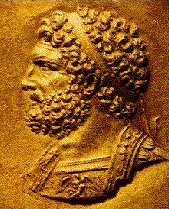
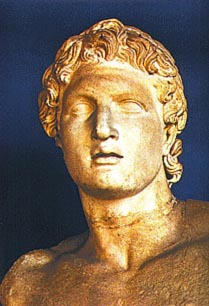
Alexander the Great in the Holy Koran
Ο Μεγαλέξανδρος στο Ιερό Κοράνι
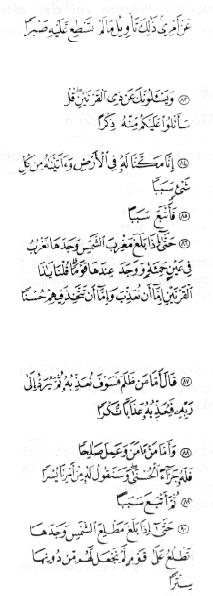
Σύμφωνα με την μετάφραση, η οποία έγινε με την φροντίδα της κας Μαριάννας Ι. Λάτση (Ιδρυμα Λάτση), το Ιερό Κοράνι αναφέρει για τον Μεγαλέξανδρο τα εξής:
[82] Kαι τιμή από τον κύριό σου, όλα αυτά δέν τα έκανα από δική μου θέληση. Αυτή είναι η εξήγηση για αυτά τα πράγματα που ήσουν ανίκανος να κρατήσεις υπομονή.
[83] Θα σ' ερωτήσουν αναφορικά με τον Ζούλ Καρνέιν (τον Δίκερο Βασιλιά, δηλαδή αυτόν που χρησιμοποιεί και τα δύο ημισφαίρια του εγκεφάλου του). Να πείς "Θα σας απαγγείλω κάτι από την ιστορία του".
[84] Είχαμε στήσει την δύναμή του πάνω στην γή και του δώσαμε τόν τρόπο και τα μέσα για κάθε σκοπό
[85] Κάποιο τέτοιο δρόμο ακολούθησε.
[86] Μέχρις ότου, όταν έφτασε εκεί όπου δύει ο ήλιος, τον βρήκε να βασιλεύει σε μιά πηγή από πυρωμένο νερό! Δίπλα της βρήκε ένα λαό, και τότε είπαμε: Ω! Ζούλ Καρνέιν! Έχεις την εξουσία ή να τους τιμωρήσεις ή να τους μεταχειριστείς με καλοσύνη".
[87] Είπε "Όποιος αδικεί, αυτόν θα τιμωρήσω, κι' έπειτα θα επιστρέψει στον Κύριό του, κι' Εκείνος θα τον τιμωρήσει με ανήκουστη τιμωρία.
[88] Όποιος, όμως, πιστεύει και κάνει έργα αγαθά, θα έχει μιά εξαιρετική αμοιβή, και εύκολο θα είναι το έργο του καθώς διατάζουμε να το εκτελέσει.
[89] Έπειτα εκολούθησε κάποιον άλλο δρόμο,
[90] μέχρις ότου, όταν ήρθε εκεί όπου ανατέλλει ο ήλιος, τον βρήκε ν' ανατέλλει πάνω σ' ένα λαό που δέν του είχαμε προμηθεύσει καμία προφύλαξη εναντίον του ηλίου.
Καθώς θα τελειώνει ο χρόνος, το φράγμα που έστησε ο Μεγαλέξανδρος θα διαρραγεί σύμφωνα με τη θεία βούληση και οι δυνάμεις του χάους θα ξεχυθούν στον κόσμο.
Τότε θα ηχήσει η σάλπιγγα, το θέλημα του Θεού θα επιβληθεί οριστικά και «άπιστοι» θα ριχτούν στη γέενα, τόπο φωτιάς.
Έτσι η Ιστορία θα τελειώσει...
Και συνεχίζει... σε άλλο σημείο στο Ιερό Κοράνι (ΧVΙΙΙ, 82-110) περιέχεται λυρική εξιστόρηση του έργου του Μεγαλέξανδρου με τα εξής λόγια:
Ο Θεός στερέωσε τη δύναμή του [Μεγαλέξανδρου] επί της γης και του επέτρεψε να πραγματοποιήσει ό,τι επιθυμούσε.
Ο βασιλιάς [ο Μεγαλέξανδρος], από την πλευρά του, έφτασε στα πέρατα της γης.
Πήγε μάλιστα και στο σημείο από όπου ξεχύνονται στον κόσμο οι Γωγ και Μαγώγ άκουσε τις παρακλήσεις του λαού που ζούσε εκεί και έχτισε, με «πέτρες σιδερένιες» και λιωμένο χαλκό, φράγμα για να προστατεύσει την οικουμένη από αυτούς.
Και συνεχίζει... Το ιερό βιβλίο των Μουσουλμάνων είναι κατηγορηματικό σχετικώς:
Πράγματι, ο Μακεδών εμφανίζεται να λέει: «Είμαι άνθρωπος σαν εσάς, αλλά μου αποκαλύφθηκε ότι δεν υπάρχει παρά ένας Θεός.
Οποιοσδήποτε (λοιπόν) ελπίζει πως θα εμφανιστεί μια μέρα μπροστά στον Κύριο να κάνει το καλό και να μην εμπλέκει κανένα δημιούργημα στη λατρεία του Κυρίου».
by K. Kianush, Art Arena, Iran
The conquest of Persia by Alexander the Great's armies left the Persian army in complete disarray. Alexander captured Babylon, Susa and then Persepolis. The splendour of Persepolis was short lived, as the palaces were looted and burned by Alexander in just one night.
The Greeks were then in possession of the ancient world from Egypt to Indus, and from Oxus to the Danube. Alexander followed a policy of integration between the Greeks and the Persian communities, encouraging marriages and applying the formula of magnanimity and generosity, which had formerly brought success to Cyrus II.
In 324 B.C., having travelled down the Indus as far as its delta, he returned to Babylon where he fell ill and died in 323 B.C., at the age of 32, without having nominated an heir to his empire.
Those who succeeded him, were the so-called Diadochi, who fought among themselves and after the battle of Ipsus (301 B.C.), Alexander's Empire was finally divided into three main segments. The Ptolemaic Dynasty ruling Egypt, the Macedonian monarchy ruling Europe and Seleucus I ruling the east including; Mesopotamia, Iran, Syria and Bactria.
(The Hellenistic period in Iran began in 331 B.C. and continued until c. 250 B.C. This was the time when the Greeks tried to impose their culture on Asia. During approximately a century and a half of Greek rule in Iran, very little construction took place, and ruins from this period remain few and far between.)
ArabNet -- Libya, Tour Guide, Cyrene
... resulting in considerable prosperity for the city of Cyrene. Its golden age came at the time of Alexander the Great, from about 330BC, when the city became an important exporter of grain and the valuable ...ArabNet -- History
... the Great, who founded the Persian monarchy over 2,500 years ago. Classical tales recount how Alexander the Great found carpet of a very fine fabric in Cyrus tomb. The next great period in the history ...ArabNet -- Jordan, History, Before World War 1
... light signs of habitation from the dawn of history to the present day. In 331B.C., the armies of Alexander the Great conquered the Near East, introducing Hellenic culture to the area. On Alexander's death ...ArabNet -- Egypt, History, Greek Rule
... Rule (332-30BC) After centuries of upheaval and foreign incursions, Egypt was in disarray when Alexander established his own Pharaonic rule, reorganizing the country's government, founding a new capital ...ArabNet -- Syria, Tour Guide, Damascus
... Three thousand years ago it was the capital of the Aramean Kingdom and was later conquered by Alexander the Great, when it became an important Greek city. It was also a major city of the Roman Empire ...ArabNet -- Palestine, History, Persian Rule
... Persian rule Persia ruled in Palestine until the country was captured by Alexander the Great in 333BC. His successors -- the Egyptian Ptolemies and the Syrian Seleucids -- tried without success ...ArabNet -- Iraq, History, Age of Empires
... invaders conquered the land after Nebuchadnezzar's death, including Cyrus the Great in 539BC and Alexander the Great in 331BC. In the second century BC, it became part of the Persian Empire, remaining ...ArabNet -- Syria, History, Ancient Syria
... ruled by the Egyptians, Babylonians, Hittites, Chaldeans and Persians. It became part of Alexander the Great's empire in 333B.C., when one Alexander's generals founded the city of Antioch as its capital ...ArabNet -- Bahrain, History, Pre-Islam
... between Dilmun's absorption by Babylon and the arrival of Nearchus, a general in the army of Alexander the Great. He established a colony on the island of Falaika off the coast of Kuwait in the late ...ArabNet -- Lebanon, Tour Guide, Places of Interest, South of Beirut
... an ancient Roman cemetery. Tyre This Phoenician city withstood a 13-year siege before it fell to Alexander the Great who literally bridged the gap between the fortified island city and the mainland by ...ArabNet -- Egypt, History, Late Period
... dynasty was overthrown by Artaxerxes III, remaining under Persian domination until the arrival of Alexander the Great in 332BC. Quick Search Jump to main Egypt sections Contents Overview History Geography ...
ArabNet -- Palestine, History, Persian Rule.
... Persia ruled in Palestine until the country was captured by Alexander the Great in 333BC. His successors -- the Egyptian Ptolemies and the Syrian Seleucids -- tried without success to force Greek culture and religion on the people ...ArabNet -- Iraq, History, Age of Empires.
... Various invaders conquered the land after Nebuchadnezzar's death, including Cyrus the Great in 539BC and Alexander the Great in 331BC. In the second century BC, it became part of the Persian Empire, remaining thus until the 7th century AD, when it was captured by Arab Muslims (Abbasids) ...
From other search
History of Uzbekistan : Antiquity, Upsurge and Deprivation, Alexander the Great, The Turkic Kaganate, Arabs and Islam, The Samanids Dynasty, Genghis Khan, Timur - The Ruler of Mavara-Un-Nahr, Ulugbek, and Bobur.
By Sir Harold Idris Bell : Egypt, from Alexander the Great to the Arab Conquest - A Study in the Diffusion and Decay of Hellenism
By Gregory Zorzos : Links about Alexander the Great.
Qur'an Quran Koran Coran Syraic qeryaanaa : Scriptural reading. Occurs 66 times in the Qur'an. see also ARABIC, WORD OF GOD. According to Dr. Sobhy as-Salih, this word is not Arabic but Aramaic. He said: "Allah chose to His revelation new names...
Alexander the Great and Islam : Islam and Greeks
Announcement : Economic History - History of Economics.
Different opinions [sic]
Surah 18:89-98 : Alexander the Great, a Muslim? - According to the Quran (Surah 18:89-98) Alexander the Great was a devout Muslim and lived to a ripe old age.
Al-Kahf 18:89-98 : Al-Kahf 18:89-98. Muslims believed that this passage speaks of Alexander the Great, that he was a devout Muslim and that he lived to a ripe old age. Historical records, however, show that he died young at age 33 (356 B.C. - 323 B.C.)
Note: Holy Qur'an has no mistake on anything...
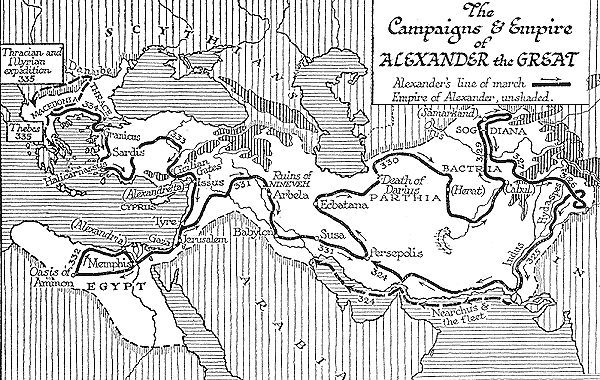
The campaign of Alexander the Great
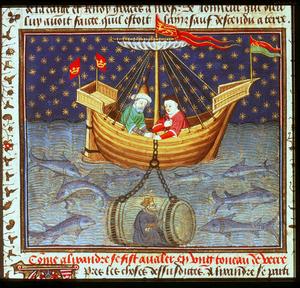
A kind of ancient submarine
[Technical of Alexander the Great by Gregory Zorzos, pages 199-202, 1998]
Research on Economics and Economic History
Saudi Arabia
Argeria
Bahrain
Brunei
Egypt
Iran
Jordan
Kuwait
Libya
Morocco
Oman
Palestinian Authority
Syria
Tunisia
Turkey
Yemen
Universities and Research Centers
Bahrain
Bangladesh
Brunei Darussalam
Egypt
Jordan
Kuwait
Lebanon
Morocco
Palestine
Sudan
Turkey
United Arab Emirates
soc.culture.arabic
soc.culture.arabic
alt.culture.turkish
alt.culture.turkish.a
alt.culture.turkish.c
alt.culture.turkish.d
alt.culture.turkish.h
© 1980-2000 GREGORY ZORZOS