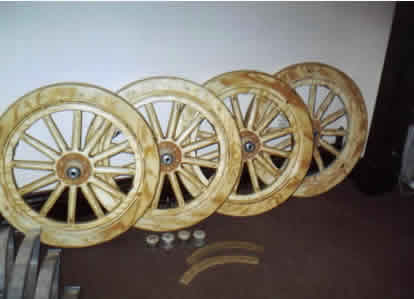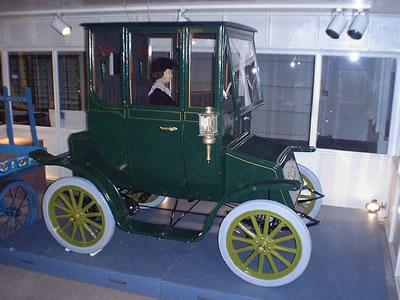
This
wood sculpture of a 1910 Studebaker electric motor car was a two-year undertaking.
Note the wood tires, side and tail lanterns, chains and gears.
This full-size
model weighs approximately 300 pounds and has an aluminum support structure.
It
has working doors, hoods, steering, wheels and windows.
This picture was taken at the Minnesota State Fair on July 22, 2000
HISTORICAL FACTS
The
coups, with what is called "phone booth" or "china closet" styling,
were similar to a hardtop car of today but actually had a soft top. The steering
method was accomplished by means of a side lever or tiller bar. Unique for the time,
was this special fifty-volt, thirty-ampere electric motor with twenty-eight cell
batteries, arranged in three trays. The batteries were divided: part was carried
in front and part in the rear of the vehicle. The average mileage per charge with
two passengers on hard, level streets was forty miles, and speeds from three to thirteen
miles per hour could be reached. Also, at that time, Studebaker had offered gasoline
cars.
ABOUT THE BUILDER
Gary Russeth
has had a life-long love for cars and the art of design they hold. This love became
apparent in the first car models he carved at the age of thirteen, and he has continued
in artistic endeavors throughout the years. He chose this model, the Studebaker electric,
because of its exceptional look and included the Little Grandmother in her Sunday
best with fresh flowers in the hanging vase as an image of the times.
THE
MAKING