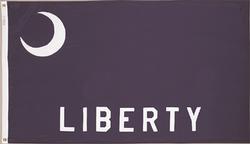
Colonel William Moultrie's South Carolina
Militia on Sullivan
Island in Charlston Harbor carried this flag on June 28, 1776. The
British were defeated that day which saved the south from British occupation for
another two years. Some versions of this flage have the word, "Liberty" in
the crescent moon. The South Carolina State flag still contains the
crescent moon from this Revolutionary War flag.
Gadsden
Flag
The American Revolutionary period was
a time of intense but controlled individualism - when
self-directing responsible individuals again and again decided for themselves what they should do,
and did it- without needing anyone else to give them an assignment or supervise
them in carrying it out. Such a person was the patriot Colonel
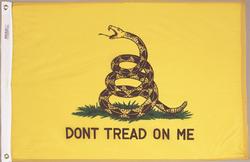
Christopher Gadsden of South Carolina. He had
seen and liked a bright yellow banner with a hissing, coiled rattlesnake rising
up in the center, and beneath the serpent the same words that appeared on the
Striped Rattlesnake Flag - Don't Tread On Me. Colonel Gadsden made a copy of
this flag and submitted the design to the Provincial Congress in South Carolina.
Commodore Esek Hopkins, commander of the new Continental fleet, carried a
similar flag in February 1776, when his ships put to sea for the first time.
Hopkins captured
large stores of British cannon and military supplies in the Bahamas. His cruise
marked the salt-water baptism of the American Navy, and it saw the first landing
of the Corps of Marines, on whose drums the Gadsden symbol was
painted.
Bunker Hill
Flag
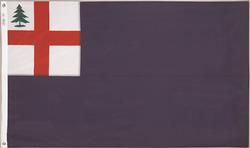
It is unclear as to what flags
actually flew at the Battle of
Bunker Hill on June 17, 1775, as no flags survive. There are several
postwar descriptions of flags that allegedly flew during the battle that day.
One of these flags is said to have been blue with the cross of St. George in the
canton, a green pine tree in the uppermost corner of the hoist, and trimmed in
gold fringe.
The Colonials suffered 453
casualties, and the British approximately 1,150. While the Battle of Bunker Hill
was actually not a victory for the Americans, as they finally retreated from the
redoubt, it was a major public relations blow to the British. The American
colonists were to have been easily routed, and the valiant fight they gave,
coupled with the heavy casualties of the British troops proved to be quite a
boost for American independence.