 |
|
|
|
|
|
|
|
|
|
|
|
|
|
|
|
|
|
|
|
|
|
|
|
|
|
|
|
|
|
|
|
|
|
|
 |
|
|
|
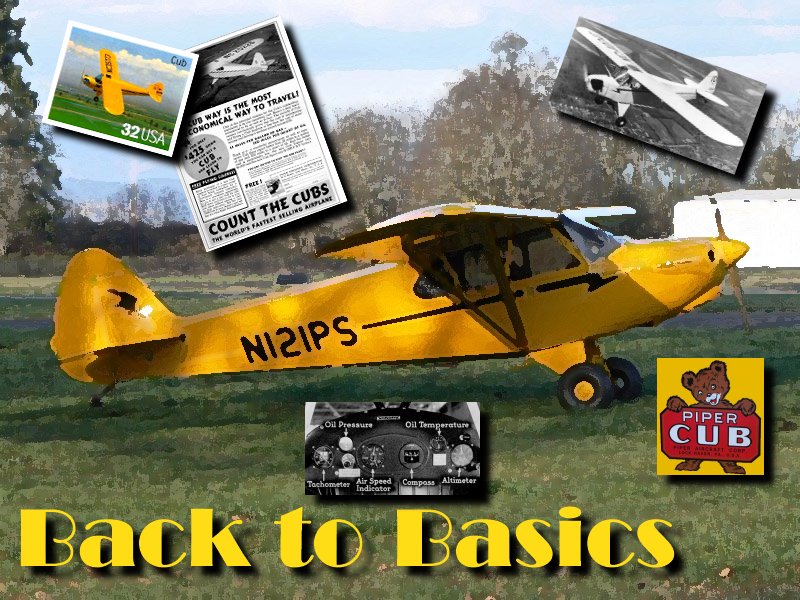
In the dozen or so years since moving to Washington State we had been gradually transitioning to faster, heavier and more complex airplanes. We owned a Cessna 150 for a year or two, then moved up to a Grumman Cheetah, then to a Beech Bonanza. We enjoyed each of these, and also enjoyed the excitement of moving up the aeronautical ladder.
Over the five years we owned the Bonanza, though, two significant events occurred. First, the cost of fuel doubled, negating any advantage we enjoyed in flying the Bonanza on long trips, versus buying airline tickets. |
|
|
|
Second, the FAA adoped the new Light Sport Aircraft rules, which made possible a new breed of simple, affordable aircraft.
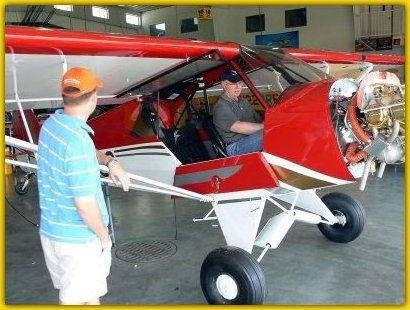
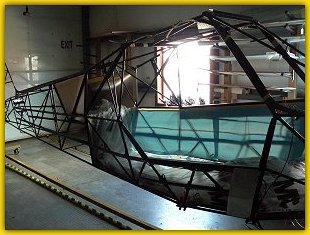
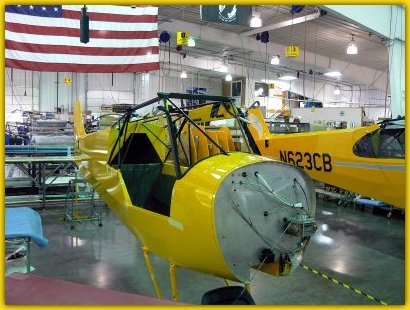
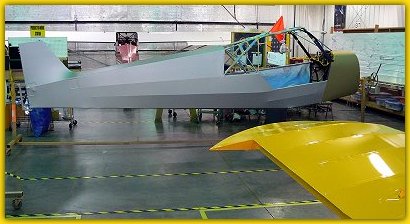
Since 1980 CubCrafters, Inc., of Yakima, WA, has been in the business of rebuilding Piper Super Cubs, and recently began building an improved version, called the Top Cub. With the advent of the Light Sport Aircraft rule, CubCrafters used its experience and expertise to create a "clean sheet of paper" clone of the classic, lightweight Piper J-3 and PA-11 Cub of 1937-49. The CC11 Sport Cub has a strong resemblance to its forebears, but incorporates dozens of improvements in safety, technology, comfort and performance. |
|
 |
|
 |
|
|
|
|
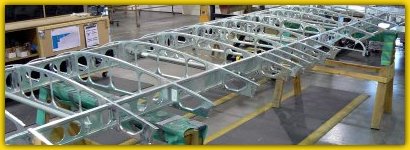
In June 2007, Ron Frederiksen and I flew to Yakima to visit the CubCrafters factory and see the Sport Cub close-up. Suffice to say we were highly impressed with the quality and workmanship of the airplane. |
|
|
|
 |
|
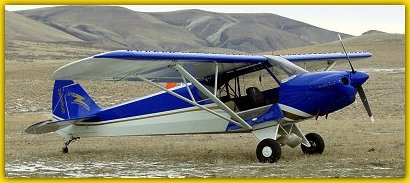
| Compared to the classic Cubs, the Sport Cub has an all-new structure, flaps, vortex generators, enlarged cabin door and four-inch-wider cabin. Power is the proven 100-hp TCM O-200-A engine. |
|
|
|
|
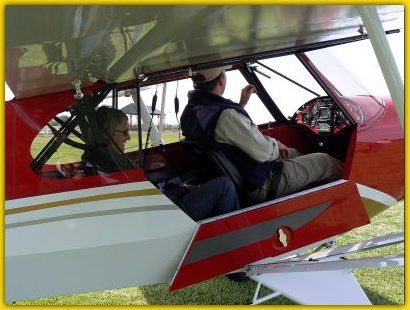
At first Cheryl couldn't understand my fascination with a stone-simple airplane when we had a gorgeous, classic Bonanza in the hangar. So I took her with me to the CubCrafters Open House in Yakima on September 22, 2007. She had never been in a tandem-seat or tailwheel airplane before, and I didn't know how she'd react to her demo ride. When she climbed out of the Sport Cub after a 20-minute ride with Clay she had this silly grin on her face. Then they drove us back to the factory for a tour, after which it was, "Where do we sign?!"
In early December 2007 it was determined that our Sport Cub was to be Serial No. 62, and that it would be ready for delivery by the end of the year. We worked out a deal by which CubCrafters would take the Bonanza in on trade, which streamlined the process considerably.
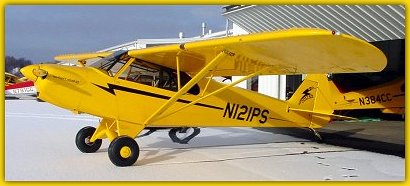
It was also up to us to decide on a personalized registration number. Years earlier when our Cheetah was painted, we wanted to change its registration to N121PS, for the 121st PSalm. That number, though, was in a block of numbers that had been reserved by the Aviat company for its Pitts Special biplane production line. Again we checked the FAA registry, and we found that Pitts Special N121PS had been de-registered and exported to Canada a couple of years ago, so that number was now available.
Our Sport Cub, duly registered as N121PS, made its first test flight at the factory in Yakima, Washington, on December 21, 2007.
Why the 121st Psalm?
I lift up my eyes to the hills-- where does my help come from?
My help comes from the LORD, the Maker of heaven and earth.
He will not let your foot slip-- he who watches over you will not slumber;
indeed, he who watches over Israel will neither slumber nor sleep.
The LORD watches over you-- the LORD is your shade at your right hand;
the sun will not harm you by day, nor the moon by night.
The LORD will keep you from all harm-- he will watch over your life;
the LORD will watch over your coming and going both now and forevermore. [NIV]
Included in the airplane's purchase price was tailwheel transition training -- a good thing, since I only had a handful of tailwheel hours in my logbook, the last of which was during the Nixon Administration.
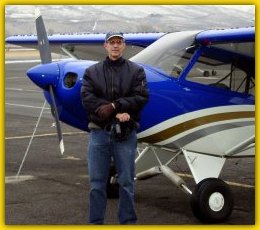
On a stormy December 26, 2007, I drove to Yakima for three days of flying with instructor Brian Thompson in Sport Cub s/n 1. We were fortunate to have good flying weather the next three days, but it was cold -- in the high teens and 20's.
|
|
|
|
 |
|
|
|
|
 |
|
|
 |
|
|
|
|
 |
|
|
|
|
 |
|
|
 |
|
|
|
|
 |
|
|
|
|
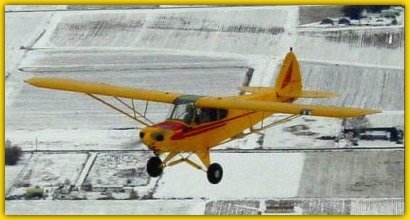
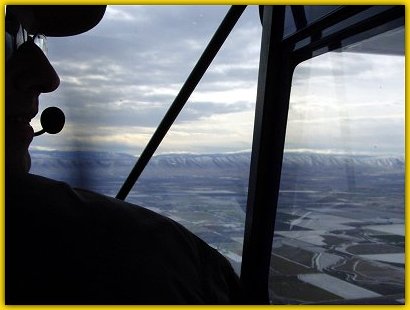
Brian introduced me to a kind of flying I'd not known before. We landed on several grass and dirt airstrips, and Brian helped me exorcise the demons of crosswind operations. We visited the airstrip (above right) of a local rancher, who showed us his hangar full of historic aircraft under restoration, then fired up his own Super Cub to fly in formation with us over snowy south-central Washington State to lunch at Prosser.
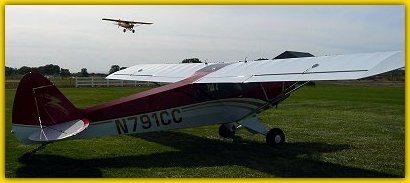
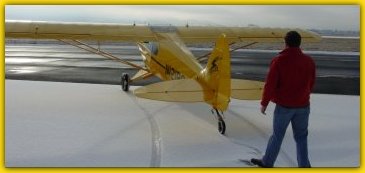
On Friday, December 28, I took time out from flying with Brian to sign the papers completing the purchase of N121PS (below) and to take a quick first hop in our new airplane, with CubCrafters' Clay Hammond coaching from the back seat.
While at the factory I noticed a new Sport Cub with a custom crimson-and-white paint job and a Washington State Cougars logo on the tail. It was s/n 61, the one built just before ours, and purchased by Scott Carson, CEO of Boeing Commercial Aircraft. |
|
|
|
|
 |
|
|
|
| Below: Rollout of N121PS from the factory, Dec. 28, 2007 |
|
|
|
 |
|
 |
|
|
|
|
 |
|
 |
|
|
|
|
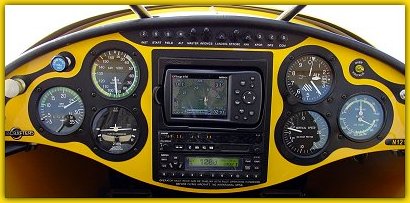
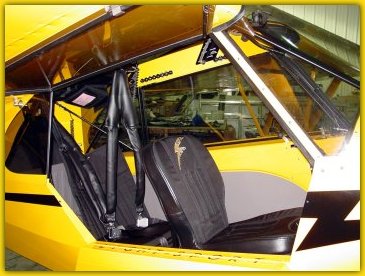
Above: The avionics suite in N121PS: Garmin GPS496 with XM weather and audio; Garmin SL40 com; Garmin GTX-327 transponder. Left: Shoulder harnesses with integral airbags. |
|
|
|
 |
|
|
On New Years Eve 2007, Clay flew N121PS from Yakima to its new home at Pearson Field. I had doubts he'd make it, as the morning fog stubbornly refused to burn off. As it turned out Clay landed at a Goheen's Airstrip in northern Clark County to wait for the fog. Finally at mid-afternoon it cleared just enough for him to slip into Pearson.
I showed Clay around the Bonanza, then he fired it up and took off for Yakima, minutes before the fog closed in again. |
|
|
|
|
 |
|
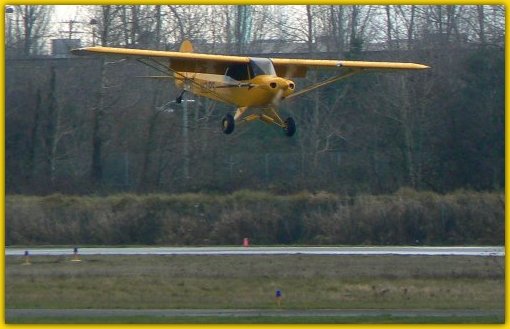
| We realized then (and still do) that going from a Bonanza to a Cub is a huge transition for us, and we're giving up some things. We won't be going on any more trips several states away (well, maybe as an adventure someday), and we're limited to day VFR. But we've discovered new joys. I've already seen many sights within just a few miles of our home airport that I had always missed by going too high and too fast and being too busy as a "systems manager" instead of a pilot. Andrew Cleveland has invited me to join him and his Piper PA-12 in visiting Idaho backcountry airstrips this summer (performance of the 100-hp Sport Cub is just about equal to that of his 150-hp PA-12, though it can't carry as much load). There is peace of mind in the simplicity of the Sport Cub and its systems, its ability to lift off before the second runway light and cross the departure end of our 3200 ft runway at 500' AGL. Though lightweight it is surprisingly stable, even somewhat heavy on the controls. It handles like a very substantial airplane. I don't miss the autopilot and even the trim seldom needs to be adjusted. The process of mastering the tailwheel has been a real confidence-builder. |
|
|
|
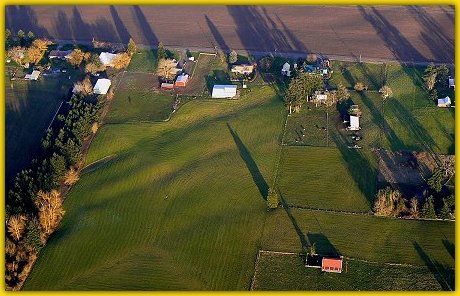
"You haven't seen a tree until you've seen its shadow from the sky" -- Amelia Earhart |
|
|
|
 |
|
|
|
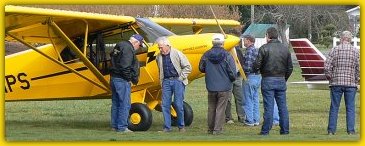
People admired our Bonanza ("That's a [yawn] nice Bonanza ..."), but this Sport Cub draws crowds wherever we go. Old-time Cub pilots are awed by it. When knowledgeable people look at the airplane the comment heard most often is admiration for the workmanship and detail.
One long-time Cub expert looked at N121PS and told me, "Everything that was wrong with the old Cub, they fixed!"
I never really considered any of the other LSA's on the market. The Sport Cub looks and feels like a real airplane, is of conventional (read: proven) construction and has an engine that every mechanic knows and can work on. It's US-made (are you listening, Cessna?), and the purchase price stays in the local economy. The factory is just a little over an hour away, even at Cub speeds. From the get-go we were very impressed with the company and the people. I like the enlarged door and front legroom (I'm tall and cannot fit in the front of a classic J-3 or J-5). The flaps and vortex generators (Vs0 = 32 mph) are a huge plus over the Cub-clone competition. |
|
|
|
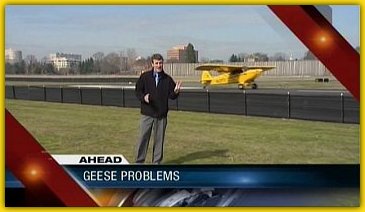
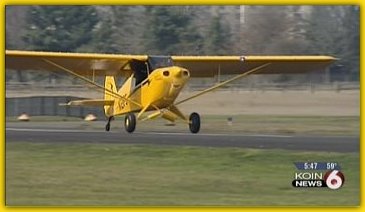
N121PS has already become a local celebrity. Our airport has been in the news lately about its efforts to get rid of the Canada geese which hang around for months in the winter, get in the way of airplanes in the pattern, and leave messy little calling cards on the runways and taxiways.
In late February 2008 reporter Tim Gordon from Portland TV station KOIN-6 was at our airport to do a story on the bird issue. Coincidentally I picked that time to go out and shoot some landings for a little aero-therapy. Result, N121PS got her pretty yellow face on the six o'clock news, fortunately in a favorable light. Even more fortunately I didn't botch any landings while a TV news camera was pointed at me! |
|
|
|
 |
|
 |
|
|
|
[home] |
|