
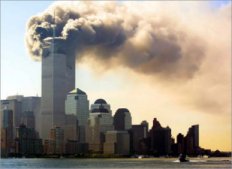

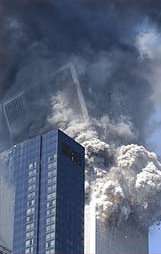
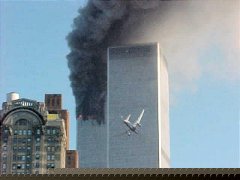
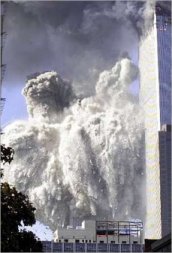
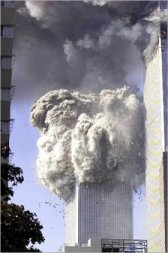
"It was the fire that killed the buildings. There's nothing on earth that could survive those temperatures with that amount of fuel burning," said structural engineer Chris Wise. "The columns would have melted, the floors would have melted and eventually they would have collapsed one on top of each other." From then on, the collapse because inevitable, as each new falling floor added to the downward forces. Further down the building, even steel at normal temperatures gave way under the enormous weight--an estimated 100,000 tons from the upper floors alone. People's only hope was to run and keep running--reaching open ground. The building could have fallen over sideways, he points out, potentially bringing even greater devastation.

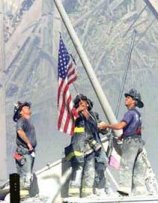
The photo on the right are the firemen who errected the United States flag inside Ground Zero.
Jane, who is in her early twenties, moved to NYC seven months before the attack. She had never been to the city when she accepted her company's offer to relocate from California. Shortly before the attack, she broke up with her boyfriend. Her job wasn't going as well as she'd hoped it would. She described herself as "messed up".
On the morning of the attack Jane got to work a little late. She worked for a bank on the 81st Floor. She said she was very busy typing on her computer, as were all the other employees on that floor, when the building shook suddenly as if there'd been an earthquake, knocking people out of their chairs. Having grown up in the Bay area, Jane was familiar with earthquakes. Even though windows surrounded them, the employees had been working too intently to see the plane hit the floor above theirs. Now they could see pieces of an airplane falling from the windows above them. They made a quick decision to leave the building, believing they had been hit by a small aircraft. They went calmly to the stairwells, which were still lighted as they made their trip down the stairs. She said that she occasionally would have to stand to the side as someone from the higher floor would come by screaming in pain from serious burns. She said one woman was so racked with pain that she turned her head to the side and looked at the wall so as not so see the extent of her wounds when she passed by. On the thirtieth floor they saw firefighters coming up the stairs. She said they were afraid of the smoke overcoiming them but the firefighters told them they would get out, so everyone continued on with the rest of her co-workers until they got to the bottom floor. The trip took an hour.