Southern Right Whales
I had to do some research for this. I knew what I was seeing was special, but I’d no idea just how until later. We’d heard on the news that there were four whales dawdling off Taieri Mouth earlier in the week, so when Nik called to say they were closer, in fact just off Ocean View, there was no way we’d miss this chance!
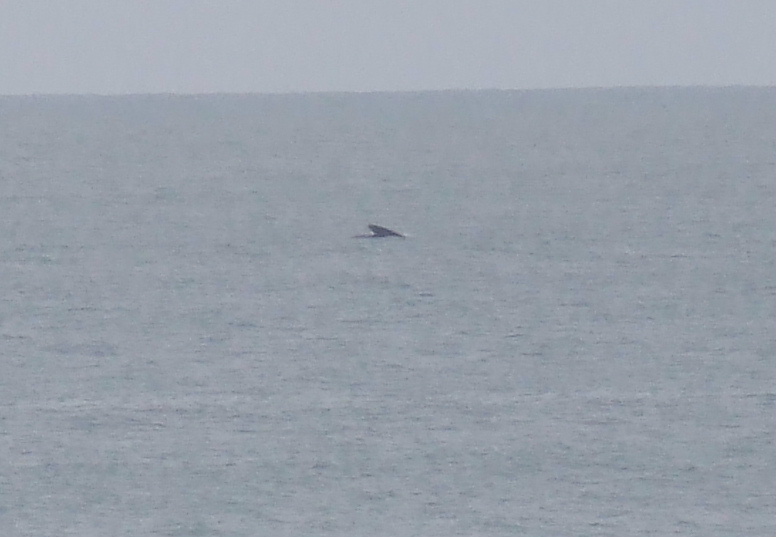
The “right whale” is a large, stocky, black whale, 15–18 metres long. It has broad flippers. It is easy to recognise as it has no dorsal fin. The arched upper jaw is covered in callosities – they look like barnacles but are actually thick growths of skin which are often made white by infestations of whale lice. It also has a unique blow, with the water rising in two columns to form a ‘V’ 5 metres high. We witnessed many such ‘eruptions’ during the time we watched, marveling that even from such a distance, the spouts were clearly visible. Sadly as I clicked the shutter, the spout ended and I got a wave from one of the fins on the underbelly!
With NZ having many whaling stations in the 19th and early 20th century’s, these magnificent mammals were highly prized. It seems right whales were the most vulnerable of all the baleen whales. They are slow-paced swimmers (travelling no more than 9 kilometres per hour), they were easy to catch as they stay on the surface for quite a while before diving. They supplied larger quantities of oil than other species; when harpooned they floated rather than sank; and their baleen (‘whalebone’) was valuable as it is fine and flexible and was used for a range of items such as corsets, umbrella ribs and riding crops. For all these reasons, early whalers described the species as ‘the right whale’.
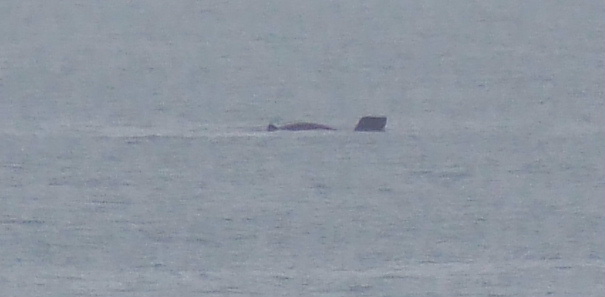
Hunting decimated their numbers with only the blue whale suffering more population-wise.
Recent estimations are that there are only around 250 right whales living in their usual regions, two groups of islands offshore, between 700 and 900km from the mainland. Despite being protected since 1935, seeing them close to the mainland is rarer than ever. The female only has a calf every 3 years and it is currently believed that there are less than 30 of these whales coming close enough to be seen around the mainland. What a tragedy.
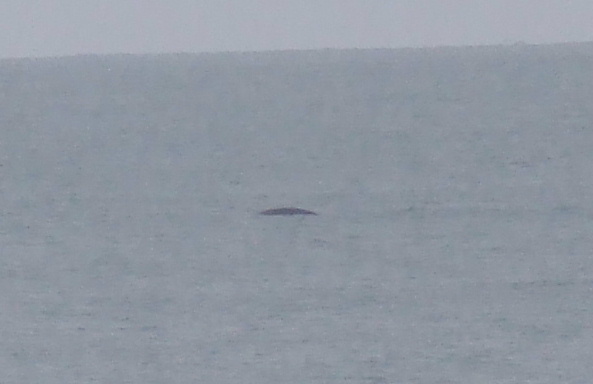
It scares me that potentially, with the presence of this quartet, I saw over 10% of the population of the NZ coastline. Tragic! As with other endangered species, like the Yellow-Eyed Penguin and the Hookers Sea Lion, we need to do whatever we can to ensure that future generations don’t merely learn of them by reading a book, but by going out on a late winters afternoon to watch them feed on krill in a bay close to shore.
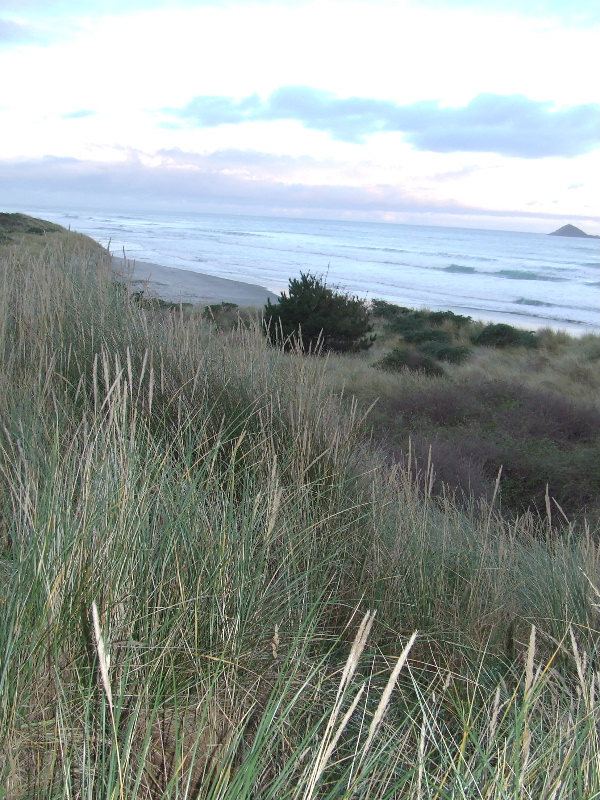
And with the sun setting over the ocean, the grasses swaying in the dunes, the dull roar of the waves as they broke just added a hint of percussion to the views we were all enjoying! One word says it all - Magical!