Dunedin Railway Station.
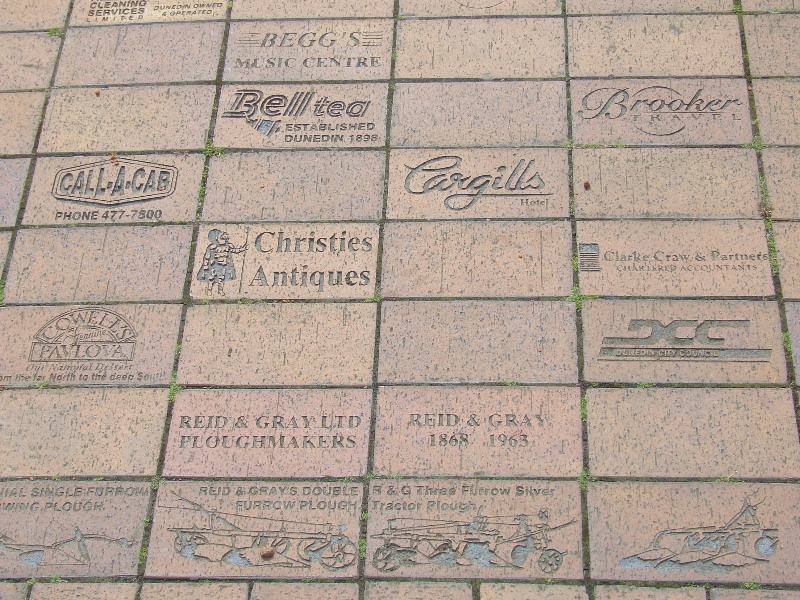
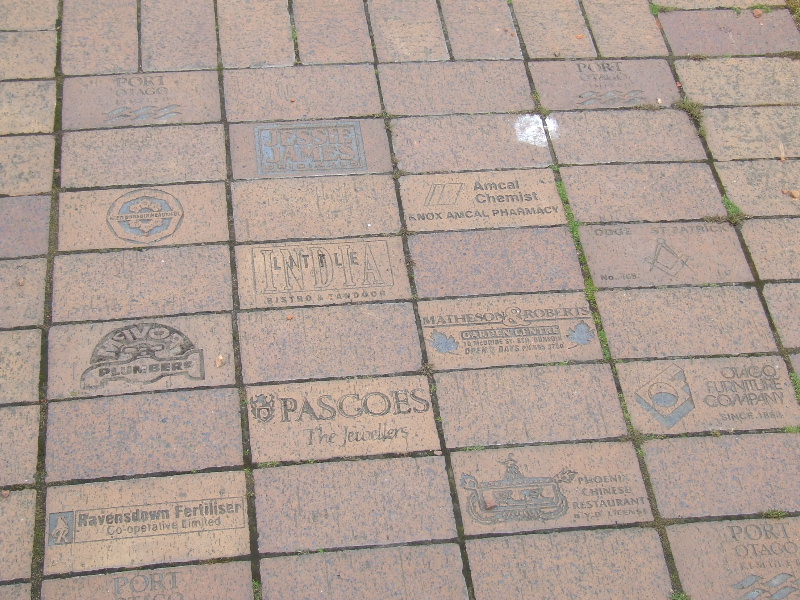
As you approach the Railway Station, you’ll be met by some beautifully kept flower gardens. Most are edged with box hedging, carefully trimmed and manicured to maintain the shape desired. Along the outer rim, against the lush cushion of grass, there are bricks. On the outer edges almost without exception they are engraved with the name of the donor. Whether a memorial for the dead or a testament to the living, they remain where they can be seen by any who walk across to the Station.
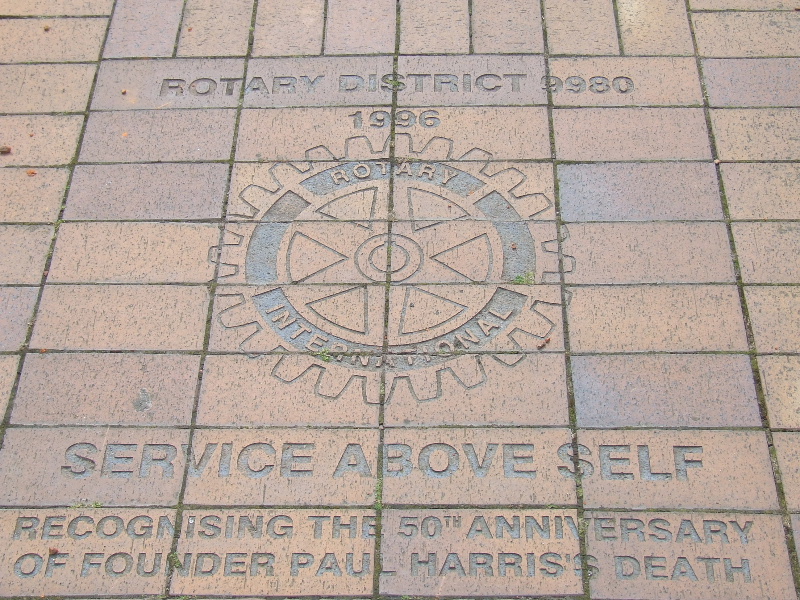
It’s quite interesting going around and playing ‘spot the name I think I know!’ A few seemed familiar, but most (and there are hundreds!) are just names in the throng.
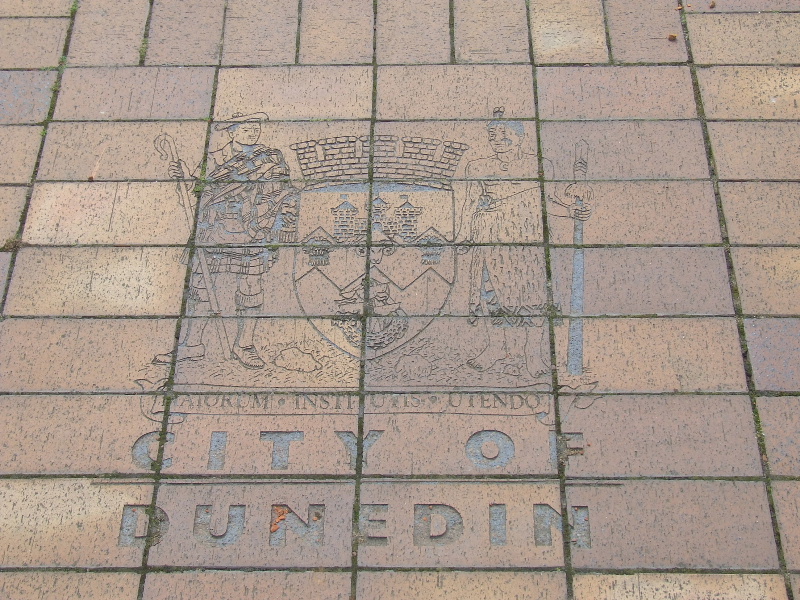
Larger companies and concerns have their own sections across the middle of the walkways, where the two central ones form a cross. Spread over many bricks, the skill of the engraver is evident, in the clarity of detail shown.
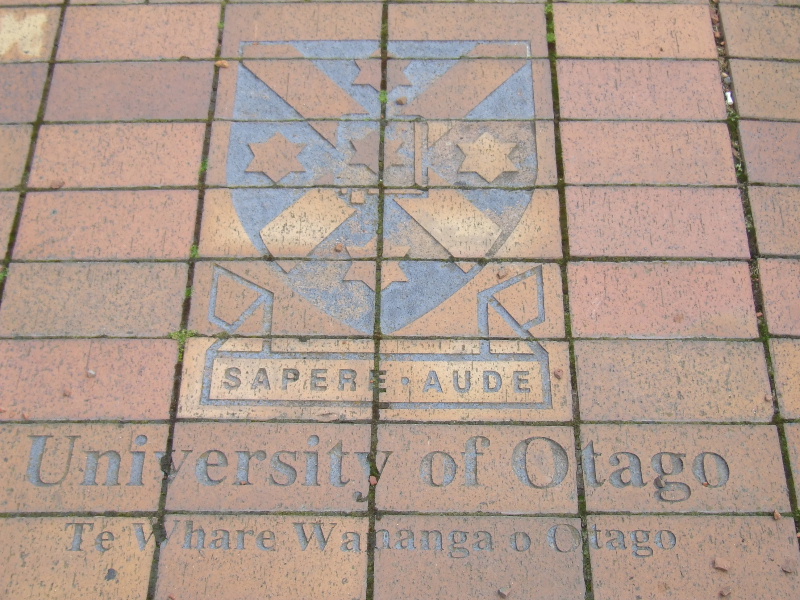
Each bears something unique and important to not only this region but the country as a whole – and the world beyond these shores. The skills learned and honed at the University are invaluable as they equip young minds to enter fields where dreams become reality.
From the walkway it’s not far to cross the road, between buses, cars and pedestrians and enter the splendour of the station itself. Though only used for a tourist train (see my entry on the Taieri Gorge Railway) now, goods, lumber and freight trains regularly rumble their languorous way through as they head to their destinations.
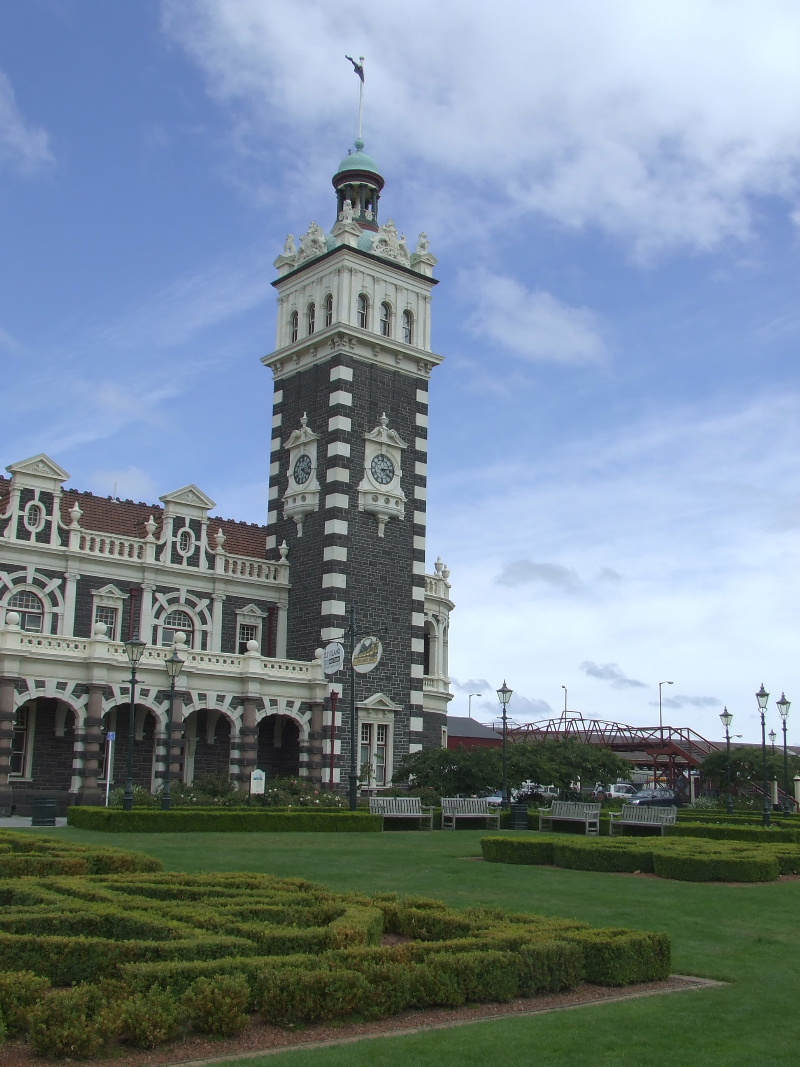
The fascia is stunning. Imposing. Constructed in times when tools and skills were the opposites of now – the tools fairly crude, the skills learnt over a long period of apprenticeship, the structure has withstood the ravages of time – and the occasional earth quake!
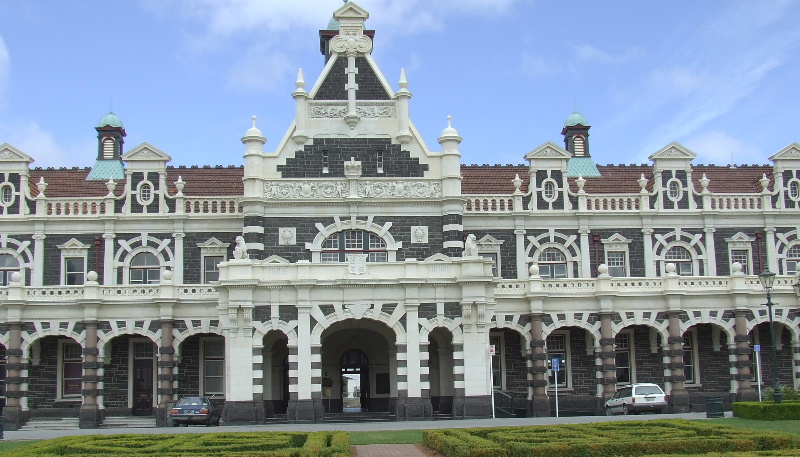
Approaching from any quarter, the dark stone and its Oamaru cornices and plinths are an amazing sight. The huge doors spill out onto a wide platform, once you’ve wrested your way out of the cavernous waiting area. The ticket offices and luggage holds are still in use, but not quite as the designers and builders of a century ago might have hoped.
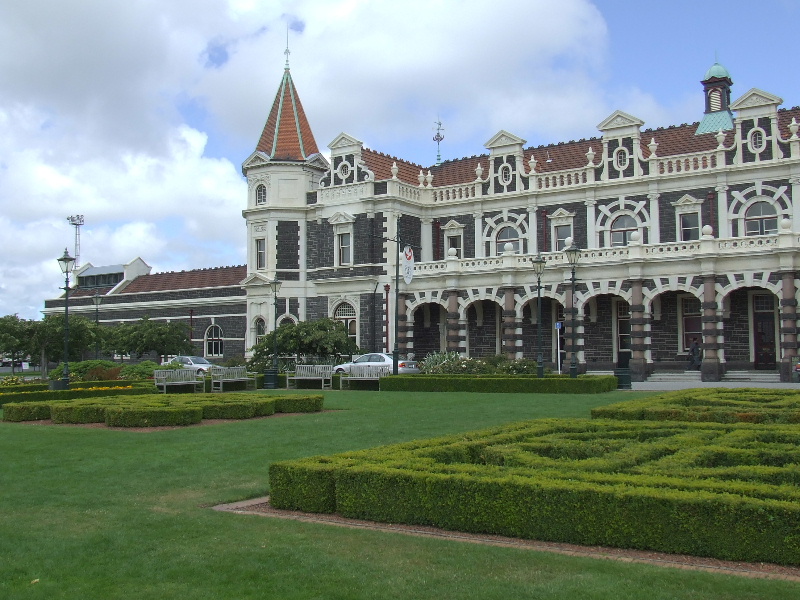
Reputed to be the most photographed station in the world and the most photographed building in New Zealand, it’s not unusual to see queues of people vying for the best view or prime situation!
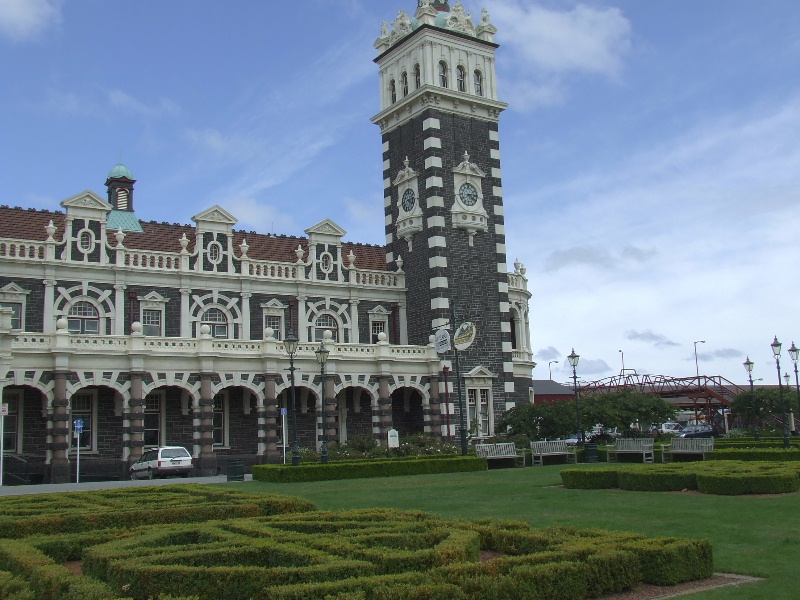
Part of the lower floor is given over to a bar and function rooms. Part of the upstairs houses an art gallery whilst the other is the home of the New Zealand Sports Hall of Fame. Filled with fascinating memorabilia and artefacts, many hours could be spent browsing through the items on display.
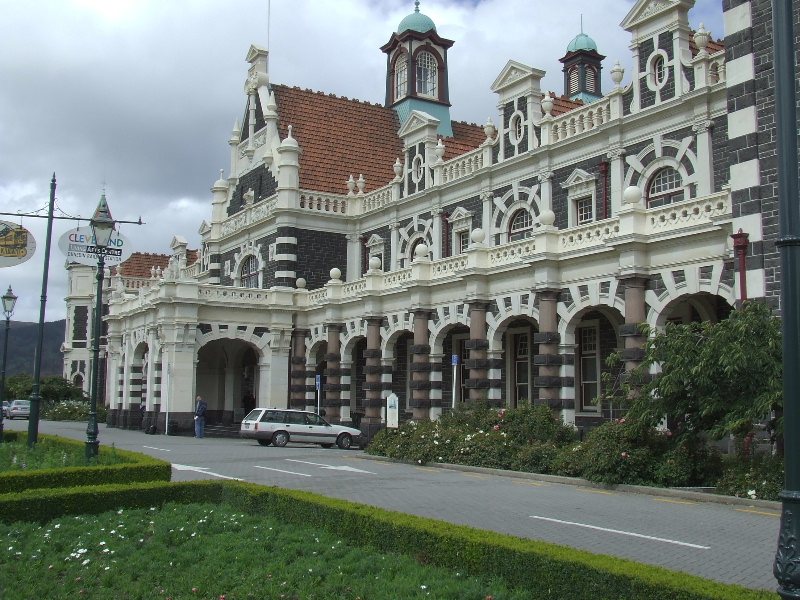
With the stunning architecture, it’s no wonder that people stand in awe when confronted with this magnificent building! And yes, I am biased, everso slightly!
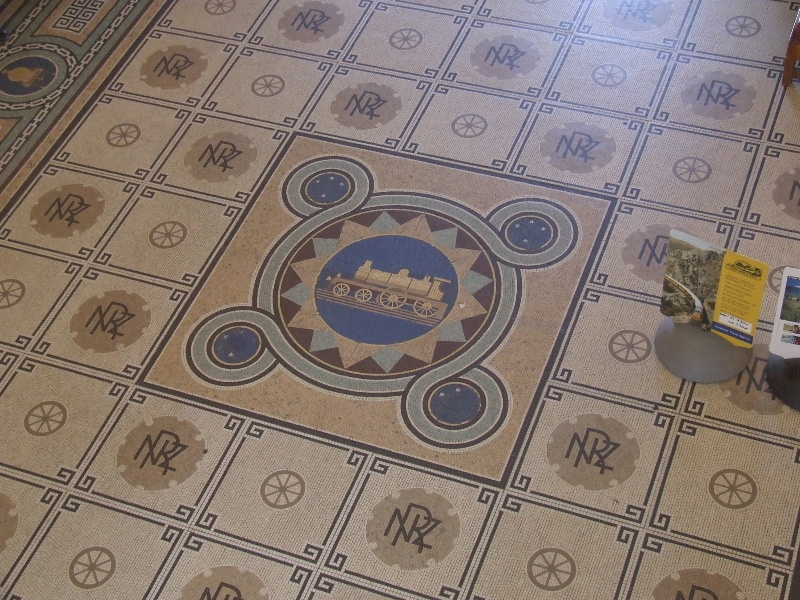
The inside of the Station is regularly used as the venue for Wedding Photos as well as fashion shoots and shows. With the beauty of the place it’s little wonder that people climb the stairs to gain the view shown here.
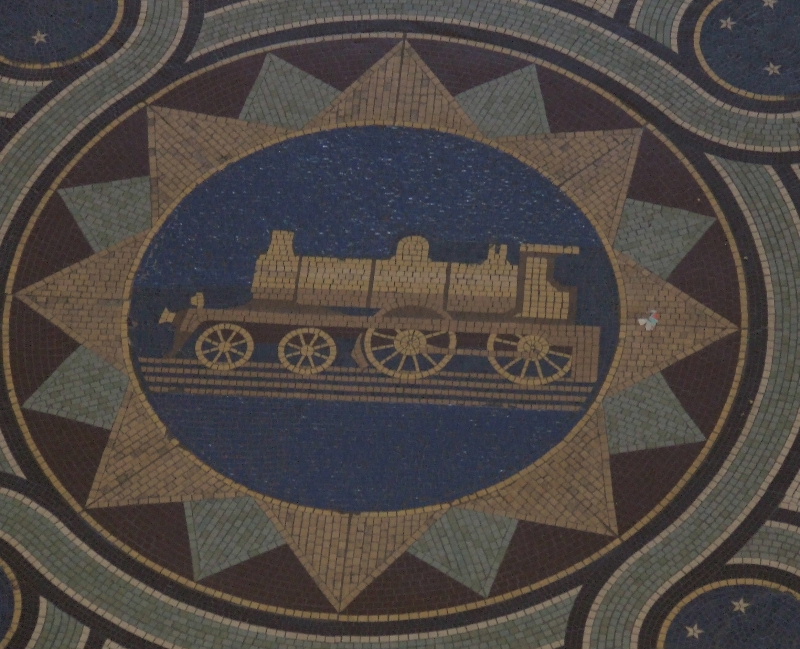
The central motif is that of an engine. All around the edges are other symbols of the steam age – signals, telegraph wires, carriages, trucks, wheels – all faithfully reproduced in miniature amid the tiles.
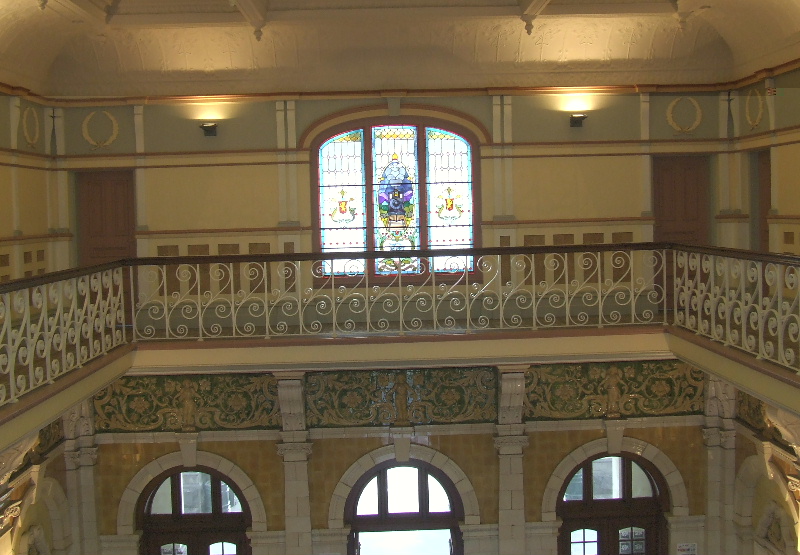
Upstairs in the gallery area there are two amazing stained glass windows. They are as identical as they can be, with the intricacies of making them from the handmade glass and lead that such a work of art entails.
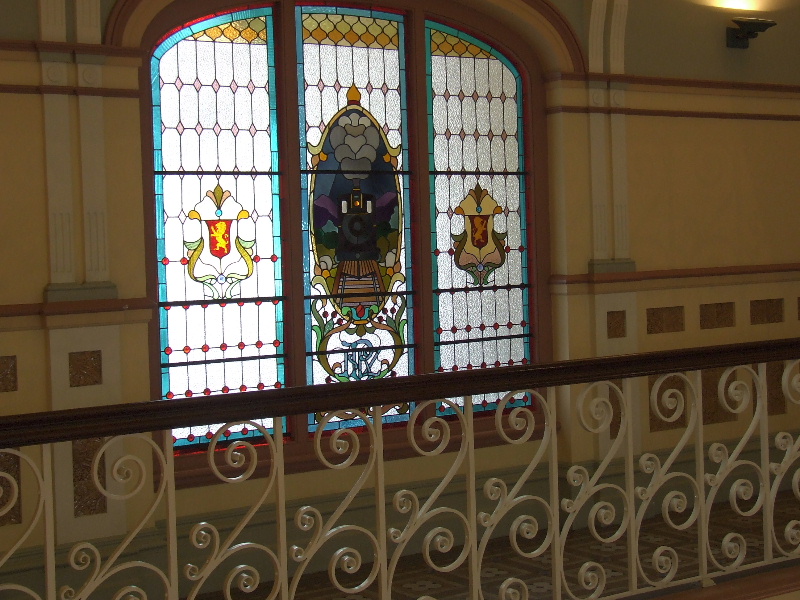
They depict a train, an engine, approaching through the billowing steam. With the light streaming in behind them, the clarity and simplicity of the shapes contradict one another and bring new dimensions into this glorious view of yesteryear!
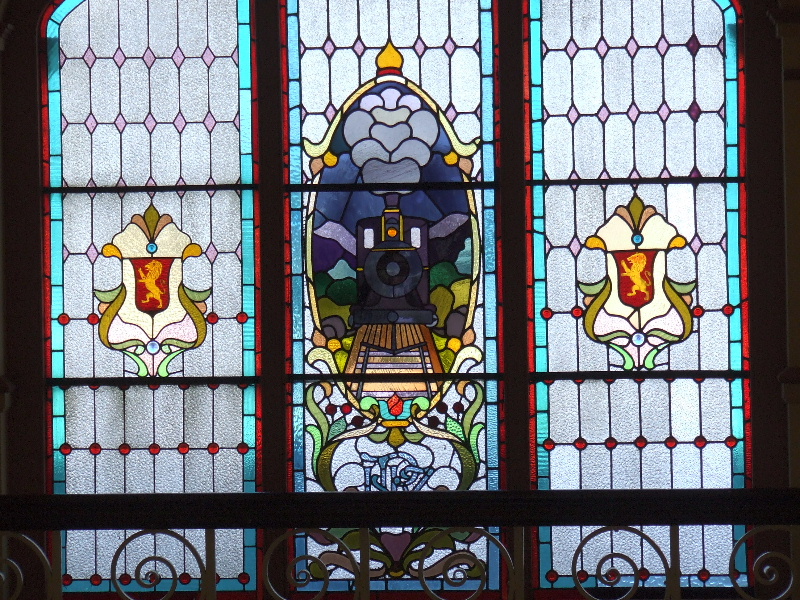
This closer view really doesn’t do it justice, so come on over and see for yourself!