Summer guests = outings!
Day One.
With new friends visiting it was a delight to have an excuse to revisit some favourite places of particular beauty. The first was a trip out along the Otago Peninsula, to Taiaroa Heads, in the hopes of seeing some of the elusive Royal Albatross. It wasn�t the best day as far as the weather went, but with Heath in the car, cooler climes were preferred. We stopped and let him play for a while in a dog park before continuing the tortuous drive across the hills and down into Portobello.
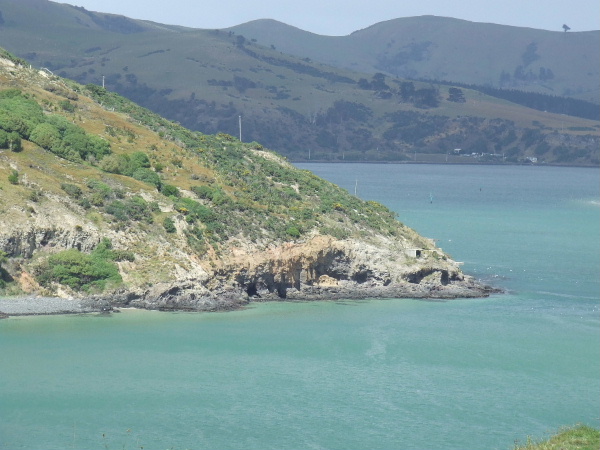
It wasn�t cold, so a short walk on the beach, just beyond Wellers Rock seemed a good plan. Here I found a suitable stick and threw into the retreating surf for him to retrieve. He loved this and was barking like a maniac, between fetching the stick and dropping it, waiting expectantly for it to be hefted once more, into the waves. Suddenly, on the sand, I caught sight of something that made me stop and look again.
Trailing up from the waves were the tell-tale footprints of a sea lion. I recognised the shape of the marks and so paused and looked, catching a glimpse of her, settling quietly in the dunes. I immediately alerted my companions to a photo opportunity, whilst regaining control of Heath, who thankfully remained oblivious of the source of our interest! I also glimpsed another shape a few hundred meters further along the beach, a very dark bulk - a male sea lion was on the beach as well.
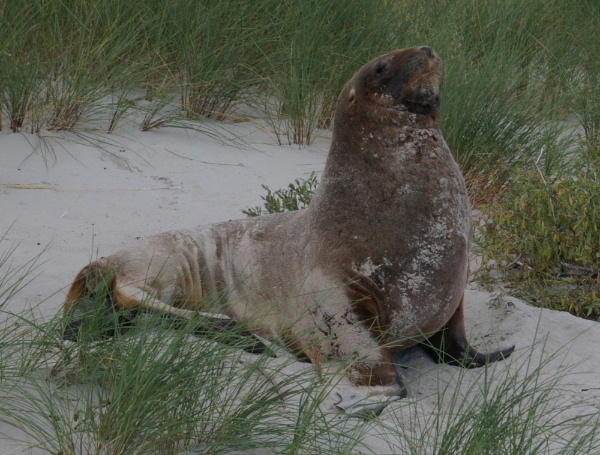
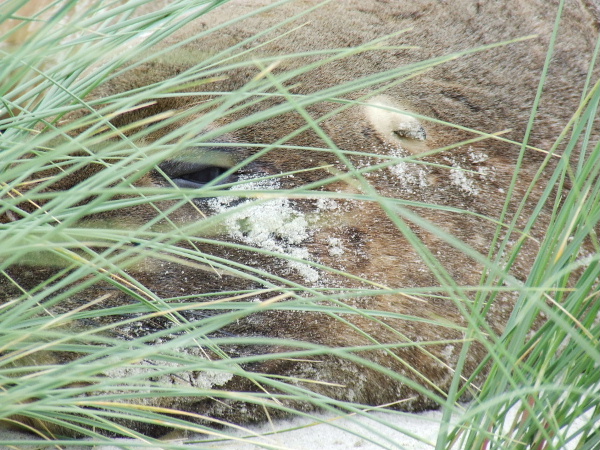
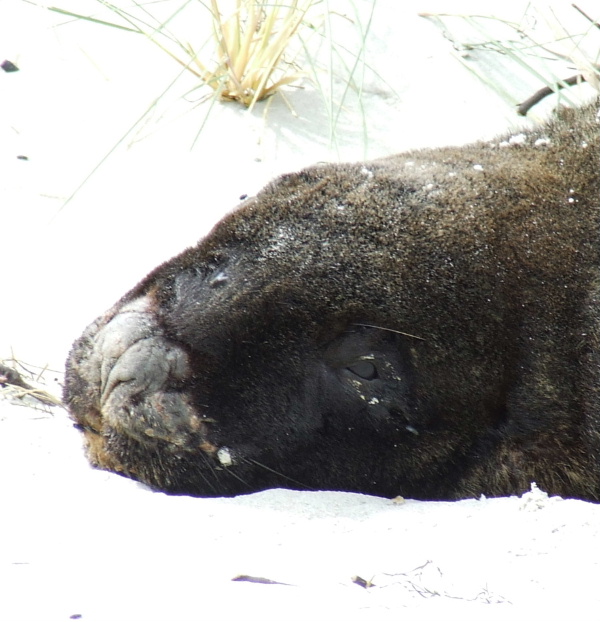
I slowly took Heath back to the car and grabbed my camera and was lucky to get a few really nice photos of both animals. She looked like a slightly older female, many dozens of scars littering her body. She was very placid and allowed us to linger and enjoy seeing her, without making too much of a fuss.
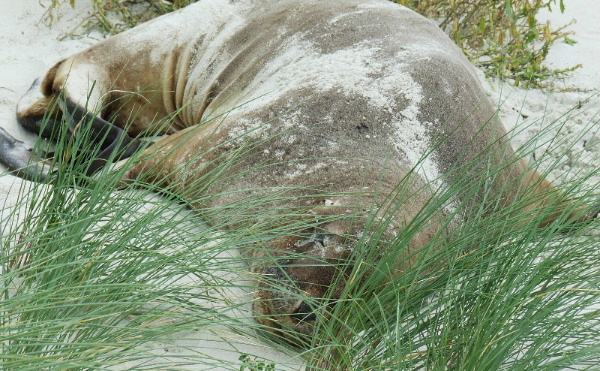
He, however, took exception to his siesta being intruded upon by curious human beings! He raised himself to his full, � grown size and growled. His mane is developing nicely but is far from being the spectacular sight it will be when he is fully mature. When he gets to that point, he will fill out more and has the potential to weigh many kilos more than his current weight!
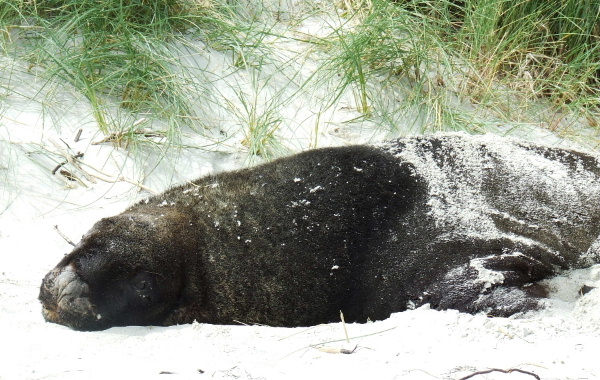
Though I looked carefully I was not able to see whether either of them was tagged. The majority of regulars to our beaches have tags fitted to a flipper, identifying them so that their health and activity can be monitored more successfully and to enable the Sealion Trust to keep accurate records of these endangered beasts.
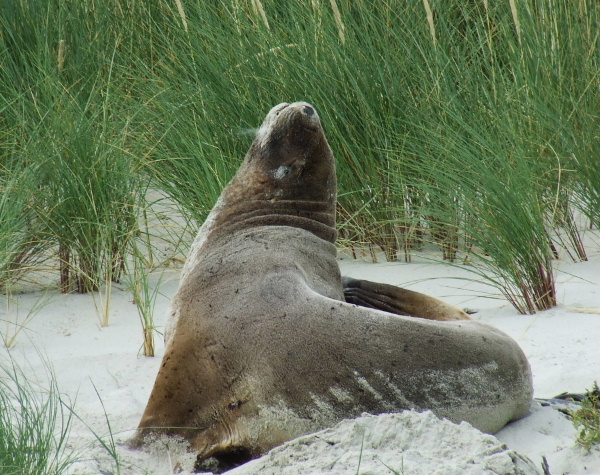
With photos taken we moved back along the beach to the car, leaving both animals to flick sand over their bodies and sleep the rest of the morning away. It was a lovely start to the trip out along the Peninsula and meant we were all keenly aware of the privilege we�d just had, seeing these reclusive beauties.
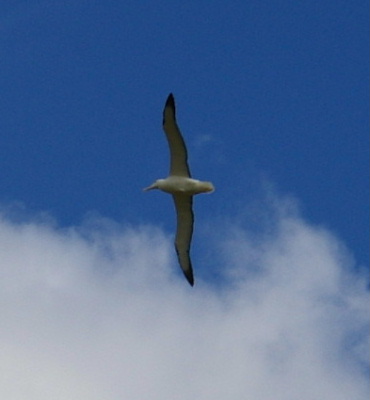
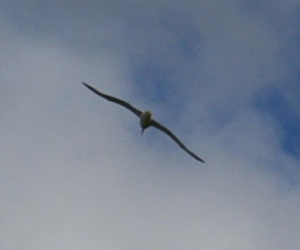
After arriving at the Albatross colony we settled in the caf� with hot drinks and watched a young bird testing its skills, riding on the air currents high above us, before swooping down and re-launching itself from the cliff face. It was a fairly breezy day, and it began to drizzle, but still the Albatross rode high in the sky, showing its skill and determination, preparing for a life spent at sea, for months on end.
Finally we made our way back down to Pilots Beach, where the NZ Fur Seals were lounging on the rocks, draped in a decorous manner, digesting whatever they�d been successful in catching whilst satisfying their hunger.
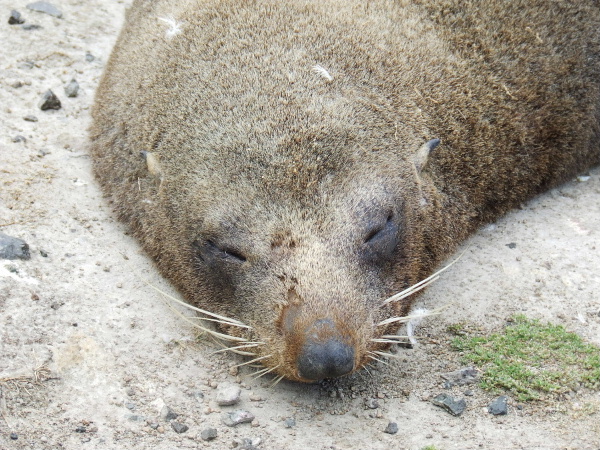
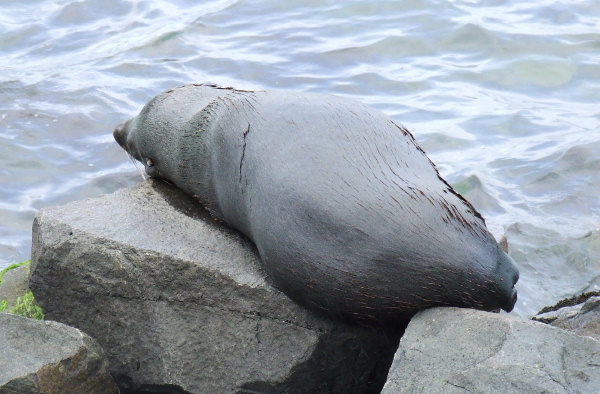
Many were in the reserve, undisturbed, but the �usual culprits� were lying in wait for the unwary or unwise! This time there were no silly Japanese tourists trying to poke one to wakefulness with a stick, then screaming as the seal reared up and lunged at him. Shame! Ooops!
Day Two.
Moeraki was beckoning us, so into the car we piled and off we set. Heath had to be allowed his treat so we stopped in at Trotters Gorge and let him play in the river for half an hour. He swam, played, dived and retrieved sticks, barking like the maniac he is. He was even content to go into the car and move on up the coast, so it saved a battle of wills! I didn�t go down to the beach this time, spending time with Heath, getting some warmth from the sun to help dry him off, so I�ve no new pictures of the boulders for which this beach is famous. (Previous pages have several pictures so if you�re not sure what you�re looking at please do browse them!)
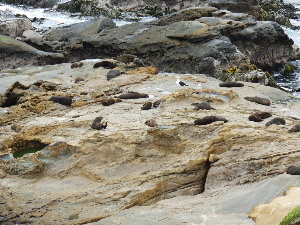
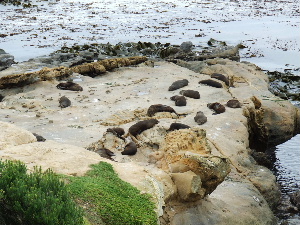
We�d promised that we would stop and look for something very special on our way back to Dunedin, so followed the narrow lane past the old miners shacks, out to the reserve at Shag Point. Named after the colonies of these sea birds, the area is also a sanctuary for seals and some of our less obvious but very rare sea birds � Yellow-Eyed Penguins. We parked and soon discovered that seals were aplenty here.
See them draped over every surface? Way too many to attempt to count and of many ages.
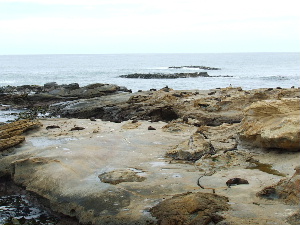
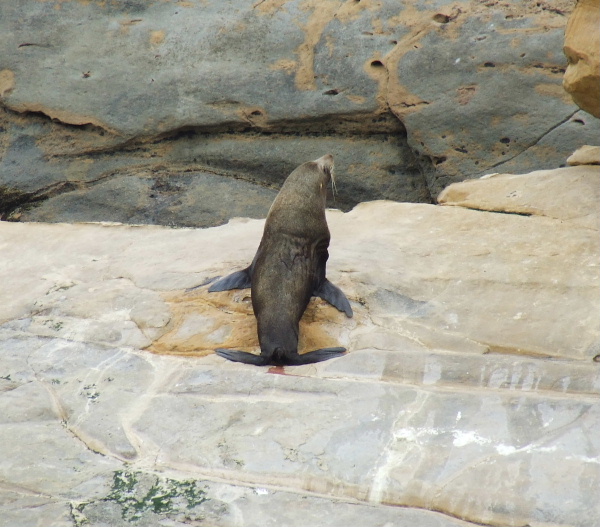
Some were being too cute not to take a photo of them, so here are the two that really struck the right pose!
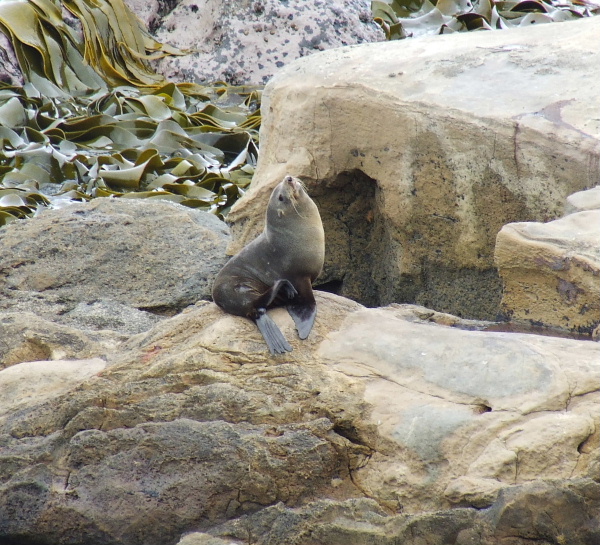
Note the huge swathes of kelp in the background? No wonder there are so many seals thriving here, with such plentiful food sources within a short distance. No doubt there are shoals of fish that come in close to the rocks and provide the young pups all the experience they need to survive in these sometimes rough conditions!
Then as we moved on through to another place, we saw something quite remarkable. There, right where we were walking, there were hundreds of juvenile and adult red-billed seagulls. The juveniles had brown speckles in their backs and wing feathers, clearly marking them as immature. Suddenly my eye was caught by a movement in the grass.
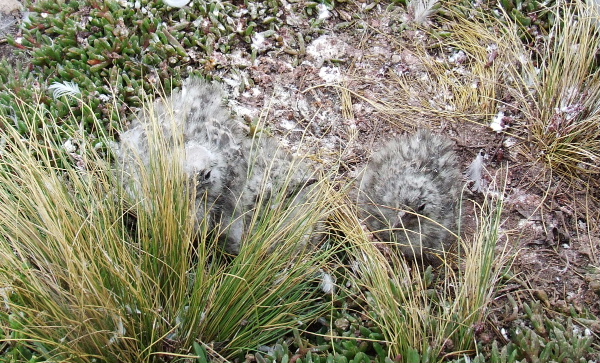
There were tiny chicks all over the place. Some still on the nest with eggs that didn�t hatch.
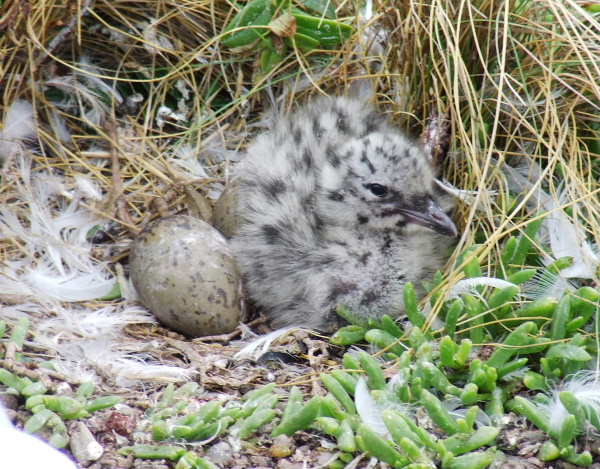
Carefully we moved through the colony and discovered more and more of the tiny downy chicks. There, right beneath one of the signs that explains the habitat of the seals, was a newly hatched baby and another egg being pecked away at, from inside. The attendant mother was anxious for us to move on, so we did so as soon as a photo had been taken!
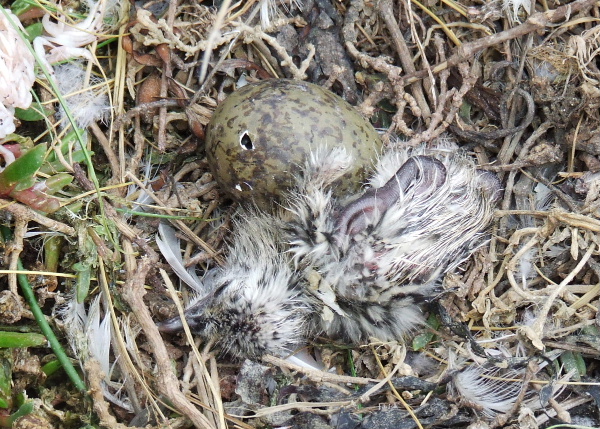
You might see in the top left of this photo some regurgitated krill and tiny fish, possibly whitebait, brought back in excess of requirement by the very busy parent birds. Yet even with all this activity, the area didn�t smell offensive.
We tore ourselves away from this amazing sight and went to the edge of the cliff to look for any signs of penguins. I scoured the headland, about 500m away and was rewarded with the clear sight of a penguin, busily preening itself. We made out way around to the area where there is a viewing platform and from there I was able to get photos I�ve long dreamed of. Here, preening its back, is an adult Yellow-Eyed Penguin.
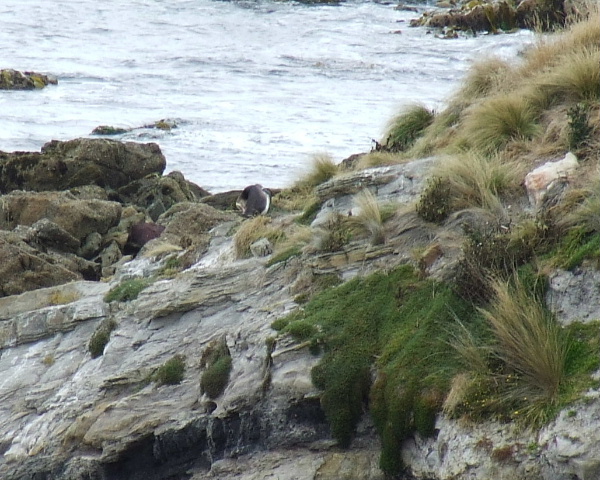
Watching through binoculars grew tiring, so I just kept my camera focused on the spot and every few minutes, clicked the shutter. I got this image just before we went back to the car, elated and tired, after a day of gallivanting and gusty fresh air!
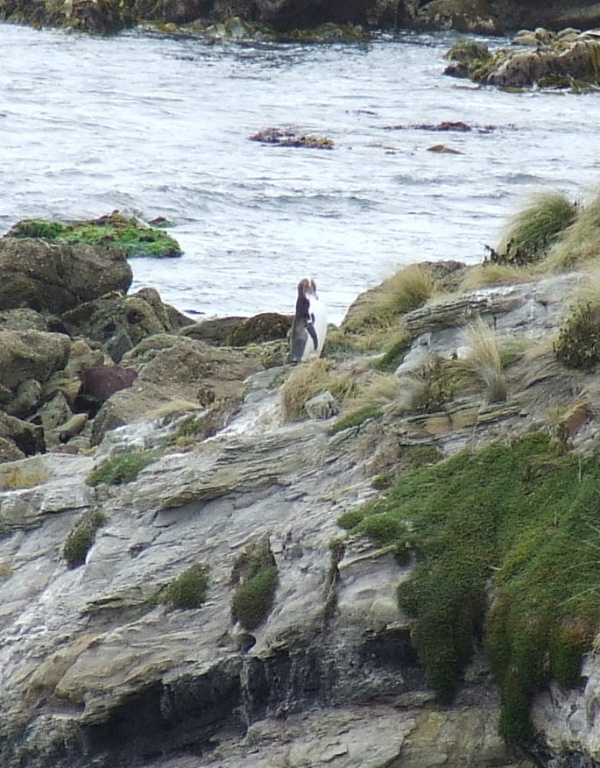
Note the silver tag on its wing � these are the rarest penguins in the world, so very careful records are made and kept and all adults are banded with a unique code to enable identification should one perish or become sick. There aren�t many here on this spot now � just 4 or 5, as I understand, so we really were blessed, seeing this one, particularly as it remained in full view for so long, absorbed in moulting, preening and sunning itself, as it regained it's land legs!
Yellow-Eyed Penguin, maori name Hoiho.
Height 70 - 76cm
Protected - in danger of extinction.